

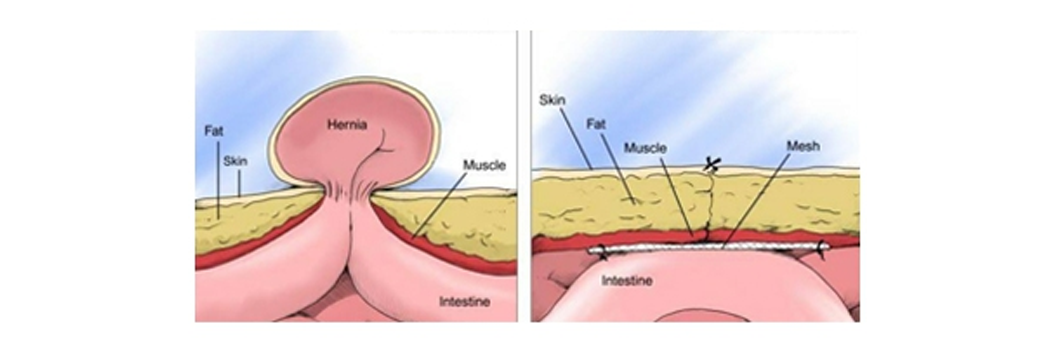
Hernia operation are one of the commonest operations & laparoscopic surgery has brought revolution to this disease. Bilateral inguinal hernia , unilateral inguinal hernia, recurrent hernia, large hernia in the inguinal region and femoral region are very well tackled by this approach of keyhole surgery. One of the most important type of hernia are the #incisional hernia & ventral hernias that happens in the abdominal wall which occurs postoperatively. They are conventionally done by open surgery but it poses lot of wound related complications like wound infections, pain, recurrent hernia, flap necroses, blacking of the skin & bad scar. All these complications can be avoided if one does laparoscopic repair .Normally the IPOM & IPOM PLUS are the the two approaches which are used for incisional hernias . Meshes used in IPOM & IPOM PLUS are very expensive and can be done away with modern way treatment of abdominal wall reconstruction know as AWR. Different approaches are Tep ie extra peritoneal approach and eTAP ie extended totally extraperitoneal approach and TAPP . These are all abbreviations of different types of hernias. Presently in very large hernias TAR is the operation in fashion. Bigger operations resulting in big incisional hernias require defect closure rather then bridging the defect by this type of an operation known as transverse abdomonis release (TAR). One can use a very large mesh 30×30 cm to reinforce abdominal wall which has been destroyed by incisional hernias. Patients functional results are superlative. These procedures can be done laparoscopically and has come as a huge advancement &revolution in hernia surgeries .

Hernia surgery in Dubai
A hernia is a weak spot in the abdominal wall that lets fatty tissue or a loop of bowel push through, creating a bulge you can often see or feel. Hernias do not heal on their own, and the gap tends to widen with time. The reliable fix is surgery to close the defect and reinforce the wall.
Laparoscopic, or keyhole, hernia repair does this through a few small incisions rather than one long cut. A camera and fine instruments are passed inside, the bulge is reduced, and a mesh is placed to support the wall from within. Most people need surgery once a hernia causes pain, keeps growing, or limits daily activity. Dr Arindam Ghosh brings 25+ years of experience and 12,000+ gastrointestinal procedures to this work across Dubai and Sharjah.
Know the signs
A hernia often starts small and quiet, then becomes harder to ignore. If you notice several of these together, it is worth a surgical assessment before the defect enlarges.
Book an assessment when the hernia is getting bigger, when pain becomes persistent, when it stops you from exercising, or when a previously repaired hernia has come back. Early review keeps your options open and usually makes the operation simpler.
Hernias are named by where they sit and how they behave. A clear diagnosis decides the right repair, and you can read more on the different types of hernias and their warning signs before your visit. The conditions managed here include:
Inguinal hernia
The most common groin hernia, where tissue pushes through the inguinal canal.
Bilateral inguinal hernia
Groin hernias on both sides, often repaired in one keyhole operation.
Femoral hernia
Sits lower in the groin, more common in women, with a higher risk of getting stuck.
Umbilical hernia
A bulge at or near the navel, which can enlarge over the years in adults.
Incisional hernia
Appears through the scar of a previous abdominal operation.
Ventral hernia
A defect anywhere along the front of the abdominal wall, treated with ventral hernioplasty.
Recurrent hernia
A hernia that has returned after an earlier repair, which usually needs an experienced approach.
For most patients, the keyhole approach is gentler than traditional open surgery, and it sits within the wider field of minimally invasive and robotic surgery that Dr Ghosh practises across the UAE. The practical advantages add up:
Smaller incisions
A few short cuts instead of one long wound.
Less pain
Most patients need lighter pain relief afterwards.
Minimal scarring
Small scars that fade and stay discreet.
Faster recovery
A quicker return to walking and daily routine.
Earlier return to work
Desk-based roles often resume sooner.
Lower wound infection risk
Smaller wounds mean fewer wound problems.
Both sides, same incisions
Bilateral hernias can be repaired together.
Better view of the defect
The camera shows the whole abdominal wall clearly.
| Feature | Laparoscopic | Open |
|---|---|---|
| Incision size | Small | Larger |
| Pain | Less | More |
| Recovery | Faster | Slower |
| Scarring | Minimal | More visible |
| Hospital stay | Shorter | Longer |
| Bilateral hernia repair | Easier | Separate incisions |
Open surgery still has its place, for example in some very large or scarred abdomens. The right choice is the one that fits your anatomy and health, decided with your surgeon.
Knowing the sequence takes a lot of the worry out of the day. Most keyhole repairs follow the same path, and a little planning at home helps, which is why it is worth reading how to prepare for hernia surgery in advance.
General anaesthesia
You are asleep and pain free for the whole operation.
3 to 4 small incisions
Tiny cuts give access without opening the abdomen.
Camera insertion
A laparoscope projects a magnified view onto a screen.
Hernia reduction
The protruding tissue is gently eased back into place.
Mesh placement
A mesh reinforces the weak area so it can heal strong.
Closure
The small incisions are closed, usually with dissolvable stitches.
Recovery room
You wake gently and are monitored as the anaesthetic wears off.
Getting back to life
Recovery is usually quicker than people expect, though exact timing depends on the hernia, the repair, and your general health. Your surgeon will give you a plan made for your case.
In short, most people manage everyday activities quite soon and return to a desk job within one to two weeks, while strenuous work and sport take a little longer. Follow your discharge advice closely, and contact the clinic early if anything feels wrong.
Mesh is one of the questions patients ask about most, so here is a plain answer. Mesh reinforces the repaired wall so the defect is far less likely to open again, which is why it is standard in modern hernia surgery.
Every operation carries some risk, and you deserve a straight account of it. With laparoscopic hernia repair the recognised risks include:
Bleeding
Usually minor with the keyhole approach.
Infection
Less common when wounds are small.
Recurrence
A hernia returning after repair, which is uncommon.
Mesh-related issues
Rare reactions or discomfort linked to the mesh.
Urinary retention
Short-term difficulty passing urine after surgery.
Anaesthesia risks
Discussed and screened before your operation.
These complications are uncommon when the surgery is performed by an experienced surgeon, and they are weighed carefully against the risk of leaving a hernia untreated.

Your surgeon
Outcomes in hernia surgery track closely with how often a surgeon does the work and how comfortable they are with the difficult cases. Dr Arindam Ghosh is a Fellow of the American College of Surgeons with 25+ years of experience and 12,000+ gastrointestinal procedures, and is among the first licensed Consultant GI Surgeons in the UAE.
His practice covers complex and recurrent hernias as well as routine repairs, using the full range of modern keyhole and robotic hernia repair techniques:
He consults at Emirates Hospital Jumeirah, Emirates Speciality Hospital DHCC, and NMC Royal Hospital Sharjah, so care is within reach across Dubai and Sharjah, with support for international and medical-visa patients.
Planning ahead
No two repairs are identical, so a firm quote follows an examination rather than a phone estimate. For a fuller breakdown you can read what hernia surgery costs in Dubai, including how packages are built.
The main factors that shape the price include:
Medically indicated hernia repair is commonly covered by major UAE insurers, and the clinic works with DAMAN, BUPA Arabia, AXA Gulf, and Oman Insurance. Pre-authorisation and your individual co-pay are confirmed before surgery so there are no surprises.
Many patients are up and walking the same day and back to everyday activities within a week or two. Heavy lifting and intense exercise are usually avoided for about four to six weeks while the repair and mesh settle. Your exact timeline depends on the hernia and your health, and your surgeon will tailor it for you.
Desk-based and office work is often possible within one to two weeks, provided you feel comfortable. Physically demanding jobs that involve lifting or strain need longer, typically four to six weeks. Tell your surgeon what your job involves so the advice fits your situation.
Yes. Modern mesh is biocompatible and designed to remain in the body permanently, giving the abdominal wall lasting support. The mesh type is selected for your specific hernia, and serious mesh problems are uncommon.
Recurrence is possible but uncommon. A correctly sized, well-positioned mesh placed by an experienced surgeon greatly reduces the chance of the hernia returning, which is one reason surgical experience matters so much.
Most people do not feel the mesh once healing is complete. Over a few weeks your own tissue grows into it, and it becomes part of the abdominal wall rather than a foreign object you notice.
Often, yes. One advantage of the laparoscopic approach is that bilateral inguinal hernias can usually be repaired through the same small incisions in a single operation, rather than needing two separate procedures.
Medically necessary hernia repair is commonly covered by major UAE insurers, and the clinic works with DAMAN, BUPA Arabia, AXA Gulf, and Oman Insurance. Coverage and any co-pay depend on your plan, and pre-authorisation is arranged before surgery.
Talk it through with a consultant GI surgeon who treats hernias every week, across Dubai and Sharjah. A clear assessment is the first step to lasting relief.
We bring the years, global experience, and stamina to guide our clients through new and often disruptive realities.