

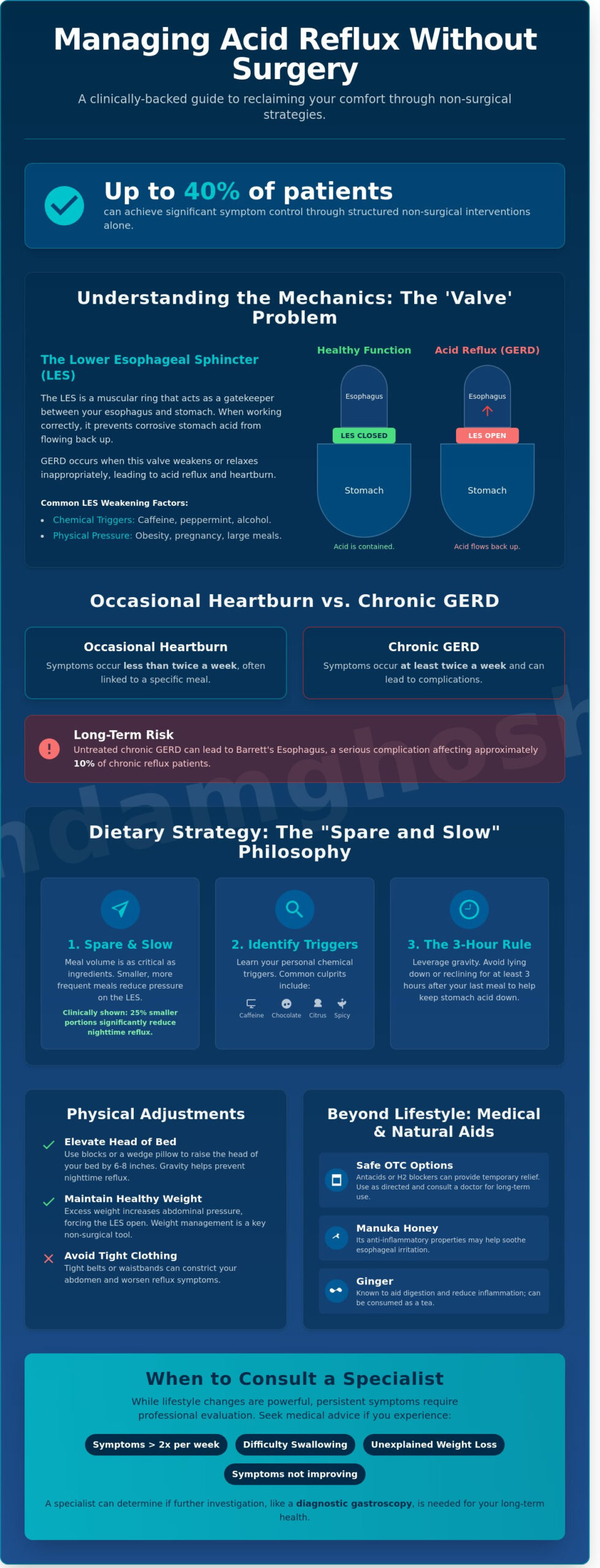
Imagine waking up at 2:00 AM, not to the quiet of the night, but to a searing heat in your chest that makes rest impossible. For many individuals, this isn’t just a bad night; it’s a persistent cycle that dictates what they eat and how they socialize. You might feel caught between the fear of long-term medication dependency and the daunting prospect of an operation. However, managing acid reflux without surgery is a scientifically grounded reality for many who seek a more holistic path to recovery. Recent clinical data suggests that up to 40% of patients can achieve significant symptom control through structured non-surgical interventions alone.
It’s frustrating to live with the constant anxiety of a “trigger food” ruining your evening or the exhaustion that follows a night of disrupted sleep. You’ve likely tried over-the-counter remedies only to find the relief is temporary. This guide promises to show you exactly how to break that cycle using clinically-backed lifestyle strategies and precise dietary adjustments. We’ll examine the mechanics of your digestive health and provide a structured plan to reduce heartburn frequency, helping you regain your quality of life with confidence and ease.
Key Takeaways
- Understand the mechanical function of the LES valve and how restoring its balance is essential for reclaiming your daily quality of life.
- Master the “Spare and Slow” nutritional philosophy to identify personal triggers, a vital step in managing acid reflux without surgery.
- Learn how to leverage gravity and manage abdominal pressure through physical adjustments to naturally prevent acid backflow.
- Explore a balanced spectrum of medical supports, from safe over-the-counter options to natural aids like Manuka honey and ginger.
- Identify the specific clinical thresholds that indicate when a specialist consultation and diagnostic gastroscopy are necessary for your long-term health.
Understanding the Mechanics of Acid Reflux (The ‘Valve’ Problem)
Acid reflux is often dismissed as a simple consequence of a heavy meal, yet for many residents in the UAE, it represents a persistent challenge to their daily comfort. At its core, Understanding Gastroesophageal Reflux Disease requires looking past the burning sensation to the underlying mechanical failure. This condition, commonly known as GERD, occurs when the specialized valve between your esophagus and stomach fails to close effectively. While stomach acid is essential for breaking down food, it’s highly corrosive to the delicate lining of your food pipe, which lacks the protective mucosal shield found in the stomach.
Chronic irritation does more than cause physical pain; it erodes your quality of life. It affects how you sleep, what you eat during social gatherings in Dubai or Abu Dhabi, and your general sense of wellness. When we talk about managing acid reflux without surgery, we’re focusing on restoring a functional balance. It’s not always about a permanent “cure” in the clinical sense, but rather about creating an environment where your body can function without constant chemical injury. This holistic approach prioritizes long-term esophageal health through precise lifestyle adjustments and medical guidance.
The Lower Esophageal Sphincter (LES) Explained
The LES is a pressure-sensitive ring of muscle that acts as a sophisticated gatekeeper. Under normal conditions, it opens only to allow food and liquid to pass into the stomach. However, various factors can cause this muscle to relax inappropriately. Chemical triggers like caffeine or peppermint can weaken its tone, while physical factors like increased abdominal pressure from obesity or pregnancy can force it open. The LES is the primary barrier against gastric backflow. When this barrier is compromised, the high-pressure environment of the stomach pushes acidic contents upward into the low-pressure esophagus.
Short-term Heartburn vs. Chronic GERD
It’s vital to distinguish between occasional indigestion and a chronic condition. Most people experience heartburn once or twice a month, often after a specific dietary trigger. Chronic GERD is defined by symptoms occurring at least twice a week. Without intervention, the physiological progression can lead to serious complications. Persistent acid exposure can cause cellular changes, leading to conditions like Barrett’s Esophagus, which affects approximately 10% of patients with chronic reflux.
Early managing acid reflux without surgery is critical for long-term health. By addressing the mechanical issue through non-invasive means, we can prevent the scarring and narrowing of the esophagus known as strictures. Taking action now ensures that your treatment journey remains focused on wellness and prevention rather than reactive crisis management. This proactive mindset is the foundation of a personalized care plan that respects both clinical needs and your individual lifestyle.
Dietary Strategy: Aligning Nutrition with Digestive Comfort
Managing acid reflux without surgery starts with a fundamental shift in how we perceive the act of eating. I often advocate for the Spare and Slow philosophy. This approach emphasizes that meal volume is just as critical as the ingredients themselves. When the stomach is overextended, it places mechanical pressure on the lower esophageal sphincter (LES), forcing it open. By consuming smaller, more frequent portions, you reduce this internal pressure and allow your digestive system to function with greater efficiency. A 2022 clinical review indicated that patients who reduced meal portions by 25% reported a significant decrease in nocturnal reflux episodes.
Identifying your personal chemical triggers is a diagnostic journey. While caffeine, chocolate, and citrus are common culprits, every patient’s biology is unique. It’s equally important to respect the Three-Hour Rule. In the UAE, where social dining often occurs late into the evening, this rule is vital. Gravity is a natural ally in digestion. Reclining too soon after a meal allows gastric juices to migrate upward. According to the Official Treatment Guidelines for GERD, these lifestyle adjustments form the bedrock of non-surgical management. This multidisciplinary approach, combining nutritional discipline with medical guidance, is often enough to restore a patient’s quality of life and prevent the need for invasive procedures.
Reflux-Friendly Foods to Incorporate
- Alkaline Choices: Melons and bananas have a high pH level, which helps to neutralize the harsh acidity of gastric juices.
- High-Fibre Staples: Oatmeal and whole grains promote satiety. This prevents overeating and reduces the intra-abdominal pressure that triggers reflux.
- Lean Proteins: Choosing grilled chicken or fish over high-fat meats like lamb is essential. High-fat foods delay gastric emptying time, meaning food sits in the stomach longer and increases the window for acid backup.
The Liquid Factor: Carbonation and Alcohol
Liquids play a deceptive role in gastric health. Carbonated beverages, including sparkling water, introduce air into the stomach. This expansion creates upward pressure against the LES. Alcohol acts as a direct muscle relaxant, specifically targeting the LES and allowing acid to escape into the esophagus. For effective hydration, I recommend a sipping strategy. Gulping large amounts of water during a meal can distend the stomach. Instead, focus on consistent hydration between meals to maintain digestive health without overfilling the gastric cavity.
If you find that dietary changes alone aren’t providing the relief you need, it may be time to seek a personalized consultation to explore a comprehensive care plan tailored to your specific physiology.
Gravity and Pressure: Physical Adjustments for Day and Night
Managing acid reflux without surgery requires a deep understanding of the mechanical forces at play within your body. Your lower esophageal sphincter (LES) serves as a biological gatekeeper. When abdominal pressure becomes too high or gravity works against you, this valve fails. By applying a sense of robotic precision to your daily habits, you can create an environment where acid remains where it belongs. Consistency is your greatest ally in this process. Small, deliberate changes to how you sit, stand, and sleep provide the structural support your digestive system needs to function without discomfort.
Optimising Your Sleep Environment
Nighttime often brings the most significant challenges for reflux sufferers. Clinical data suggests that elevating the head of your bed by 15 to 20 centimeters is one of the most effective ways to use gravity as a natural barrier. This is not about using extra pillows, which can actually increase pressure by bending the waist. Instead, use a wedge pillow or bed risers to lift the entire upper torso. Anatomy also dictates that you should sleep on your left side. Because of the stomach’s natural curvature, the gastric-esophageal junction stays above the acid level when sleeping on the left, preventing the contents from spilling back into the sensitive lining of the esophagus.
Weight Management and Internal Pressure
The relationship between body mass and reflux is purely mechanical. Visceral fat acts as an internal weight that constantly pushes against the stomach, weakening the LES over time. You don’t need a radical transformation to see results immediately. Evidence shows that a modest weight loss of 5% to 10% can significantly reduce the frequency of your symptoms by lowering this intragastric pressure. It’s a compassionate way to treat your body, reducing the strain on your internal organs while improving your overall quality of life.
Your choices throughout the day in the UAE’s active environment also matter. Wearing tight-fitting clothing or restrictive belts can exacerbate the “squeeze” on your abdomen. When it comes to physical activity, timing is vital. Gentle walking after a meal can aid digestion, but high-impact exercises should be avoided for at least two hours after eating. To complement these physical adjustments, consulting the Harvard Guide to an Acid Reflux Diet can help you identify specific triggers to avoid. By combining postural awareness with weight management, you take a multidisciplinary approach to your recovery, ensuring your path to wellness is both scientifically grounded and personally sustainable.
Beyond Lifestyle: Safe Use of Non-Surgical Medical Supports
While diet and posture form the bedrock of recovery, many patients require pharmacological or holistic interventions to bridge the gap toward long-term relief. Successfully managing acid reflux without surgery involves a structured approach where we combine clinical precision with supportive therapies. Even when a remedy is labeled natural or over-the-counter, medical supervision remains vital to ensure these treatments don’t mask underlying complications or interact with other medications. In the UAE, the Ministry of Health and Prevention (MOHAP) regulates these options strictly, ensuring that the products you find in local pharmacies meet high safety standards.
Antacids, H2 Blockers, and PPIs
The spectrum of medical support begins with chemical neutralization and moves toward systemic acid reduction. Each level serves a specific purpose in your healing journey:
- Antacids: These provide immediate, short-term relief by neutralizing existing stomach acid. They’re excellent for breakthrough pain but don’t prevent future reflux episodes.
- H2 Blockers: Medications like Famotidine work by blocking the histamine receptors that trigger acid production. They offer a longer duration of relief, often lasting up to 12 hours, making them a reliable choice for nighttime symptoms.
- Proton Pump Inhibitors (PPIs): These are the most potent tools for managing acid reflux without surgery. They shut down the tiny pumps in the stomach lining that produce acid. Clinical guidelines often suggest a 4 to 8 week course to allow esophageal tissues to heal. It’s essential to use these under a doctor’s guidance to avoid long-term dependency or nutrient absorption issues.
Natural Digestive Aids
Natural remedies can offer a gentle, “human touch” to your treatment plan. Ginger acts as a natural prokinetic, which means it helps the stomach empty its contents into the small intestine more efficiently. Chamomile tea provides an anti-inflammatory effect on the digestive tract lining, while high-quality Manuka honey can provide a protective coating for the esophagus. When sourcing Manuka honey in Dubai or Abu Dhabi, look for a high MGO (Methylglyoxal) rating to ensure therapeutic benefits. These aids work best as part of a multidisciplinary approach rather than isolated solutions.
Holistic Stress Reduction
The gut-brain axis is a physiological reality where psychological stress directly influences gastric function. Anxiety can heighten the sensitivity of the nerves in your esophagus, making even a small amount of acid feel incredibly painful. Addressing this requires a focus on your overall wellness and nervous system regulation.
Diaphragmatic breathing is a particularly effective technique. By practicing deep “belly breathing,” you strengthen the crural diaphragm. This muscle group wraps around the Lower Esophageal Sphincter (LES), acting as an external brace that helps keep the valve closed. Additionally, prioritizing restorative sleep is non-negotiable. Esophageal tissue repair is most active during deep sleep cycles. If you’re constantly sleep-deprived, your body lacks the resources to fix the micro-damage caused by daily reflux episodes.
When to Consult a Specialist: Bridging the Gap to Advanced Care
While many patients successfully achieve relief by managing acid reflux without surgery through disciplined lifestyle changes, there is a clear clinical threshold where conservative measures are no longer enough. If you’ve adhered to dietary restrictions and medication for 6 to 8 weeks without a measurable reduction in symptoms, it’s time to seek a specialist’s perspective. Seeking a consultation isn’t an admission of failure in your wellness journey; it’s a proactive step to ensure that chronic inflammation doesn’t lead to permanent structural damage.
A surgical consultation in the UAE medical landscape is designed to be a collaborative dialogue rather than a direct path to the operating theater. We focus on restoring your quality of life by identifying the root cause of your discomfort. By integrating robotic precision with a compassionate human touch, we provide a sense of safety for those who feel overwhelmed by persistent gastric issues. Our goal is to move you from a state of constant uncertainty toward a state of informed empowerment.
Recognising the ‘Red Flag’ Symptoms
- Difficulty swallowing (dysphagia): If you experience the sensation of food being stuck in your chest or throat, this indicates a potential narrowing of the esophagus that requires immediate investigation.
- Unexplained weight loss: Dropping more than 5% of your body weight unintentionally over 6 months can be a sign of underlying complications.
- Chronic hoarseness: A raspy voice or a persistent cough that lasts longer than 3 weeks often suggests that acid is reaching the larynx, which can lead to long-term respiratory issues.
- Refractory symptoms: When heartburn persists despite taking maximum doses of over-the-counter proton pump inhibitors for 14 consecutive days.
The Value of a Comprehensive GI Evaluation
Modern diagnostics act as a precise roadmap for personalized care. A diagnostic gastroscopy allows us to assess the internal lining of the esophagus and stomach with high-definition clarity, identifying conditions like Barrett’s esophagus or hiatal hernias that lifestyle changes alone cannot resolve. This evaluation is part of a multidisciplinary team approach where surgeons, dietitians, and the patient work together to find the most effective path forward.
It’s vital to remember that surgery is a tool for restoration, not a first resort. For some, the evaluation reveals that a simple adjustment in medication timing or a specific dietary tweak is all that’s needed. For others, advanced minimally invasive options might be the key to reclaiming a life free from pain. Education is always the first step in our clinical practice, ensuring you understand every option available for managing acid reflux without surgery before making a decision. We prioritize your long-term health and wellness, ensuring that every intervention is tailored to your specific physiological needs and lifestyle goals.
Take the Next Step Toward Digestive Comfort
Restoring your quality of life starts with recognizing that chronic heartburn isn’t a condition you must endure. By aligning your nutrition with digestive comfort and implementing physical adjustments like gravity-based sleeping positions, you can achieve significant relief. These strategies are vital for managing acid reflux without surgery, yet they’re most effective when supported by a clear medical diagnosis. Whether it’s through a precise gastroscopy or a personalized non-surgical plan, the focus remains on bridging the gap between discomfort and lasting health.
With over 25 years of specialized surgical and GI experience, Dr. Arindam Ghosh offers a unique blend of robotic-assisted precision and compassionate patient care. If lifestyle changes haven’t delivered the results you need, it’s time to consult a specialist who understands the complexities of the UAE’s healthcare landscape. You can access comprehensive diagnostic services, including advanced endoscopy, to pinpoint the exact cause of your symptoms. Schedule a comprehensive GI consultation with Dr. Arindam Ghosh today to reclaim your health and vitality. You don’t have to navigate this journey alone; expert care is ready to help you thrive.
Frequently Asked Questions
Can acid reflux be cured permanently without surgery?
Many patients achieve long-term remission through structured lifestyle modifications and medical management. Clinical data from Gastroenterology Research and Practice shows that 40% of patients experience a complete resolution of symptoms by maintaining a healthy body mass index and following specific dietary protocols. Success in managing acid reflux without surgery depends on a consistent, holistic commitment to these behavioral changes to protect your quality of life.
What are the best foods to eat to stop acid reflux immediately?
Alkaline foods like bananas, melons, and oatmeal provide the fastest relief by neutralizing gastric acid. Bananas have a natural pH of 5.0, which helps buffer the acidic environment in your stomach. You can also try ginger tea, as clinical trials demonstrate it reduces gastric contractions by 30%. These natural options offer a gentle, human-centric way to find comfort without relying solely on chemical interventions.
Is it safe to take PPIs for a long period of time?
Proton Pump Inhibitors are effective for short-term healing, but long-term use requires a multidisciplinary approach and regular medical supervision. Research published in The BMJ indicates that using these medications for more than 8 weeks can lead to a 25% decrease in magnesium absorption. Our goal is always to find the lowest effective dose that maintains your esophageal health while minimizing potential side effects from prolonged usage.
How can I stop nighttime acid reflux without medication?
Elevating the head of your bed by 15 to 20 centimeters is the most effective way to prevent acid from rising while you sleep. A study in the Journal of Gastroenterology found that sleeping on your left side reduces acid exposure time by 50% compared to sleeping on your right. It’s also vital to finish your last meal at least 3 hours before lying down to ensure your stomach is empty.
Does drinking water help or worsen acid reflux?
Sipping water throughout the day helps clear acid from your esophagus, but drinking large amounts during a meal can increase stomach pressure and trigger reflux. Clinical evidence suggests that alkaline water with a pH of 8.8 is particularly beneficial because it inactivates human pepsin on contact. This simple adjustment supports the body’s natural defenses and is a key component of managing acid reflux without surgery.
Can stress alone cause severe GERD symptoms?
Stress doesn’t cause the stomach to produce more acid, but it makes your brain significantly more sensitive to the acid that is already there. The American Journal of Gastroenterology reports that patients under high stress perceive their pain as 2.5 times more intense than those who are relaxed. Incorporating wellness practices and mindfulness can lower this sensitivity, providing a compassionate pathway to symptom relief and emotional balance.
When should I see a gastroenterologist for my heartburn?
You should seek a professional consultation if you experience heartburn more than twice a week or if symptoms persist after 14 days of over-the-counter treatment. The Dubai Health Authority recommends immediate evaluation if you have “red flag” symptoms like difficulty swallowing or unexplained weight loss. Early intervention allows us to use precise diagnostic tools to prevent complications like Barrett’s esophagus, which affects 10% of chronic reflux patients.