

Last Tuesday, a patient in Dubai named Sarah sat in her living room, feeling the relief of a successful cholecystectomy but shadowed by the sharp discomfort of post-operative bloating. It’s a common experience, as roughly 15% of patients encounter temporary digestive adjustments during the initial weeks at home. You likely understand that while the surgery is a vital step, the true challenge often begins when you leave the clinic. Your gallbladder surgery recovery shouldn’t be a period of anxiety or guesswork regarding what you can eat or when you can safely return to your daily routine.
I’m here to provide the clinical guidance and compassionate support you need to move from post-surgical uncertainty to a state of informed empowerment. This guide offers a clear roadmap for managing pain without heavy medication, adjusting your diet to avoid digestive distress, and recognizing the specific healing milestones, such as the standard 5-kilogram lifting limit for the first six weeks, that lead back to a high quality of life. We’ll examine the precise steps to ensure your transition is smooth, safe, and focused on your long-term wellness.
Key Takeaways
- Understand the critical milestones of the first 48 hours and how your specific surgical path—whether laparoscopic, robotic-assisted, or open—shapes your initial healing.
- Learn to effectively stay ahead of the pain curve by distinguishing between surgical site discomfort and digestive shifts during your gallbladder surgery recovery.
- Master the transition from liquid to solid foods with a clinical understanding of how your body now processes bile to ensure a smooth, distress-free digestive adjustment.
- Identify the safe parameters for resuming physical activity and driving, utilizing the “Listen to Your Body” principle to balance rest with progressive movement.
- Discover how a multidisciplinary approach to long-term wellness can restore your quality of life, often resulting in better health than before your surgery.
The Cholecystectomy Recovery Timeline: What to Expect in the First 48 Hours
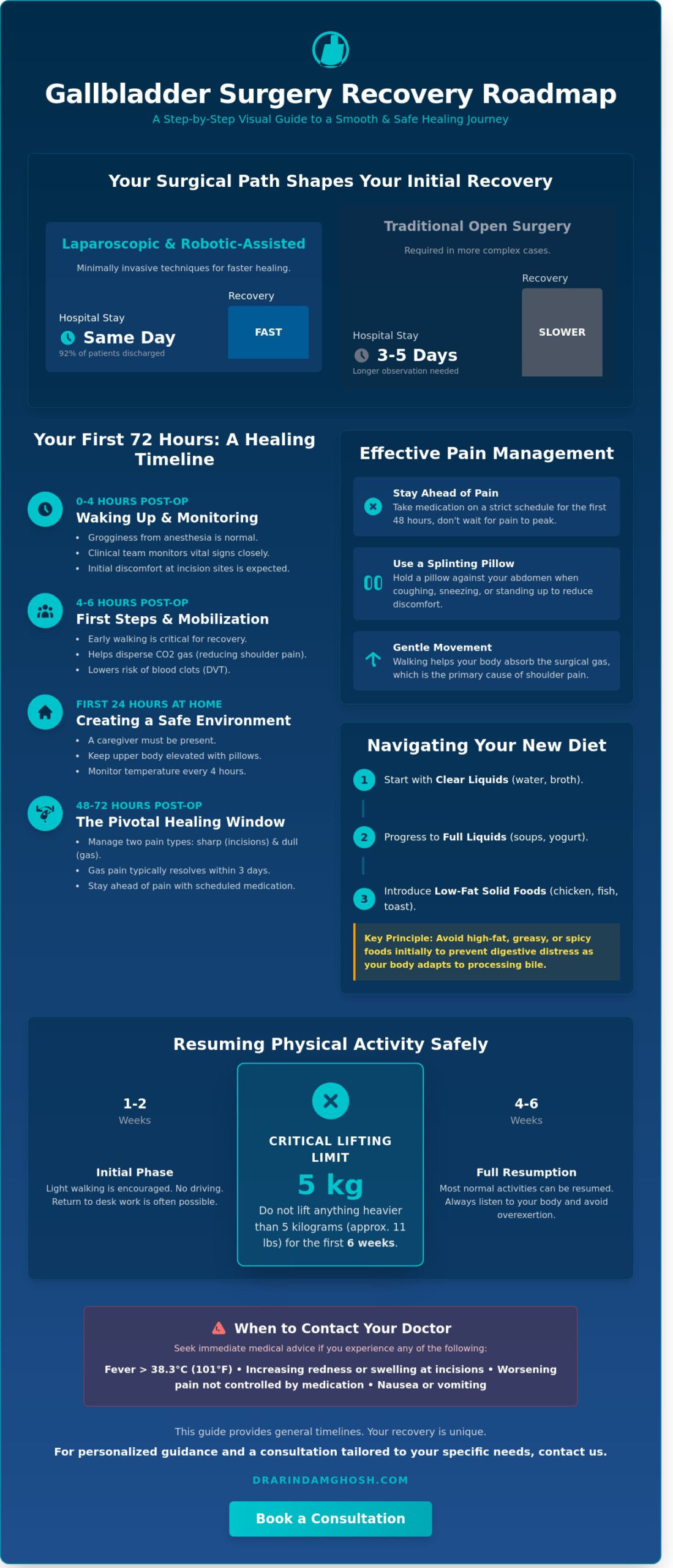
The moments following your surgery mark the beginning of a transformative journey toward a better quality of life. As you wake from anesthesia, you’ll likely experience a period of grogginess that typically lasts between 2 and 4 hours. Our clinical team monitors your vitals closely during this phase to ensure a seamless transition. While some initial discomfort at the incision sites is expected, the modern Cholecystectomy procedure is designed to be as minimally invasive as possible, prioritizing your comfort from the very start.
One unique aspect of gallbladder surgery recovery is the presence of “gas pain,” often felt in the right shoulder. This occurs because carbon dioxide is used to inflate the abdomen during the operation, which can irritate the phrenic nerve. To manage this, we prioritize early mobilization. Clinical data shows that patients who begin walking within 4 to 6 hours of their procedure experience faster gas dispersal and a lower risk of deep vein thrombosis. Movement isn’t just a physical requirement; it’s a vital step in your holistic healing process.
Laparoscopic vs. Robotic-Assisted Recovery
In the UAE, advanced surgical centers utilize robotic-assisted technology to enhance gallbladder surgery recovery. Robotic precision allows for smaller incisions and less tissue manipulation compared to traditional methods, which significantly reduces the body’s inflammatory response. While open surgery might require a 3 to 5-day hospital stay, roughly 92% of our laparoscopic and robotic patients are safely discharged on the same day. This efficiency is driven by a multidisciplinary team of specialists who coordinate every aspect of your immediate post-operative safety.
The First Night at Home
Your first 24 hours at home require a structured environment to support your wellness. It’s essential to have a dedicated caregiver present for this entire period to assist with mobility and medication timing. Before you arrive, ensure your recovery space is equipped with extra pillows to keep your upper body elevated, as this helps ease any lingering respiratory or gas discomfort. You should monitor your temperature and pain levels every 4 hours. If you notice a fever above 38.3°C or sudden redness at the incision sites, contact your surgical team immediately. This proactive approach ensures that your path to restoration remains steady and secure.
A Step-by-Step Guide to Managing Pain and Wound Care
The initial 48 to 72 hours following your procedure are pivotal for a smooth gallbladder surgery recovery. During this window, your body begins the inflammatory response necessary for tissue repair. Managing discomfort effectively isn’t just about comfort; it’s about enabling mobility, which prevents complications like deep vein thrombosis or pneumonia. You’ll likely experience two distinct types of sensations: sharp, localized pain at the incision sites and a dull, bloated feeling in the abdomen or shoulders. This secondary discomfort often stems from the carbon dioxide gas used during the procedure. Walking gently around your home in Dubai or Abu Dhabi helps your body absorb this gas more quickly, typically resolving the issue within 3 days.
Effective Pain Management Strategies
Staying ahead of the pain curve is more effective than trying to suppressed intense discomfort once it peaks. We typically recommend a multimodal approach that combines prescribed analgesics with over-the-counter options like paracetamol. By rotating these medications on a strict schedule for the first 48 hours, you maintain a steady therapeutic level in your bloodstream. Splinting involves holding a pillow firmly against your abdomen to provide counter-pressure, which significantly reduces discomfort when you need to cough, sneeze, or transition from a sitting to a standing position. While medication is vital, localized heat therapy on the shoulders can alleviate gas-related aches. If you have questions about specific dosages, consulting a specialist in robotic-assisted surgical techniques ensures your plan is tailored to your specific surgical history.
Incision Care and Hygiene
Modern surgical methods prioritize minimal scarring and rapid healing. When recovering from laparoscopic cholecystectomy, your incisions are usually sealed with surgical glue or steri-strips. You can typically shower 24 to 48 hours after surgery, provided you pat the area dry gently rather than rubbing it. However, you must avoid immersing the incisions in water for at least 14 days. This means no baths, swimming pools, or hot tubs, as standing water increases the risk of bacterial entry into the healing tissue.
- The Hands-Off Rule: Don’t peel off steri-strips or surgical glue; they’ll naturally detach as the skin underneath heals, usually within 7 to 10 days.
- Healthy Healing: It’s normal to see slight bruising or a small firm lump under the skin, which is part of the internal healing ridge.
- Infection Red Flags: Contact your care team if you notice spreading redness, foul-smelling discharge, or a fever exceeding 38.3°C (101°F).
Recovery is a collaborative process between your surgeon’s technical precision and your diligent aftercare. By following these clinical guidelines, you protect the integrity of your repair and accelerate your return to a high quality of life. Patients undergoing other minimally invasive abdominal procedures, such as a Laparoscopic Appendectomy, will find that many of these same wound care principles apply to their recovery as well.
Navigating Your Diet After Gallbladder Removal: From Liquid to Solid
Your body is a remarkably adaptable system. When the gallbladder is removed, the liver continues to produce bile, but it no longer has a dedicated reservoir for storage. Instead, bile trickles continuously into the small intestine. This physiological shift means your digestive tract must learn to process fats without the concentrated “burst” of bile previously supplied during meals. Understanding this transition is vital for a smooth gallbladder surgery recovery and ensures your quality of life remains high as you heal.
A gradual reintroduction of nutrients prevents the sudden digestive distress often associated with post-operative care. During the initial weeks, the focus remains on ease of digestion. Hydration stands as a central pillar of this process. Drinking at least 2 to 2.5 liters of water daily helps prevent constipation, a common side effect of anesthesia and pain medications, while supporting your metabolic health. Identifying trigger foods early helps you avoid temporary bloating or discomfort. Many patients find that high-fat dairy, fried foods, and spicy seasonings are best avoided for at least 30 days.
The Three-Phase Dietary Roadmap
- Phase 1 (Days 1-3): Focus on clear liquids and light nourishment. Stick to apple juice, herbal teas, and clear vegetable or chicken broths. If these are tolerated well, you can introduce plain crackers or toast to provide simple carbohydrates for energy.
- Phase 2 (Days 4-14): Move toward low-fat solids. Prioritize lean proteins such as steamed white fish or skinless chicken breast. Incorporate well-cooked, steamed vegetables like carrots or zucchini, which are easier on the gut than raw greens.
- Phase 3 (Week 3+): Begin the gradual reintroduction of healthy fats. Start with small portions of avocado or a teaspoon of extra virgin olive oil. This methodical approach allows your liver to calibrate its bile production to your dietary intake.
Managing Post-Cholecystectomy Syndrome
Approximately 10% to 15% of patients may experience Post-Cholecystectomy Syndrome, which manifests as persistent bloating or “dumping syndrome.” This occurs when the small intestine cannot absorb bile salts efficiently, leading to rapid bowel movements. It’s a manageable condition that often resolves as the body adjusts. Soluble fiber is your most effective tool during this phase. Foods like oats and barley act as a sponge, soaking up excess bile and regulating your digestive rhythm.
I emphasize a multidisciplinary approach to your wellness. While minor adjustments are expected, you should consult your specialist if you experience severe abdominal pain, jaundice, or diarrhea that persists beyond the first month. Your recovery journey is personalized; we use clinical precision to ensure your transition back to a full, varied diet is both safe and comfortable. Focusing on these dietary milestones is a proactive way to reclaim your health and vitality after your gallbladder surgery recovery period begins.
Resuming Physical Activity and Returning to Normal Life
The path to full vitality after your procedure isn’t a race; it’s a deliberate progression. I often tell my patients that the most sophisticated monitoring tool we have isn’t a machine, but their own intuition. Listening to your body remains the golden rule of gallbladder surgery recovery. You’ll feel a natural pull toward movement, but balancing this with restorative rest ensures the internal sutures remain secure while your energy levels stabilize. This approach combines robotic precision with a deep respect for the body’s natural healing rhythm, moving you from a state of post-operative care to a state of empowered wellness.
Safety during transit is paramount. You shouldn’t get behind the wheel until you’ve been off narcotic pain medication for at least 24 hours. More importantly, you must be able to perform an emergency stop without hesitation or sharp pain. This usually takes 5 to 7 days for most patients in the UAE. Regarding physical strain, a strict lifting limit of 5 kilograms is necessary for the first 4 to 6 weeks. This precaution is vital to prevent incisional hernias, a complication where internal tissue pushes through the surgical site. My team and I prioritize these boundaries to protect the integrity of your clinical outcome.
Physical Exercise and Fitness
- Week 1-2: Focus on gentle walking within your home or a climate-controlled environment. This promotes circulation and prevents blood clots without straining the abdominal wall.
- Week 3-4: You can start light cardio, such as using a stationary bike at a low resistance. Avoid any core-heavy exercises or heavy “crunch” movements that increase intra-abdominal pressure.
- Week 6+: After a follow-up clinical assessment, you’ll likely receive clearance for full strength training and more vigorous activities.
Professional and Social Reintegration
Your return to the workplace depends heavily on the nature of your role and the surgical method used. Patients who undergo laparoscopic or robotic-assisted surgery, which I favor for its precision and faster healing, often return to desk-based roles within 7 to 10 days. If your job involves heavy lifting or manual labor, expect a longer transition of 4 to 6 weeks. Don’t be surprised by post-op fatigue. This temporary dip in energy is a natural response as your body redirects resources toward cellular repair. If you’re planning to fly from Dubai or Abu Dhabi, most surgeons recommend waiting 7 to 14 days to minimize the risk of deep vein thrombosis during long-haul flights. This holistic view of your lifestyle ensures that your gallbladder surgery recovery doesn’t just end at the clinic door but continues until you’ve reached your peak quality of life.
Long-Term Wellness: Restoring Your Quality of Life
The transition from the immediate post-operative phase to long-term wellness represents the final step in your gallbladder surgery recovery. This journey isn’t just about healing a physical incision; it’s about reclaiming a lifestyle free from the debilitating pain of biliary colic. Most patients find that their overall quality of life improves significantly within 4 to 8 weeks as the body stabilizes. The ultimate goal of this surgical intervention is to return you to a meaningful, pain-free existence where food and activity are no longer sources of anxiety.
Many patients discover that a “gallbladder-free” life is actually healthier than their previous state. Before surgery, chronic inflammation or stones often forced a very narrow, often nutritionally deficient diet. Once the diseased organ is removed, you can focus on long-term nutritional balance. This often includes a higher intake of fiber and lean proteins, which supports heart health and weight management in line with UAE health initiatives. By adopting these habits, you aren’t just recovering; you’re upgrading your metabolic health.
The “New Normal” for Digestion
Adapting to life without a gallbladder is a straightforward process for the vast majority of patients. While the first few weeks require a low-fat approach, about 92% of individuals eventually return to a completely unrestricted diet. The liver eventually compensates for the loss of the gallbladder by continuously secreting bile directly into the small intestine to facilitate digestion. Beyond the physical changes, the psychological relief is profound. You’re no longer living under the constant threat of a gallbladder attack, allowing for a more spontaneous and joyful engagement with life and dining.
Red Flags and Warning Signs
While modern robotic and laparoscopic techniques have reduced complication rates to less than 2% in leading clinical practices, staying vigilant remains a pillar of comprehensive care. Your follow-up appointments are essential milestones where we monitor your healing trajectory and address any subtle digestive shifts. Promptly identifying issues ensures that your path to wellness remains on track. You should seek an immediate clinical evaluation if you notice any of these red flags:
- Jaundice: A noticeable yellowing of the whites of the eyes or the skin, which can indicate a bile duct obstruction.
- Fever: A persistent body temperature of 38°C (100.4°F) or higher.
- Digestive Distress: Persistent vomiting or an inability to tolerate liquids after the first 48 hours.
- Increasing Pain: Abdominal pain that worsens over time rather than improving with rest and prescribed medication.
Proactive communication with your surgical team is the best way to ensure a safe and steady return to your daily routine. Schedule your post-operative consultation with Dr. Ghosh for personalized recovery tracking and to discuss any questions regarding your long-term digestive health.
Reclaiming Your Health and Vitality
Navigating your gallbladder surgery recovery is a journey that requires both patience and precise clinical guidance. By following a structured timeline for wound care during the first 48 hours and transitioning thoughtfully from liquids to solids, you’re setting the foundation for a seamless return to your routine. Most patients in the UAE find that a gradual increase in physical activity, supported by professional post-operative follow-ups, significantly restores their quality of life within a few weeks.
Dr. Arindam Ghosh brings over 25 years of specialized gastrointestinal surgical experience to every patient’s care plan. His expertise in advanced robotic and laparoscopic techniques ensures that surgical intervention is minimally invasive, prioritizing your comfort and long-term wellness. This multidisciplinary approach combines technical precision with a compassionate human touch to support your healing at every stage. You’ll receive comprehensive, patient-centric care designed to help you regain your strength and confidence.
If you’re ready to move toward a healthier future, Consult with Dr. Arindam Ghosh for Expert Surgical Care. It’s time to embrace the active, pain-free life you deserve with a partner who values your health as much as you do.
Frequently Asked Questions
How long does it take to recover from laparoscopic gallbladder surgery?
Most patients return to their normal daily activities within 7 to 14 days. Laparoscopic cholecystectomy is a minimally invasive procedure, allowing 90% of patients to go home the same day. While the internal healing process takes about 4 to 6 weeks, your energy levels typically rebound by day 10. We focus on a personalized recovery plan to ensure you regain your quality of life quickly and safely through modern surgical techniques.
Can I ever eat spicy or fatty foods again after gallbladder removal?
You can gradually reintroduce spicy or fatty foods into your diet about 4 weeks after your procedure. Since your body no longer has a gallbladder to store bile, 15% to 30% of patients experience digestive sensitivity if they eat high-fat meals too soon. Start with small portions to see how you react. This cautious approach ensures your gallbladder surgery recovery remains comfortable and free from significant gastrointestinal distress or pain.
Is it normal to have diarrhea after gallbladder surgery?
It’s common to experience loose stools or diarrhea for several weeks following your operation. Statistics from the Journal of the Society of Laparoendoscopic Surgeons indicate that up to 20% of patients report post-cholecystectomy diarrhea. This happens because bile now flows continuously into your small intestine. Usually, this condition resolves within 3 to 6 months as your body adjusts its metabolic rhythm. If it persists, we provide targeted nutritional guidance to restore your comfort.
When can I start exercising and lifting weights again?
You should wait at least 4 to 6 weeks before engaging in heavy lifting or strenuous weight training. While light walking is encouraged immediately after surgery to prevent blood clots, lifting more than 5 kilograms can increase the risk of an incisional hernia. Most patients resume low-impact activities like swimming after 14 days. Always wait for a clinical clearance during your follow-up appointment before returning to your full intensity gym routine.
What are the symptoms of a bile duct injury during recovery?
Key symptoms of a bile duct injury include persistent abdominal pain, fever, and jaundice, which is a yellowing of the skin or eyes. Although this complication occurs in fewer than 0.5% of laparoscopic cases according to international surgical standards, it requires immediate medical attention. If you notice dark urine or pale stools within the first 7 days of recovery, contact your surgical team immediately to ensure a safe and effective intervention.
Why do I feel bloated and gassy even a week after the operation?
Feeling bloated or gassy for 7 to 10 days is a standard side effect of the carbon dioxide gas used during the operation. This gas is used to inflate the abdomen, providing a clear view for the robotic or laparoscopic tools. About 80% of patients feel this discomfort in their abdomen or even their shoulders. Walking for 10 minutes every few hours helps your body absorb and expel this gas naturally and efficiently.
How soon can I return to work after a cholecystectomy?
Most individuals return to office-based work within 5 to 7 days after a cholecystectomy. If your job involves physical labor or heavy lifting, you’ll likely need 2 to 3 weeks of rest to ensure proper healing. In the UAE, many patients coordinate their recovery with their employer to allow for a phased return. This timeline ensures that your gallbladder surgery recovery isn’t rushed, protecting your long-term health and your overall surgical outcome.
What should I do if my incisions look red or feel warm?
Redness, warmth, or increasing pain at the incision site can be signs of a localized infection and should be reported to your doctor. While minor bruising is normal, a study in the Annals of Medicine and Surgery notes that surgical site infections occur in roughly 2% of laparoscopic procedures. If you notice pus or have a fever above 38 degrees Celsius, it’s vital to seek a clinical evaluation immediately to prevent any further complications.