

What if the fear of the operating room is actually preventing you from achieving the long-term digestive health you deserve? It’s natural to feel anxious about general anesthesia or how your body might change after a cholecystectomy. Many patients across the UAE spend hours researching natural remedies because they want to avoid the perceived aggression of surgery. If you’re currently exploring non-surgical treatment for gallstones UAE specialists can offer, you’re not alone in seeking a path that feels less invasive and more aligned with your personal wellness goals.
I’ve seen many individuals find temporary relief through medical management, yet clinical data often shows recurrence rates as high as 50 percent within five years for these interventions. This article provides a balanced perspective on medical alternatives, their effectiveness, and the clinical realities of when a surgical approach remains the gold standard for your safety. We’ll examine the specific criteria that determine if a non-surgical route is viable or if a robotic-assisted procedure is the most compassionate way to restore your quality of life. You’ll gain the clarity needed to move from a state of uncertainty toward informed empowerment.
Key Takeaways
- Understand the clinical role of medical alternatives like oral dissolution therapy and shock wave lithotripsy for managing specific types of gallstones.
- Evaluate the practical limitations of non-surgical treatment for gallstones UAE patients should consider, including the high 50% recurrence rate within five years.
- Learn how tailored dietary adjustments and high-fiber intake can reduce gallbladder attacks while avoiding the risks associated with rapid weight loss.
- Compare the immediate recovery of non-invasive paths against the long-term, curative certainty of modern surgical standards for symptomatic relief.
- Discover how a personalized, multidisciplinary consultation with Dr. Arindam Ghosh ensures your treatment plan balances clinical precision with your long-term quality of life.
Understanding Gallstones: Can They Be Managed Without Surgery?
Gallstones, or cholelithiasis, are hardened deposits of digestive fluid that form within the gallbladder. For many patients in Dubai and Abu Dhabi, the first question after a diagnosis is whether they can avoid the operating room. While surgery remains the gold standard for definitive relief, exploring non-surgical treatment for gallstones UAE protocols is a valid starting point for specific clinical profiles. Understanding Gallstones involves recognizing that not every stone requires immediate intervention. We differentiate between “silent” stones, which are often discovered incidentally during check-ups, and symptomatic stones that cause the intense pain known as biliary colic.
In the UAE, metabolic factors often drive stone formation. High-calorie diets and sedentary lifestyles contribute to a higher prevalence of cholesterol-based stones. These stones form when bile contains too much cholesterol for the gallbladder to dissolve. While surgical removal of the gallbladder (cholecystectomy) is a definitive cure, organ-preserving therapies aim to manage the condition through medication or lifestyle changes. This approach is often a preference for patients seeking to maintain their natural anatomy, though it comes with specific clinical limits that we must carefully evaluate.
Cholesterol vs. Pigment Stones: Why Composition Matters
The success of medical therapy depends on stone composition. Cholesterol stones are the primary targets for non-surgical dissolution because oral bile acid medications can occasionally break them down. Pigment stones are different; they consist of bilirubin and calcium salts, which are far too dense for chemical treatments. Diagnostic imaging determines stone density. If a stone is calcified, non-surgical routes are usually ineffective. We use these insights to build a personalized care plan grounded in medical reality.
The ‘Silent Stone’ Protocol
Watchful waiting is a structured non-surgical strategy for asymptomatic stones. Data indicates that only about 1% to 2% of these patients develop symptoms annually. We don’t rush into surgery if stones aren’t causing inflammation. Instead, we rely on regular monitoring, including an ultrasound every 6 to 12 months. If a patient develops “gallbladder attacks,” the protocol shifts toward active intervention. This approach protects quality of life without performing unnecessary procedures, a key part of non-surgical treatment for gallstones UAE.
Medical and Interventional Alternatives to Cholecystectomy
Patients in the Emirates often seek a non-surgical treatment for gallstones UAE specialists can provide when they wish to avoid the operating room. While laparoscopic surgery remains the definitive solution for symptomatic stones, several medical and interventional pathways exist for those who are not immediate candidates for surgery. These alternatives focus on dissolving, fragmenting, or removing stones through less invasive means, though each carries specific limitations and clinical criteria.
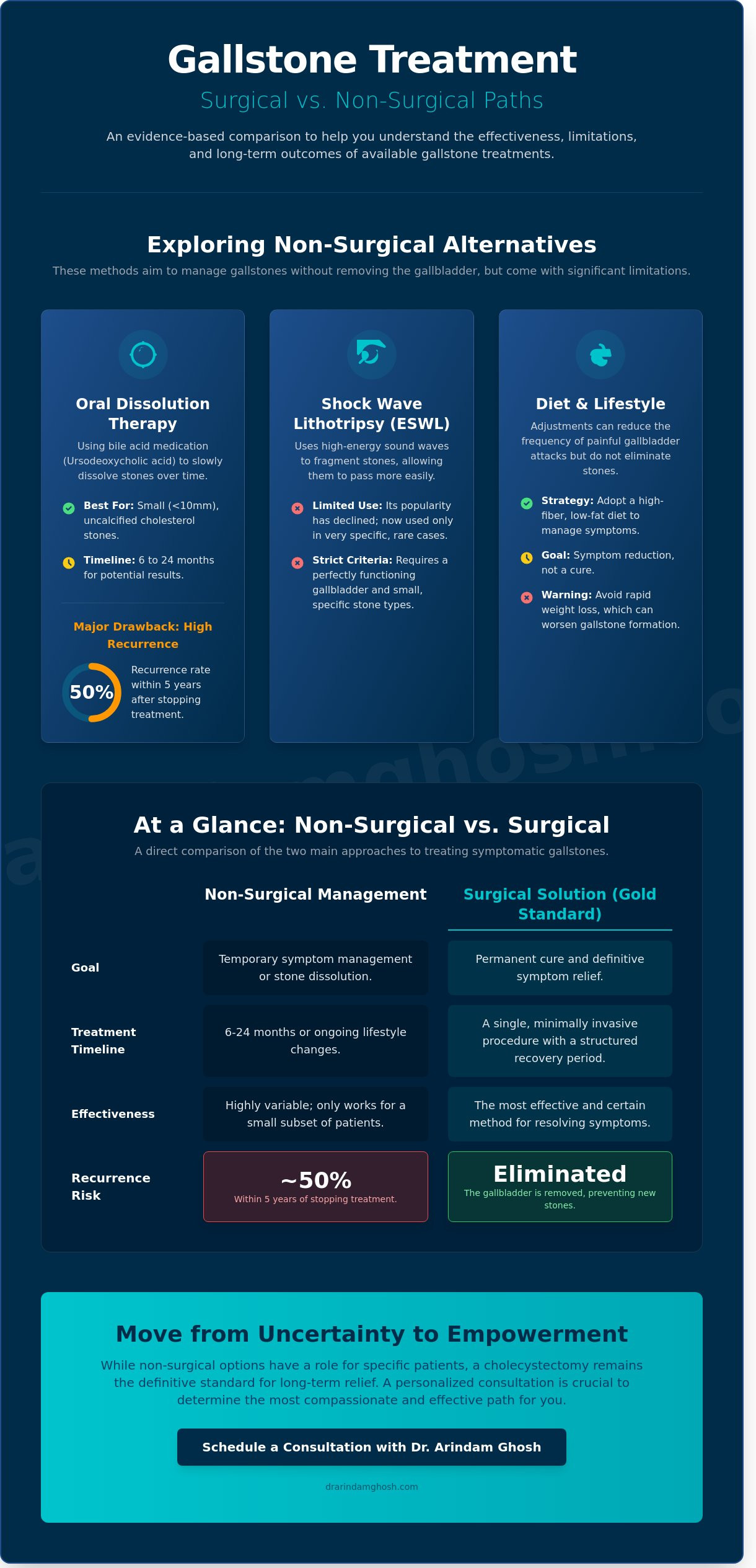
Understanding these Medical and Interventional Alternatives requires a balanced view of modern gastrointestinal care. For instance, Extracorporeal Shock Wave Lithotripsy (ESWL) uses high-energy sound waves to break stones into smaller fragments. While this technology was once widely popular, its use today is limited to very specific cases where stones are small and the gallbladder functions perfectly. In the UAE’s clinical landscape, we prioritize a multidisciplinary approach to ensure that any chosen intervention aligns with the patient’s long-term quality of life.
Oral Dissolution Therapy: Success Rates and Timeline
Oral dissolution therapy involves taking bile acids, specifically Ursodeoxycholic acid, to chemically dissolve stones. This path requires significant patience and discipline. Treatment typically spans 6 to 24 months before visible results appear on imaging. It’s most effective for a very specific group: patients with small, uncalcified cholesterol stones that are less than 10mm in diameter.
- Success Factors: Success depends on the stone composition and the patient’s ability to maintain the medication schedule.
- Recurrence Risks: Research indicates a recurrence rate of nearly 50% within five years once the medication is stopped, as the underlying metabolic environment of the gallbladder remains unchanged.
- Patient Profile: This is often reserved for individuals who cannot undergo anesthesia due to high-risk comorbidities.
ERCP: Managing Stones in the Bile Ducts
Endoscopic Retrograde Cholangiopancreatography (ERCP) is a sophisticated interventional tool rather than a traditional surgery. It allows us to access the biliary system using a flexible endoscope passed through the mouth, avoiding any abdominal incisions. It’s important to distinguish between stones in the gallbladder and those that have migrated into the common bile duct. ERCP is the gold standard for removing duct stones, which can otherwise cause life-threatening jaundice or pancreatitis.
By clearing these blockages endoscopically, we provide immediate relief from acute symptoms. For high-risk patients in UAE hospitals who are too unstable for surgery, we may also utilize percutaneous cholecystostomy. This involves placing a small drainage tube through the skin into the gallbladder to resolve infection. While these methods address the immediate crisis, they don’t always prevent future stone formation. If you’re weighing these options, a comprehensive consultation can help clarify the most sustainable non-surgical treatment for gallstones UAE for your specific diagnosis.
The Role of Diet and Lifestyle in Gallstone Management
Managing gallbladder health involves more than clinical intervention; it requires a dedicated commitment to long-term wellness and metabolic balance. For patients exploring non-surgical treatment for gallstones UAE, dietary adjustments serve as the foundational pillar of care. A low-fat, high-fibre diet minimizes the stimulation of the gallbladder, which prevents the intense, painful contractions often referred to as biliary colic. While these changes don’t typically dissolve existing calcifications, they are highly effective at reducing the frequency and severity of symptomatic episodes.
I frequently encounter patients in Dubai and Abu Dhabi who fall into the rapid weight loss trap. Extreme caloric restriction or “crash dieting” is a significant trigger for stone formation. When the body loses weight too quickly, the liver secretes additional cholesterol into the bile, and the gallbladder fails to contract often enough to empty its contents. This stagnation allows cholesterol to crystallize into stones. I recommend a steady, sustainable weight loss of 0.5 to 1 kilogram per week to protect your digestive system. Maintaining adequate hydration is equally vital, as water ensures bile remains fluid and less viscous, preventing the “sludge” that precedes stone development.
Addressing comorbidities like Type 2 diabetes and obesity is a critical part of a multidisciplinary approach. Clinical evidence suggests that hyperinsulinemia increases the cholesterol saturation of bile. By managing these underlying metabolic conditions, we reduce the physiological stress on the gallbladder and improve your overall quality of life.
The Gallbladder Diet: What to Eat and Avoid
Precision in nutrition is essential for symptom control. Patients should minimize saturated fats found in fried foods, processed meats, and heavy creams, as these require heavy gallbladder activity to digest. Instead, focus on healthy omega-3 fatty acids found in walnuts and flaxseeds, which help maintain bile solubility. A diet rich in soluble fibre and lean proteins can significantly reduce the pressure on a dysfunctional gallbladder. Incorporating pulses, oats, and fresh vegetables helps bind bile acids in the gut, easing the workload on your system.
Natural Remedies: Fact vs. Fiction
The internet is full of “gallbladder flushes” or “liver cleanses” involving large quantities of olive oil and lemon juice. These are medically unverified and carry significant risks. For patients seeking Comprehensive Gallstone Care, it is vital to understand that these flushes can force a large stone into the narrow bile duct, causing a blockage that leads to jaundice or pancreatitis. Lifestyle changes are excellent for managing symptoms and preventing new stones, but they don’t dissolve existing ones. When stones are large or causing frequent pain, we must look toward evidence-based non-surgical treatment for gallstones UAE or minimally invasive interventions rather than unverified herbal remedies.
Non-Surgical vs. Surgical: A Comparative Framework
Choosing between medical management and surgery requires a clear understanding of long-term outcomes versus immediate convenience. While non-surgical treatment for gallstones UAE patients often seek provides a temporary reprieve from the operating room, it rarely addresses the underlying pathology. Medical dissolution therapy or shockwave lithotripsy might seem less invasive, yet these paths often lead to a cycle of recurrence. Clinical data indicates that gallstones return in approximately 50% of patients within five years of successful non-surgical dissolution. This happens because the gallbladder itself remains diseased and prone to stone formation. Relying solely on non-surgical treatment for gallstones UAE protocols can sometimes delay the permanent relief that only a definitive intervention provides.
The most common concern I hear from patients is whether their digestion will be ruined without a gallbladder. It’s a valid fear, but physiologically, your liver continues to produce bile. The gallbladder is merely a storage pouch. Once removed, the bile flows directly into the small intestine. Most people find their digestion actually improves because they’re no longer dealing with the inflammation and pain associated with gallbladder attacks. Your quality of life depends on a digestive system that functions without constant interruption from biliary colic.
When Non-Surgical Treatment Becomes Risky
Delaying definitive care can turn a routine condition into a complex medical emergency. You should recognize red flag symptoms that signal the limits of medical management. Persistent jaundice, high fever, and intractable pain aren’t just uncomfortable; they indicate life-threatening complications like cholecystitis or biliary obstruction. Recurring inflammation causes the gallbladder to become scarred and thickened. This scarring makes future surgery more difficult and increases the risk of complications. There’s also a documented link between chronic, untreated gallstones and an increased risk of gallbladder cancer, a risk that’s eliminated through surgical removal.
The Modern Surgical Standard: Laparoscopic and Robotic Precision
The transition from a state of pain to a state of wellness is now faster than ever. I utilize advanced laparoscopic and robotic-assisted techniques to ensure the highest level of precision. Unlike the months of uncertainty associated with medical dissolution, modern surgery typically allows for a 24-hour recovery period. Most patients return to their normal routines within a week. This approach combines robotic precision with a human touch, focusing on restoring your health through a single, definitive procedure. We prioritize a multidisciplinary approach to ensure your recovery is seamless and your long-term health is secured.
If you’re experiencing recurring pain and want to explore a permanent solution, consult with Dr. Arindam Ghosh to discuss your surgical options in Dubai.
Comprehensive Gallstone Care with Dr. Arindam Ghosh
Dr. Arindam Ghosh brings a sophisticated, multidisciplinary philosophy to gastrointestinal health within the UAE. He understands that every patient’s journey with gallbladder disease is unique. While many patients initially seek non-surgical treatment for gallstones UAE options, the clinical reality often requires a nuanced balance between conservative management and advanced intervention. Dr. Ghosh integrates his deep expertise in gastrointestinal oncology and laparoscopic surgery to ensure that patients don’t just receive a procedure, but a comprehensive pathway to health. He pairs high-tech robotic precision with a compassionate human touch, ensuring that the individual behind the diagnosis remains the central focus of every clinical decision.
Your Consultation: Beyond the Diagnosis
A clinical evaluation with Dr. Ghosh is a thorough, methodical process. It begins with a detailed review of your medical history and a precise analysis of your imaging results, such as high-resolution ultrasounds or MRCP scans. This process isn’t just about identifying the presence of stones; it’s about assessing the gallbladder’s functional state and the risk of acute complications like cholecystitis or biliary colic. During this time, the surgeon and patient engage in a collaborative dialogue. You’ll discuss whether a non-surgical treatment for gallstones UAE is a viable long-term solution or if a minimally invasive surgical approach offers a safer, more definitive outcome for your specific anatomy.
To prepare for this diagnostic evaluation, patients should follow these steps:
- Compile a complete history of symptoms, noting the frequency and duration of abdominal pain.
- Bring all previous diagnostic reports and digital imaging files on a disc or via a secure link.
- Maintain a list of all current medications, including blood thinners or supplements.
- Document any family history of biliary disease or digestive cancers.
Restoring Quality of Life
The ultimate goal of treatment is to restore your freedom. Chronic gallbladder issues often lead to a constant fear of dietary triggers and the debilitating pain of recurrent attacks. Dr. Ghosh’s commitment extends far beyond the operating room or the initial prescription. He focuses on long-term wellness and provides robust post-operative support to ensure a smooth transition back to a normal life. By utilizing the latest advancements in robotic-assisted surgery, he minimizes recovery times and prioritizes patient comfort. This holistic approach ensures that you can return to enjoying your life in the UAE without the shadow of gastrointestinal distress. He views surgery not as a mere clinical task, but as a vital pathway to restoring your meaningful and healthy existence.
Charting Your Course Toward Lasting Digestive Health
Understanding the clinical realities of gallbladder health is the first step toward reclaiming your daily comfort. While dietary changes and medical management offer temporary relief for some, they often fall short of a permanent resolution. Selecting a non-surgical treatment for gallstones UAE residents might explore requires a careful evaluation of recurrence risks compared to the definitive results of modern intervention. Dr. Arindam Ghosh utilizes over 25 years of surgical expertise in the UAE to guide patients through these complex choices. As a specialist in advanced robotic and laparoscopic procedures, he focuses on high-tech precision balanced with deep empathy. His patient-centric approach ensures that every treatment plan prioritizes your long-term quality of life and a seamless return to wellness. You don’t have to manage chronic discomfort alone when expert care is within reach. Trust in a multidisciplinary strategy that puts your health and safety at the center of the journey.
Book an Expert Consultation for Gallstone Treatment
Your path to a healthier, more vibrant life is just one conversation away.
Frequently Asked Questions
Is it possible to dissolve gallstones naturally in the UAE?
Natural remedies like olive oil flushes don’t dissolve gallstones and can cause severe pain by triggering a gallbladder attack. While oral bile acid therapies exist, they only work for small, cholesterol-based stones. Clinical data suggests these medications take 6 to 24 months to show results. Even then, stones return in about 50 percent of cases within five years. It’s better to seek a multidisciplinary approach for a lasting solution.
What happens if I leave symptomatic gallstones untreated?
Leaving symptomatic stones untreated leads to serious complications in about 1 to 4 percent of patients annually. You risk developing acute cholecystitis, which is a severe inflammation, or life-threatening biliary pancreatitis. These conditions often require emergency intervention. In the UAE, approximately 20 percent of untreated symptomatic cases escalate to emergency surgery within a year. Seeking professional guidance early ensures your quality of life remains protected.
Can I live a normal life after gallbladder removal surgery?
You can absolutely live a healthy, full life without a gallbladder. The liver continues to produce bile, which then flows directly into the small intestine instead of being stored. Most patients return to their normal diet within 2 to 3 weeks. Modern robotic precision allows for a faster recovery. Clinical studies show that 95 percent of patients report a complete resolution of symptoms and no long-term digestive issues after the procedure.
Are there any medications that can truly remove gallstones?
Medications like Ursodeoxycholic acid can dissolve small cholesterol stones, but they aren’t a definitive non-surgical treatment for gallstones UAE patients can rely on for permanent relief. These drugs don’t work on calcified stones, which account for about 20 percent of cases. Because the underlying cause of stone formation remains, the success rate is low. Most clinical protocols prioritize more definitive interventions to prevent future attacks and ensure long-term wellness.
How do I know if I am a candidate for non-surgical gallstone treatment?
You might be a candidate for non-surgical options if your stones are smaller than 10 millimeters and composed purely of cholesterol. Doctors typically reserve these methods for patients who have high-risk medical conditions that make anesthesia dangerous. A comprehensive evaluation using ultrasound or CT scans is necessary to determine stone composition. If you’re experiencing frequent, painful attacks, surgery is often the more reliable pathway to restoring your health.
What is the fastest way to stop a gallbladder attack without surgery?
The fastest way to manage an acute attack at home is to stop eating immediately and use over-the-counter anti-inflammatory medication if your doctor allows it. Applying a warm compress to the upper right abdomen for 15 to 20 minutes can provide temporary relief. However, if the pain lasts more than 5 hours or is accompanied by a fever, you must visit an emergency department in the UAE immediately to prevent complications.
Does the UAE have specialized centres for non-surgical gallstone interventions?
Yes, the UAE hosts several advanced medical facilities in Dubai and Abu Dhabi that offer non-surgical treatment for gallstones UAE residents can access. These centres utilize a multidisciplinary team of gastroenterologists and surgeons to evaluate each case. While they offer therapies like lithotripsy or bile acid management, they prioritize clinical safety. They ensure every patient receives personalized care tailored to their specific diagnosis and overall health goals.
Is ERCP considered a surgery for gallstones?
ERCP is an endoscopic procedure rather than a traditional surgery. A specialist passes a flexible tube through your mouth to the bile duct to remove stones that have migrated out of the gallbladder. While it’s minimally invasive, it doesn’t remove the gallbladder itself. This means stones can still form in the future. It’s often used as a life-saving measure to clear blockages before a more permanent surgical solution is performed.