

What if the most vital part of your cancer screening happens in your own home rather than the clinic? According to health data from 2020, colorectal cancer remains the second most common malignancy in the UAE, yet a successful screening depends almost entirely on the quality of your colonoscopy preparation. It’s natural to feel a sense of dread about the liquid diet or the taste of the prep solution. You aren’t alone in these worries; many patients find the anticipation of the laxative effect more stressful than the actual procedure.
I’m here to tell you that this process doesn’t have to be a trial of endurance. You can achieve a clear colon for the best diagnostic results while maintaining your comfort. This guide provides the expert clinical steps you need to navigate the prep day with confidence and ease. We’ll outline exactly which medications to adjust and how to manage hunger, ensuring your path to wellness is both precise and compassionate. Let’s look at the specific timeline that will lead you toward a successful outcome and lasting peace of mind.
Key Takeaways
- Understand how thorough bowel clearing ensures optimal mucosal visibility, allowing for the precise detection and removal of precancerous polyps.
- Learn to structure a methodical seven-day timeline to coordinate medications and dietary transitions effectively with your clinical team.
- Master the essential dietary restrictions and the “Red and Purple Rule” to ensure your colonoscopy preparation meets the highest diagnostic standards.
- Discover expert strategies to improve the palatability of the prep solution and manage physical effects for a more comfortable and dignified experience.
- Gain peace of mind by understanding how modern sedation and personalized care work together to protect your long-term quality of life.
The Vital Role of Colonoscopy Preparation in Colorectal Health
When we discuss colonoscopy preparation, we aren’t just talking about a routine checklist of dietary restrictions. It’s a critical clinical process designed to clear the entire colon of solid waste and liquid, ensuring your surgical team has an unobstructed view of the intestinal lining. This process is a collaborative partnership. Your diligence at home empowers our clinical precision in the procedure room, allowing for a comprehensive evaluation that prioritizes your long-term wellness.
The primary goal of this preparation is mucosal visibility. For a surgeon to identify and remove precancerous colon polyps, the colon wall must be entirely pristine. Even a small amount of residual waste can obscure a lesion that might otherwise be detected and treated. In the UAE’s advanced medical landscape, we utilize the latest diagnostic tools, but their effectiveness depends entirely on the quality of the bowel clearing. It’s a foundational step that bridges the gap between a routine screening and a life-saving intervention.
Why a “Good Enough” Prep Isn’t Sufficient
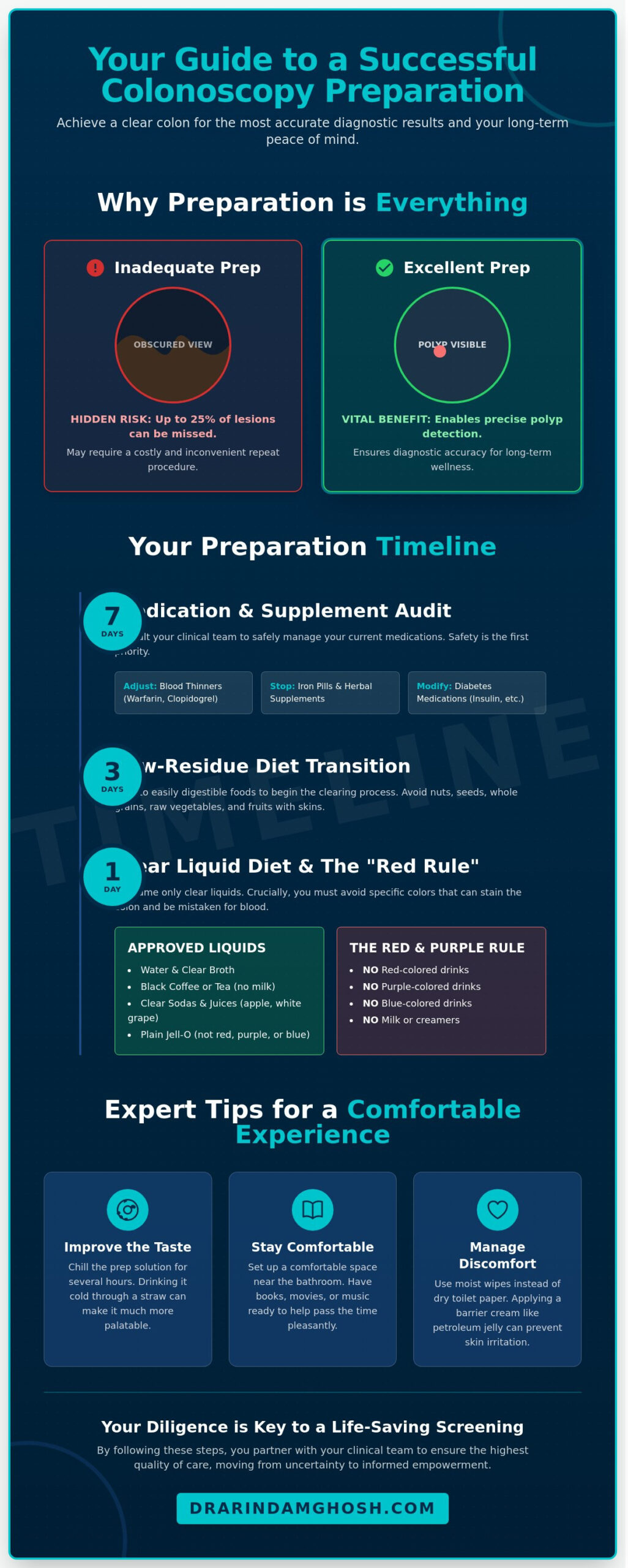
A colon that’s only partially cleared poses significant diagnostic risks. Residual stool can easily mimic or mask abnormal tissue growth, particularly flat or sessile serrated polyps. These specific types of polyps are often difficult to see because they blend into the folds of the colon wall. A 2022 study published in the World Journal of Gastrointestinal Endoscopy highlighted that up to 25% of lesions can be missed when bowel preparation is inadequate. This leads to the “hidden risk” of a false sense of security. If the prep is poor, you may be asked to repeat the entire procedure within a few months, rather than the standard ten-year interval, to ensure nothing was overlooked.
The Surgeon’s Perspective on Diagnostic Accuracy
From a surgical standpoint, the clarity of the environment dictates the success of the procedure. Modern high-definition endoscopes provide incredible detail, but they require a clean surface to function at their peak. We also track a metric called “cecal intubation time,” which measures how efficiently the scope reaches the start of the large intestine. A high-quality colonoscopy preparation allows for a smoother, faster, and more thorough navigation of the colon. Our focus is always on restoring your quality of life through early detection. By following the preparation protocol exactly, you’re helping us ensure that your screening is as accurate and effective as possible, moving you from a state of uncertainty toward informed empowerment.
- Precision: Clearer views lead to higher Adenoma Detection Rates (ADR).
- Safety: A clean colon reduces the time you spend under sedation.
- Efficiency: Proper prep avoids the need for costly and inconvenient repeat procedures.
Your Preparation Timeline: A Step-by-Step Schedule
A successful colonoscopy depends entirely on the clarity of the view inside the bowel. When the colon is thoroughly cleansed, we can identify polyps as small as 2 millimeters, which is vital for early intervention. This process isn’t a single-day event but a week-long transition. It requires a disciplined approach to ensure your safety and the accuracy of the results. By following a structured timeline, you move from a state of uncertainty to one of informed empowerment, ensuring that your colonoscopy preparation is both effective and manageable.
Seven Days Before: Medication and Supplement Audit
Safety begins with a comprehensive review of what you ingest. Seven days before your appointment, we must coordinate on your current prescriptions. Certain medications can interfere with the procedure or increase clinical risks. We often advise patients to pause specific treatments to ensure the best outcome.
- Anticoagulants and Antiplatelets: Medications like Warfarin, Clopidogrel, or other blood thinners may need to be adjusted. We’ll work with your cardiologist or primary physician to create a safe temporary pause.
- Iron and Herbal Supplements: Stop taking iron pills and herbal remedies such as Ginkgo Biloba or St. John’s Wort. These can affect colon visibility or blood clotting.
- Diabetes Management: If you use insulin or oral glucose medications, we’ll provide a modified schedule. Data suggests that 15% of patients require specific dose reductions to maintain safe blood sugar levels while their food intake changes.
Three Days Before: The Low-Residue Transition
Three days before the procedure, you’ll shift to a low-residue diet. This is a vital precursor to the final clearing phase. The goal is to minimize the amount of undigested food in your system. High-fiber foods leave behind “bulk” that can hide small lesions during the scan. By choosing simpler foods, you’re assisting in a more precise and thorough examination.
You should eliminate all seeds, nuts, popcorn, and whole grains from your meals. Avoid raw vegetables and fruits with skins or seeds. Instead, focus on “safe” proteins and refined carbohydrates. White bread, white rice, eggs, and skinless poultry are excellent choices. This dietary shift significantly eases the final 24-hour clearing process. It’s a practical step that prioritizes your comfort and helps our multidisciplinary team achieve the highest diagnostic standards. This phase is less about restriction and more about preparing your body for a successful clinical outcome, ultimately protecting your long-term quality of life.
The final 24 hours before your appointment are the most critical. You’ll move to a strictly clear liquid diet. This ensures that the colonoscopy preparation is complete and the bowel is fully visualized. While this requires focus, remember that it’s a short-term commitment for a vital health insight. We’ll guide you through every hour of this transition to ensure you feel supported and secure.
Mastering the Clear Liquid Diet and Hydration
Transitioning to a clear liquid diet is often the most mentally taxing phase of colonoscopy preparation. We define a clear liquid as any fluid you can see through when held up to a light source at room temperature. This transparency is vital for clinical success. It ensures that the colon lining remains visible for the high-definition cameras used during the procedure, allowing for the precise detection of polyps or abnormalities. This stage isn’t merely about fasting; it’s about optimizing the environment for a thorough diagnostic evaluation.
Approved Liquids vs. Prohibited Items
Maintaining your energy levels throughout the day requires a strategic selection of fluids. You should prioritize white grape juice and apple juice for their natural sugars. Clear vegetable or chicken broths provide necessary sodium to prevent the weakness often associated with fasting. You can enjoy your morning coffee or tea, but you must take it black. Adding milk, half-and-half, or non-dairy creamers is strictly prohibited as these substances create a cloudy residue in the digestive tract.
The “Red and Purple Rule” is a critical safety protocol. You must avoid any liquids, gelatins, or ice pops containing red, blue, or purple food dyes. These pigments don’t always digest fully. During the procedure, they can mimic the appearance of blood or mask underlying tissues, potentially leading to an inaccurate diagnosis or the need for a repeat exam. Stick to yellow, green, or orange options to ensure the highest level of clinical clarity.
- Allowed: Clear broth, black coffee, white cranberry juice, lemon-flavored gelatin.
- Avoid: Milkshakes, orange juice with pulp, tomato juice, and any red-dyed sports drinks.
Hydration Strategy for Clinical Safety
The physiological impact of the prep solution is significant. These formulations work by drawing water into the colon to flush the system, which can rapidly deplete your body’s fluid reserves. Effective colonoscopy preparation requires you to drink more than you think you need. Dehydration isn’t just uncomfortable; it can lead to dizziness, headaches, and even fainting. Watch for early warning signs like dark-colored urine or a persistent dry mouth.
In the UAE climate, where heat can accelerate fluid loss, proactive hydration is even more essential. I recommend using coconut water or electrolyte-enhanced clear liquids to support your system. Coconut water is an excellent, naturally clear source of potassium that helps maintain heart rhythm and muscle function. If you feel hungry, sipping warm broth provides a savory sensation that can help you feel more satiated than plain water. This disciplined approach to hydration protects your quality of life during the fast and ensures your body is stable for the upcoming procedure.
Overcoming “Prep Anxiety”: Expert Tips for a Comfortable Experience
The anticipation of the bowel clearing process often causes more stress than the clinical procedure itself. In my practice, I emphasize that a successful colonoscopy preparation is the foundation of high-precision diagnostics. When the colon is thoroughly cleared, it allows for the identification of even the smallest colon polyps, which is vital for effective gastrointestinal oncology outcomes. Transitioning from anxiety to a state of prepared calm requires a combination of clinical strategy and personal comfort measures.
Palatability Hacks for the Prep Solution
The taste of the purgative solution is a frequent concern for patients. You can significantly improve the experience by chilling the liquid in the refrigerator for at least 4 hours before consumption. Use a straw placed toward the back of the tongue to bypass the majority of your taste buds. Between doses, sucking on a lemon wedge or a sugar-free menthol candy helps neutralize the salty or metallic aftertaste. If you’re using a powder-based kit, ensure the crystals are 100% dissolved by stirring for a full 2 minutes; a gritty texture often triggers a gag reflex that’s easily avoided with patience.
Comfort and Skin Care During the Clearing
The physical process of bowel clearing involves frequent movements that can irritate sensitive skin. I recommend purchasing high-quality medicated wipes infused with aloe or witch hazel rather than using standard dry toilet paper. Applying a thin layer of a barrier cream, such as petroleum jelly or a zinc oxide-based ointment, before the process begins can prevent 80% of the skin irritation associated with the prep. Stay within a 10-second walk of your restroom and wear loose, comfortable clothing like drawstring trousers. If you feel a “chill” due to the rapid intake of cool fluids, don’t hesitate to use a heating pad or a warm blanket to maintain your core temperature.
One of the most significant advancements in patient comfort is the “split-dose” method. Clinical data from the American College of Gastroenterology indicates that splitting the colonoscopy preparation into two sessions, one the evening before and one 4 to 6 hours before the procedure, results in a 90% higher rate of “excellent” bowel cleanliness. This approach is more manageable for your digestive system and leads to a more accurate examination. It’s a collaborative effort where your comfort at home directly supports our surgical precision in the clinic. My goal is to ensure this process feels like a proactive step toward your long-term quality of life rather than a clinical burden.
Transitioning to the Procedure: Peace of Mind and Quality of Life
Completing your colonoscopy preparation is the most significant hurdle in your screening journey. Once you arrive at the surgical facility in the UAE, the focus shifts entirely to your comfort and clinical safety. You’ll be greeted by a clinical team that understands the vulnerability patients feel during diagnostic procedures. After checking in, you’ll be moved to a private preparation area where a nurse will review your medical history and start an intravenous line for fluids and medication.
Sedation is a cornerstone of the modern endoscopy experience. It ensures the procedure is entirely painless and stress-free. Most patients in our facility receive “monitored anesthesia care,” which induces a deep, restful sleep. You won’t feel any discomfort, and you won’t have any memory of the procedure itself. This approach allows Dr. Arindam Ghosh to perform a thorough examination with high-tech precision while you remain in a state of total relaxation. The procedure typically lasts between 30 and 60 minutes, followed by a brief stay in the recovery room as the sedation wears off.
Dr. Ghosh’s methodology combines advanced diagnostic tools with a high-touch compassionate approach. He utilizes high-definition imaging to identify and remove polyps during the same session, effectively preventing cancer before it can start. After you wake up, you’ll receive a preliminary report. While you can usually return to a light diet immediately, you’ll need a companion to drive you home and should avoid making major decisions for 24 hours.
The “Human Touch” in the Endoscopy Suite
Our multidisciplinary team supports you from admission to discharge, ensuring your dignity is maintained at every step. We prioritize addressing last-minute concerns about the findings or the sedation process. This patient-centric care model means you’re never alone. We provide a calm, quiet environment that reflects our commitment to holistic wellness, making the clinical experience feel personal and supportive rather than purely technical.
Restoring Quality of Life Through Screening
A successful colonoscopy is a milestone in your long-term wellness strategy. The relief of knowing your colorectal health is managed by experts allows you to return to your daily life with renewed confidence. By choosing a specialist who values both innovation and integrity, you’re investing in your future health. Most patients find that the peace of mind gained far outweighs the temporary inconvenience of the colonoscopy preparation.
Take the next step in protecting your gastrointestinal health. Schedule your consultation with Dr. Arindam Ghosh for comprehensive GI care and experience a higher standard of surgical expertise in the UAE.
Taking the Next Step Toward Lasting Digestive Wellness
Completing your colonoscopy preparation is the most critical step you’ll take toward preventing colorectal cancer, which remains the second most common cancer in the UAE. By strictly following your 24-hour hydration schedule and clear liquid diet, you ensure your specialist has the clearest view possible to identify and remove precancerous polyps. This proactive approach isn’t just about a medical procedure; it’s about securing your future quality of life through early detection and precise intervention.
Dr. Arindam Ghosh brings over 25 years of specialized surgical and gastroenterology experience to every patient interaction. His multidisciplinary approach to complex gastrointestinal oncology combines high-tech compassion with expertise in advanced minimally invasive and robotic-assisted procedures. You don’t have to navigate these health decisions alone. Consult with Dr. Arindam Ghosh for Expert Gastrointestinal Care to receive a personalized treatment plan tailored to your specific needs. You’ve done the hard work of preparing; now let a dedicated expert guide you toward lasting peace of mind and health.
Frequently Asked Questions
What should I do if I vomit during the colonoscopy preparation?
If you vomit, stop drinking the solution for 30 minutes and then resume in small sips every 10 to 15 minutes. This brief pause gives your digestive system time to settle so you can complete the colonoscopy preparation successfully. It’s a common hurdle, but finishing the fluid is vital for a clear view. If vomiting persists for more than 2 hours, contact our UAE surgical center for immediate guidance.
Can I continue taking my daily medications during the prep day?
You can take most daily medications with small sips of water, but you must discuss blood thinners or diabetes treatments with your doctor 7 days before the procedure. Medications like aspirin or anticoagulants often require specific adjustments to ensure your safety during the screening. Our multidisciplinary team will provide a personalized schedule to manage your prescriptions while prioritizing your long-term quality of life and safety.
How do I know if my bowel preparation is working correctly?
Your bowel preparation is working correctly when your bowel movements consist of a clear, yellowish liquid without solid particles. This transparency allows our team to utilize robotic precision and advanced imaging to detect even the smallest abnormalities. If your output isn’t clear enough to see the bottom of the toilet bowl after finishing the solution, the colon may not be ready for a thorough clinical evaluation.
What happens if I accidentally eat solid food on my clear liquid day?
Contact your surgical team immediately if you consume solid food on your clear liquid day, as we may need to reschedule your appointment. The success of the procedure depends on a completely empty colon. Eating solids within the 24 hour window before the exam can obscure the view. This can potentially lead to a missed diagnosis or the need to repeat the entire process at a later date.
Is it normal to feel bloated or have abdominal cramps during the prep?
Feeling bloated or experiencing mild abdominal cramps is a normal response to the 2 to 4 liters of fluid required for the prep. These sensations usually subside as your bowels begin to clear. Walking around your home for 10 to 15 minutes can help move gas through your system and alleviate discomfort. We prioritize your comfort and view this temporary phase as a necessary step toward restoring your long-term wellness.
Can I drink alcohol during the days leading up to my colonoscopy?
You should avoid all alcoholic beverages for at least 48 hours before your scheduled colonoscopy. Alcohol contributes to dehydration and can interact poorly with the sedatives used during the procedure. Maintaining proper hydration with water and electrolyte drinks is essential for a safe experience. Our goal is to ensure the highest standards of clinical safety and care for every patient in the UAE community.
How soon after the procedure can I eat a normal meal again?
You can typically eat a light meal 30 to 60 minutes after your procedure once the initial effects of sedation wear off. Start with easy to digest foods like soup or toast before returning to your regular diet later in the day. Restoring your quality of life through proper nutrition is an important part of the recovery journey after a successful screening and multidisciplinary health assessment.
Why are red and purple liquids banned before a colonoscopy?
Red and purple liquids are banned because the food dyes can stain the colon walls and look exactly like blood during the exam. This discoloration can lead to inaccurate results or mask actual medical issues. Stick to light colored liquids like apple juice or clear broths to ensure the physician has a perfect, unobstructed view of your gastrointestinal health. This precision is vital for an accurate and successful screening.