

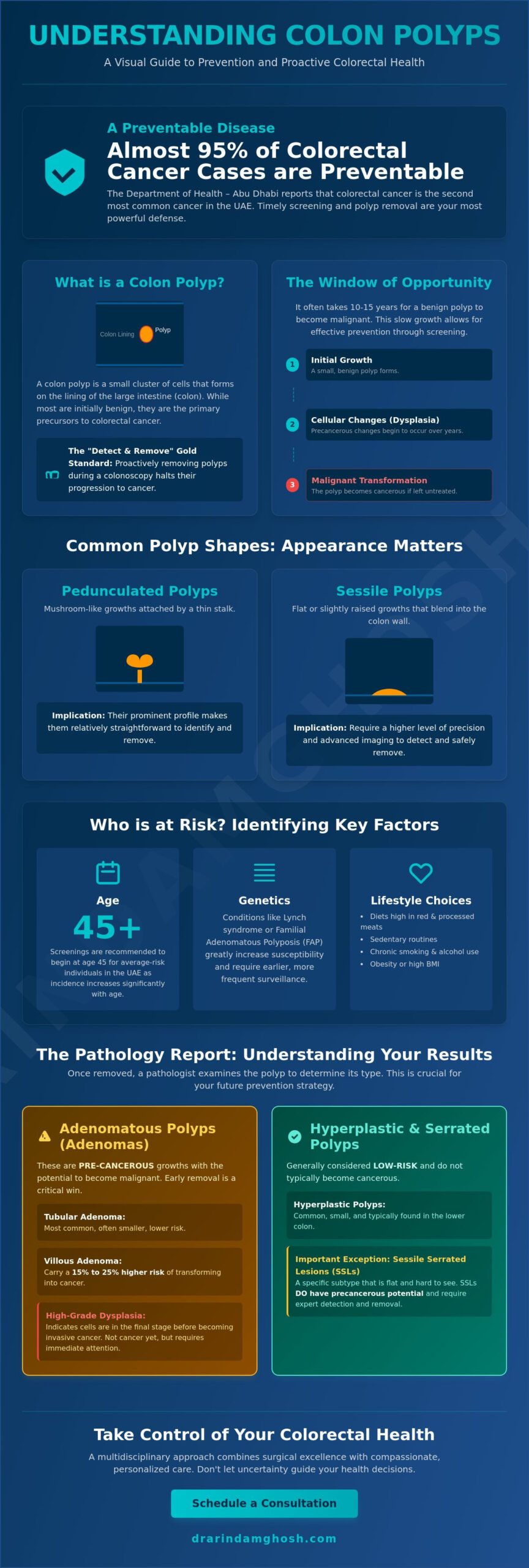
The Department of Health – Abu Dhabi reports that colorectal cancer is the second most common cancer in the UAE, yet almost 95% of these cases are preventable with timely intervention. It’s completely normal to feel a heavy sense of anxiety when you hear the term colon polyps or encounter confusing labels like “adenoma” in your medical reports. You aren’t alone in fearing a diagnosis or feeling hesitant about the preparation required for a colonoscopy.
I’ve designed this guide to replace that uncertainty with clinical clarity and a compassionate path forward. You’ll gain a thorough understanding of why these growths form, how we distinguish between benign and precancerous types, and the precise steps we take for their safe removal. We’ll look at how a multidisciplinary approach to screening serves as a powerful shield for your health, ensuring that your quality of life remains the priority through every stage of personalized care.
Key Takeaways
- Distinguish between different types of growths to understand which require immediate medical attention for long-term colorectal health.
- Learn why colon polyps are often asymptomatic and why early detection remains the gold standard for preventing advanced health challenges.
- Explore the seamless process of detection and removal during a single procedure, designed to protect your wellness with clinical precision.
- Discover how a multidisciplinary approach combines surgical excellence with a compassionate human touch to ensure a superior quality of life.
What are Colon Polyps? Understanding the Basics
A colon polyp represents a small growth of cells forming on the lining of your large intestine, also known as the colon. While the majority of these growths begin as benign, they serve as the primary precursors to colorectal cancer. In the field of gastrointestinal oncology, we view every polyp as a potential window of opportunity for prevention. Because it often takes 10 to 15 years for a benign growth to transform into a malignancy, early identification through screening is your most effective defense. This slow progression allows us to intervene long before a serious health crisis develops.
Our clinical approach follows a strict “detect and remove” gold standard. This proactive strategy ensures that we eliminate risks before they evolve into complex surgical challenges. By removing these growths during a routine colonoscopy, we effectively halt the progression toward cancer. This methodology prioritizes your long-term quality of life and wellness, moving the focus from reactive treatment to high-precision prevention. It’s a collaborative journey where modern diagnostic tools meet specialized surgical expertise to ensure your safety.
Common Shapes and Appearances
The physical structure of colon polyps often determines the surgical technique we employ for removal. Pedunculated polyps resemble small mushrooms attached to the intestinal wall by a thin stalk. Their prominent profile makes them relatively straightforward to identify and remove using a wire snare. Conversely, sessile polyps are flat or slightly raised, often blending into the surrounding tissue. These require a higher level of clinical precision and advanced imaging technology to detect and safely excise. Identifying these variations is crucial for a successful, comprehensive screening.
Who is at Risk? Identifying Key Factors
Risk factors vary across the population, but age remains the most significant variable. In the United Arab Emirates, health authorities and the Department of Health recommend that screenings begin at age 45 for average-risk individuals. This age threshold is critical because the incidence of colon polyps increases significantly as we mature. Genetic conditions also play a role. Conditions like Lynch syndrome or Familial Adenomatous Polyposis (FAP) significantly increase susceptibility and require specialized, frequent surveillance from a younger age.
Lifestyle choices within our local community also influence your risk profile. We often see a correlation between polyp development and specific habits:
- Diets high in red and processed meats.
- Sedentary routines with low physical activity.
- Chronic smoking and high alcohol consumption.
- Obesity or a high Body Mass Index (BMI).
Understanding these variables allows us to create a personalized care plan tailored to your specific health profile. By combining robotic-assisted precision with a deep understanding of these risk factors, we can provide a pathway to restoring and maintaining your digestive health.
The Pathology of Polyps: Adenomas vs. Hyperplastic Growths
Identifying colon polyps during a screening is a proactive step toward safeguarding your long-term health. Once a growth is removed, the focus shifts to the pathology lab. Here, a pathologist examines the tissue architecture to determine if the growth is neoplastic or non-neoplastic. Neoplastic polyps, such as adenomas, possess the biological potential to become cancerous over several years. Non-neoplastic polyps, like standard hyperplastic growths, generally don’t share this risk. This distinction is the foundation of your future prevention strategy.
The pathologist’s findings dictate your personal risk profile. If your report shows more than three polyps or any single growth larger than 10mm, clinical guidelines suggest a more frequent surveillance schedule. Hearing the term “adenoma” isn’t a reason for immediate alarm. It’s a signal for disciplined vigilance. By removing these growths early, we effectively interrupt the progression toward malignancy, ensuring your recovery is rooted in prevention rather than intensive treatment.
Adenomatous Polyps (Adenomas)
Adenomas are the most common type of precancerous growth. They’re categorized by their growth patterns: tubular, villous, or a mix called tubulovillous. Tubular adenomas are often smaller and carry a lower risk. In contrast, villous adenomas feature long, finger-like projections and carry a 15% to 25% higher risk of transforming into cancer. When a report mentions “high-grade dysplasia,” it means the cells look significantly disorganized under the microscope. While this isn’t cancer yet, it represents the final stage before a polyp becomes invasive. Removing these high-risk lesions is a critical win for your quality of life.
Serrated and Hyperplastic Polyps
Hyperplastic polyps are frequently found in the lower colon and are typically considered low-risk. However, a specific subtype known as sessile serrated lesions (SSLs) requires expert attention. These “hidden” polyps are often flat and blend into the folds of the colon wall, making them difficult to spot with standard equipment. In the UAE, specialized endoscopic tools like narrow-band imaging are essential for detecting these subtle growths before they evolve. Because SSLs can follow a faster path to malignancy, their detection relies on a combination of advanced technology and a meticulous clinical approach. If you’ve received a complex pathology report, seeking specialized gastrointestinal guidance can help translate these clinical findings into a clear, actionable wellness plan.
The Silent Nature of Polyps: Symptoms vs. Reality
Many patients visit my clinic in Dubai under the impression that a growth in the colon would naturally cause noticeable discomfort. This is a dangerous misconception. Colon polyps are remarkably deceptive because they develop without disrupting your daily routine or triggering pain receptors. If you wait for your body to signal that something is wrong, you might miss the most effective window for simple, preventative care.
The reality is that most polyps remain entirely asymptomatic for years. By the time physical changes become obvious, the polyp has often grown significantly or begun a transition toward malignancy. My clinical approach prioritizes finding these growths while they’re still silent, ensuring we can manage them with minimally invasive techniques rather than complex surgical interventions.
The “Invisible” Threat
Small polyps, particularly those under 10 millimeters, rarely cause any physical sensation. Statistical data shows that roughly 25% of adults over the age of 50 have polyps without knowing it. These growths don’t usually bleed or obstruct the colon in their early stages. The “silent window” is the period when a polyp exists but hasn’t yet caused symptoms, providing the optimal time for a specialist to intervene and remove the threat entirely.
When Symptoms Do Occur
While we aim for early detection, larger polyps or those located in the lower rectum may eventually present warning signs. It’s vital to monitor your body for subtle shifts that last longer than two or three weeks. These symptoms don’t always mean you have a serious condition, but they do require a professional evaluation to rule out risks. You should be mindful of:
- Persistent bowel changes: Any shift in your regular habits, such as constipation or diarrhea, that doesn’t resolve within 14 days.
- Visible or hidden blood: This includes bright red streaks on stool or very dark, tarry stools that suggest bleeding higher up in the digestive tract.
- Chronic fatigue: Often caused by iron-deficiency anemia, which results from microscopic, long-term blood loss that you can’t see with the naked eye.
- Abdominal distress: Unexplained cramping or localized pain that doesn’t have a clear dietary cause.
In my practice, I utilize diagnostic colonoscopy as the gold standard for identifying colon polyps before they escalate into a larger health challenge. This proactive strategy is designed to protect your quality of life. We use advanced imaging to spot even the smallest lesions, allowing for immediate removal during the same procedure. This seamless integration of technology and clinical expertise ensures that your path to wellness is both thorough and compassionate.
Detection and Removal: The Gold Standard Procedure
Colonoscopy stands as the definitive gold standard for managing colon polyps because it functions as both a diagnostic and therapeutic tool. In a single session, we can identify a growth and remove it immediately. This dual capability is a cornerstone of modern preventive oncology. It eliminates the gap between finding a potential issue and treating it, which offers patients immense peace of mind. By utilizing high-definition imaging, I can visualize the smallest changes in the mucosal lining, ensuring that no suspicious tissue is overlooked. This proactive approach is the most effective way to stop the progression of colorectal disease before it starts.
The benefit of these minimally invasive techniques lies in their precision. Patients often worry about the complexity of the procedure, but the reality is designed for comfort and a painless recovery. While smaller growths are straightforward to manage, expert hands are essential for removing large or complex polyps. These “difficult” polyps might be located in hard-to-reach folds of the colon or have a flat shape that makes them harder to excise. Using advanced endoscopic techniques allows us to remove these safely without the need for traditional open surgery, preserving the integrity of the colon and ensuring a faster return to daily activities.
What to Expect During a Polypectomy
If I identify a polyp during your screening, I perform a polypectomy right then. This process involves passing specialized tools through the colonoscope. We typically use a wire loop, known as a snare, or biopsy forceps to excise the growth. To ensure safety, we use cauterization. This method uses a mild electrical current to seal the site and prevent bleeding instantly. It’s a bloodless process that prioritizes patient safety. Once removed, we don’t just discard the tissue. Every specimen is retrieved and sent for detailed laboratory analysis. This pathology report is a critical piece of the puzzle, as it dictates your future screening schedule and long-term health plan.
Recovery and Post-Procedure Care
Recovery is usually swift and manageable. Most patients in the UAE are ready to go home within 60 to 90 minutes after the procedure once the sedative wears off. You’ll be able to return to a normal diet almost immediately, though I usually recommend starting with something light. It’s common to feel some mild bloating or gas for a few hours. This is a normal result of the air used to expand the colon for better visibility. It isn’t a cause for alarm and typically resolves on its own by the evening.
The timeline for your next visit depends entirely on what the pathologist finds. If the colon polyps were benign and few in number, you might not need another check-up for 5 or 10 years. However, if the analysis shows specific high-risk features, we might suggest a follow-up in 3 years. This personalized surveillance is based on the latest 2024 international clinical guidelines, ensuring your care is scientifically grounded. My goal is to lead you from a state of uncertainty toward informed empowerment, focusing on your long-term quality of life. To ensure the most accurate results from your screening, following a thorough colonoscopy preparation protocol is just as important as the procedure itself.
If you’re due for a screening or have concerns about your digestive health, it’s time to take a proactive step for your future. Schedule a consultation with Dr. Arindam Ghosh to discuss your personalized prevention plan.
A Multidisciplinary Approach to Colorectal Wellness
Dr. Arindam Ghosh operates on a philosophy where robotic precision meets a compassionate human touch. He understands that a diagnosis involving colon polyps can cause anxiety, so he prioritizes a calm, informative environment. His approach isn’t limited to the surgical suite. He views every procedure as part of a larger, comprehensive care plan designed to safeguard your future. By integrating a multidisciplinary team, he ensures that every aspect of your digestive health is monitored with clinical rigor and genuine empathy.
Choosing a specialist with extensive experience in gastrointestinal oncology adds a vital layer of safety to your care. Dr. Ghosh’s background allows him to look beyond the surface, identifying subtle cellular changes that might be missed during routine checks. This oncology-focused perspective means he treats every screening with the gravity it deserves. The ultimate goal is always your quality of life, ensuring you return to your daily routines in the UAE with the peace of mind that your health is in expert hands.
Personalised Screening Programmes
Generic health advice doesn’t account for the unique variables of your life. Dr. Ghosh develops screening schedules tailored specifically to your individual risk profile and family history. In the UAE, medical guidelines often suggest starting screenings earlier if there’s a family history of malignancy. These bespoke programmes include:
- Customized colonoscopy intervals based on the size and type of previously detected colon polyps.
- Direct nutritional guidance aimed at reducing inflammation and preventing new growth formation.
- A collaborative framework where the patient and surgeon work together on lifelong digestive maintenance.
This partnership transforms the patient from a passive recipient of care into an informed advocate for their own wellness. It’s a proactive strategy that focuses on prevention rather than just reaction.
Innovation in GI Care
The landscape of gastroenterology is changing rapidly through technological advancement. Dr. Ghosh utilizes high-definition imaging and Narrow Band Imaging (NBI) to detect flat or recessed polyps that are often invisible under standard light. These subtle lesions can be more dangerous if left unnoticed, but modern tools allow for their safe removal during a standard procedure. His mastery of robotic and laparoscopic techniques informs his steady-handed approach to every endoscopic task.
Patients should feel a sense of profound reassurance. While the transition from a routine check to a surgical intervention can feel daunting, modern medicine has made these challenges highly manageable. Polyps are preventable and treatable when caught early. Dr. Ghosh’s dedication to innovation and integrity ensures that you receive the highest standard of care available, focusing on long-term health and a quick return to a meaningful, healthy existence.
Prioritizing Your Long-Term Colorectal Health
Recognizing that colon polyps are frequently asymptomatic is the first step toward proactive health management. While many growths begin as benign adenomas, their silent nature means that regular screenings aren’t just a medical recommendation; they’re a vital preventative measure. Early intervention transforms a potential risk into a manageable health milestone. This ensures your quality of life remains the primary focus throughout your wellness journey.
Dr. Arindam Ghosh brings over 25 years of specialized gastrointestinal surgical experience to every consultation. His expertise in advanced robotic and laparoscopic interventions ensures that patients receive the highest level of clinical precision with a gentle, human touch. By providing comprehensive care across premier hospitals in the UAE, Dr. Ghosh bridges the gap between complex surgical oncology and compassionate recovery. You don’t have to navigate these health decisions alone. Taking action today can prevent complications tomorrow.
Schedule a comprehensive colorectal screening with Dr. Arindam Ghosh
Your path to lasting health starts with a single, informed choice.
Frequently Asked Questions
Are colon polyps always cancerous?
No, most colon polyps are not cancerous, though they’re the precursors to most colorectal cancers. Statistics show that while roughly 30 percent of adults over age 50 develop these growths, only about 5 percent to 10 percent of adenomatous polyps eventually become malignant. Our goal is to identify and remove them during routine screenings before they have the chance to transform, ensuring your long term health and peace of mind.
How fast do colon polyps grow into cancer?
The progression from a small polyp to a malignant tumor is typically a slow process that takes 10 to 15 years. This long window of development is exactly why regular screening is so effective. By identifying colon polyps in their early, benign stages, we can intervene early. This proactive approach significantly improves outcomes and often prevents the need for more intensive oncological treatments later in life.
Can colon polyps cause pain or bloating?
Most polyps don’t cause any noticeable pain or bloating because they’re typically small and don’t obstruct the digestive tract. However, if a polyp grows larger than 2 centimeters, it might cause changes in bowel habits or minor abdominal discomfort. Because symptoms are rare, we don’t wait for pain to occur. We rely on precise diagnostic tools to detect these growths during their silent stages.
What is the difference between a polyp and a hemorrhoid?
A polyp is a growth on the internal lining of your colon, while a hemorrhoid is a swollen vein in the lower rectum or anus. While both can cause rectal bleeding, they’re distinct conditions with different risks. Hemorrhoids are generally benign and don’t lead to cancer. In contrast, certain types of colon polyps require removal because they have the potential to become malignant over several years.
Should I be worried if my doctor found multiple polyps?
Finding multiple polyps isn’t an immediate cause for alarm, but it does mean we’ll tailor a more frequent screening schedule for you. If a specialist finds three or more adenomas, clinical guidelines in the UAE often recommend a follow up colonoscopy within 3 to 5 years rather than the standard 10 year interval. This personalized care plan ensures we monitor your colon health with the highest level of vigilance.
Can I prevent colon polyps through diet and lifestyle?
You can significantly lower your risk of developing colon polyps by adopting a high fiber diet and maintaining an active lifestyle. Research indicates that a diet rich in fruits, vegetables, and whole grains can reduce polyp recurrence by up to 40 percent. We encourage patients to limit processed meats and maintain a healthy weight, as these holistic choices work alongside medical screenings to protect your digestive wellness.
What happens if a polyp is too large to be removed during a colonoscopy?
If a polyp is too large or complex for a standard colonoscopy, we utilize advanced minimally invasive techniques like robotic assisted surgery. This technology allows for extreme precision, removing the growth while preserving the surrounding healthy tissue. Our multidisciplinary team focuses on these high tech solutions to ensure a quick recovery and a high quality of life, avoiding the need for traditional, open abdominal surgery.
Is a colonoscopy the only way to find polyps?
While a colonoscopy is the gold standard for detection and immediate removal, other options like CT colonography or stool based tests exist. In the UAE, health authorities often recommend starting screenings at age 40 for certain populations. However, if a stool test returns a positive result, a follow up colonoscopy is still necessary to remove any detected colon polyps and confirm the diagnosis through pathology. Understanding the steps involved in colonoscopy preparation can help you feel more confident and comfortable before your procedure.