

Imagine waking up at 2:00 AM with a sharp, stabbing sensation just below your ribs that you initially mistake for a heavy dinner. You might find yourself searching for what does a gallbladder attack feel like as the discomfort radiates toward your right shoulder and refuses to subside with standard antacids. It’s unsettling to face such unpredictable pain, and it’s natural to feel anxious about whether your symptoms signal a need for surgery or a simple case of indigestion. We recognize that this uncertainty can be just as taxing as the physical discomfort itself.
You deserve a clear, clinical understanding of these sensations so you can replace fear with a structured plan for your wellness and quality of life. This guide provides a compassionate look at the specific warning signs of biliary colic, helping you distinguish them from common gastrointestinal issues. We’ll explore the role of modern robotic precision in treatment and identify the exact red flags that require immediate medical attention at a UAE healthcare facility. By the end of this article, you’ll have the clarity needed to make informed decisions alongside a multidisciplinary team dedicated to your long term health.
Key Takeaways
- Identify the sudden, “gripping” pain in the upper right quadrant and understand exactly what does a gallbladder attack feel like compared to ordinary indigestion.
- Discover the clinical relationship between gallstones and biliary colic to understand why pain often radiates from the abdomen to the back or shoulder.
- Gain diagnostic clarity by learning how to distinguish gallbladder symptoms from acid reflux (GERD) to ensure you seek the most appropriate medical pathway.
- Recognize the critical “red flag” symptoms that indicate when gallbladder inflammation has progressed into a medical emergency requiring immediate attention.
- Explore how modern laparoscopic cholecystectomy offers a minimally invasive, gold-standard surgical solution to restore your long-term quality of life.
Defining the Sensation: What a Gallbladder Attack Actually Feels Like
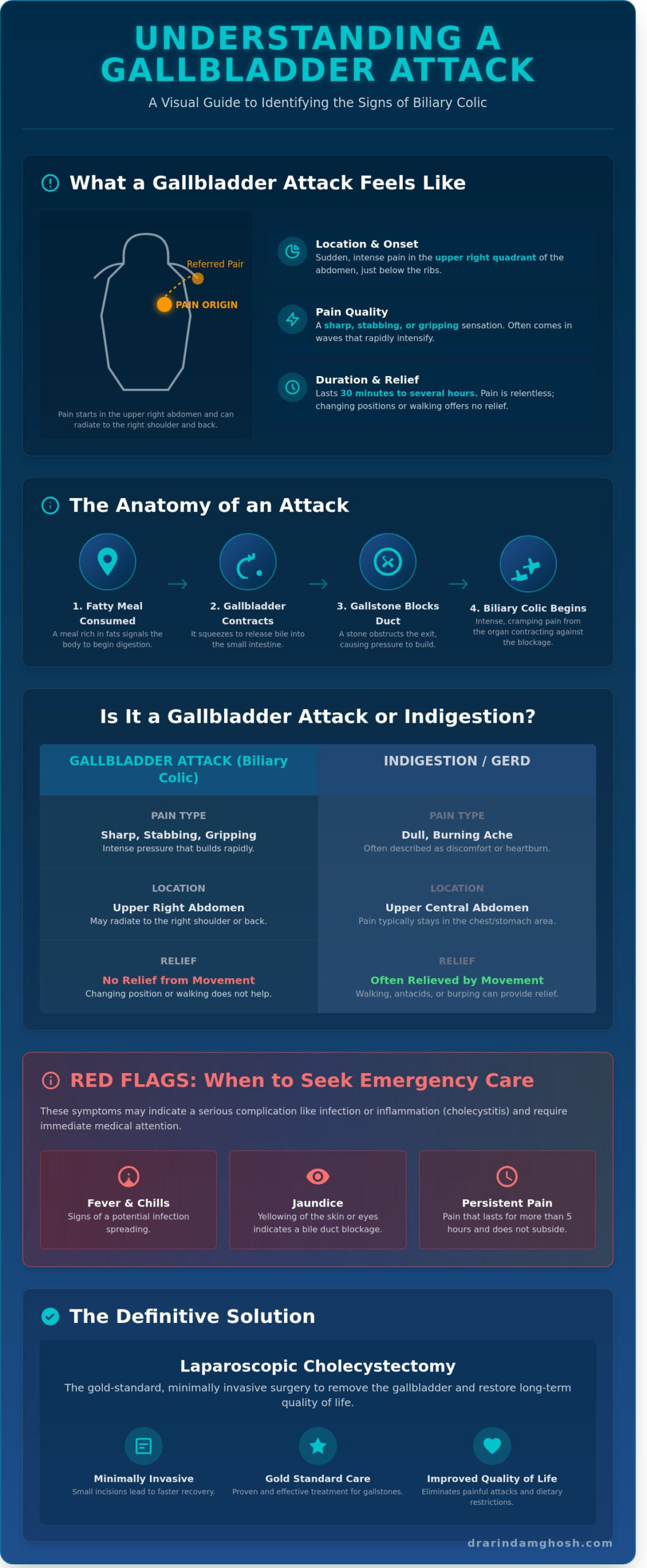
Understanding what does a gallbladder attack feel like begins with recognizing that it isn’t just simple stomach discomfort. In my clinical practice, patients often describe a sudden, gripping sensation that originates in the upper right quadrant of the abdomen, just below the ribs. This experience is medically known as Biliary colic. It typically starts abruptly and can last anywhere from 30 minutes to several hours before the intensity begins to fade.
For many residents in the UAE, these episodes frequently occur late at night or shortly after consuming a heavy meal rich in fats. The timing is predictable because the gallbladder contracts to release bile for digestion. If a gallstone is present, this contraction pushes the stone against the opening of the cystic duct. This creates a deep, intense pressure that can radiate to the back or the right shoulder blade. It’s a precise, localized distress that demands your full attention.
The Quality and Intensity of the Pain
While indigestion often feels like a dull, burning ache, a gallbladder attack presents as a sharp, stabbing pressure. Many patients report “waves” of pain that intensify rapidly before plateauing at a high level of discomfort. A hallmark sign of this condition is the inability to find relief through movement. Unlike gas pain, which might improve with walking or changing positions, biliary colic often leaves patients pacing or writhing. You simply cannot find a comfortable posture. This relentless nature helps distinguish it from other gastrointestinal issues.
Associated Physical Symptoms
The intense abdominal pressure frequently triggers a secondary response from the autonomic nervous system. This leads to sudden nausea and vomiting as the body reacts to the internal blockage. Even after the most acute pain subsides, a lingering feeling of “fullness” or bloating may persist for hours. When asking what does a gallbladder attack feel like, it’s important to remember it’s a comprehensive physical experience that affects your overall quality of life.
The Science of Biliary Colic: Why Gallbladder Pain Radiates
Your gallbladder serves as a reservoir for bile, a fluid synthesized by the liver to emulsify fats. When you consume a meal, particularly one containing more than 20 grams of fat, this pear-shaped organ contracts to release its contents into the small intestine. However, when cholelithiasis (gallstones) occurs, these hardened deposits can physically obstruct the gallbladder’s outlet. This mechanical blockage triggers a cascade of pressure and inflammation within the gallbladder wall. To understand what does a gallbladder attack feel like, one must look at this internal struggle. The organ continues to contract against an immovable object, leading to the intense, cramping sensation known as biliary colic. While the physics of the blockage are clear, the human touch in diagnosis involves listening to how this pressure translates into your unique experience of pain.
Understanding Referred Pain
Patients often feel confused when pain manifests far from the abdomen. This phenomenon happens because the phrenic nerve, which provides sensation to the diaphragm and gallbladder area, shares a neural pathway with the nerves supplying the right shoulder. When the gallbladder is inflamed, the brain misinterprets the signals as coming from the shoulder blade or the right side of the neck. Understanding what does a gallbladder attack feel like requires recognizing that the pain isn’t always localized to the stomach. Clinicians often look for the Boas sign, a specific area of increased sensitivity located just below the right shoulder blade. This diagnostic marker helps us differentiate gallbladder issues from simple muscular strain, ensuring a more accurate path toward recovery. Approximately 15% of patients experiencing biliary colic report this specific radiation, making it a vital clue during a clinical consultation.
The Trigger: Post-Prandial Attacks
The timing of these episodes is rarely accidental. After you eat, your small intestine releases a hormone called cholecystokinin. This chemical messenger tells the gallbladder to squeeze. If a stone is present, this contraction can push the stone directly into the cystic duct, creating a physiological trap. High-fat meals, common in many UAE dining traditions, are the most frequent catalysts for these acute episodes. If the blockage persists, it can lead to cholecystitis, requiring expert intervention. For those seeking clarity, reviewing the Diagnosis and treatment of cholecystitis provides a foundational understanding of how medical teams approach this inflammation. My goal is always to move beyond the procedure and focus on restoring your long-term quality of life through personalized surgical care. By combining robotic precision with a deep understanding of these biological triggers, we can address the root cause of your discomfort.
Diagnostic Clarity: Is it a Gallbladder Attack or Something Else?
Patients often arrive at my clinic feeling overwhelmed by the ambiguity of their physical symptoms. It’s common to wonder exactly what does a gallbladder attack feel like because the human abdomen is home to several organs that signal distress in similar ways. Distinguishing biliary colic from common issues like acid reflux or more serious cardiac events requires a methodical, clinical eye. In the UAE, where lifestyle factors contribute to a high prevalence of metabolic conditions, approximately 12% of the adult population may develop gallstones according to regional health studies. This makes precise diagnosis essential to ensure you receive the right care at the right time. My role is to lead you through this uncertainty with a combination of advanced diagnostics and a compassionate, patient-centered perspective.
Gallbladder Pain vs. Gastritis and Ulcers
Gastritis and peptic ulcers are frequent culprits that mimic gallbladder distress. A key differentiator is the body’s response to food. If you’re dealing with a gastric ulcer, a small snack might temporarily soothe the burning sensation by buffering stomach acid. Conversely, gallbladder pain typically intensifies 30 to 90 minutes after eating, particularly after a meal rich in fats. The location also offers a clue. While ulcers usually cause discomfort in the epigastric region, which is the center of the upper abdomen, gallbladder pain often shows right-side dominance. I frequently utilize diagnostic endoscopy or high-resolution ultrasound to rule out gastric issues, ensuring we target the true source of your discomfort with clinical rigor.
The “Great Mimic”: Gallbladder vs. Heart Attack
The most critical distinction involves the heart. Because the nerves serving the gallbladder and the heart follow similar pathways, a severe attack can sometimes be mistaken for a cardiac event. When evaluating what does a gallbladder attack feel like, it’s vital to look for specific red flags that point toward the chest rather than the abdomen. A heart attack often presents with shortness of breath, cold sweats, and pain that radiates to the jaw or the left arm. Gallbladder pain, while intense, typically stays localized to the upper abdomen or the right shoulder blade. While gallbladder pain is distressing, a surgical consultation can provide the clarity needed to distinguish it from life-threatening cardiac issues. By utilizing a multidisciplinary approach, we ensure that every diagnostic step is taken to protect your long-term wellness and restore your quality of life.
Recognising the Red Flags: When Gallbladder Pain Becomes an Emergency
Understanding what does a gallbladder attack feel like is the first step toward recovery, but it’s vital to know when the situation shifts from a manageable episode to a clinical emergency. While a standard attack usually subsides within one to six hours, persistent pain suggests the condition has evolved. Cholecystitis represents a significant progression from simple gallstones. This occurs when the gallbladder wall becomes severely inflamed or infected, often because a stone is permanently lodged in the cystic duct. If you leave a symptomatic gallbladder untreated, you risk serious complications like gallbladder perforation or gangrene, which require urgent surgical intervention to protect your long-term health.
Signs of Infection and Obstruction
When a gallstone migrates out of the gallbladder and enters the common bile duct, it creates a physical blockage that disrupts the entire biliary system. This obstruction isn’t just painful; it’s a systemic threat that manifests through several specific indicators:
- Jaundice: This is a visible yellowing of your skin and the whites of your eyes. It happens because bilirubin, a waste product in bile, backs up into your bloodstream instead of being excreted.
- Fever and chills: These are clear signals that your body is fighting an active infection, often associated with acute cholecystitis or cholangitis.
- Stool and urine changes: Bile is responsible for the brown colour of stool. If you notice pale, clay-coloured stools or dark, tea-coloured urine, your biliary system is likely failing to function correctly.
These symptoms demand immediate attention. My practice focuses on a multidisciplinary approach to ensure that these obstructions are cleared quickly, often using robotic-assisted techniques to restore your quality of life with minimal downtime.
The Risk of Gallstone Pancreatitis
A gallstone can also travel further down the ductal system and block the pancreatic duct. This is a dangerous scenario because it causes digestive enzymes to trap inside the pancreas, leading to auto-digestion and intense inflammation. You’ll experience a sharp, piercing pain in the centre of your abdomen that radiates straight through to your back. This pain is typically accompanied by persistent vomiting and a rapid pulse. If abdominal pain is accompanied by a fever over 38°C or yellowing of the skin, seek immediate surgical evaluation to prevent systemic complications.
Decisive action is your best tool for a successful recovery. We combine clinical rigor with high-tech compassion to guide you through these complex moments. If you’re worried about your symptoms or have experienced recurring pain, consult with a specialist in gastrointestinal surgery to explore a personalized treatment plan designed for your safety and wellness.
Definitive Care: Modern Surgical Pathways to Restoring Your Health
When the intense pain of biliary colic becomes a recurring disruption, the focus shifts from managing symptoms to finding a permanent solution. Laparoscopic cholecystectomy stands as the global gold standard for gallbladder removal. This minimally invasive technique replaces the large abdominal incisions of the past with a few tiny openings, often less than one centimeter each. By utilizing specialized cameras and instruments, surgeons can remove the gallbladder with exceptional clarity. This approach significantly reduces post-operative discomfort and allows patients in the UAE to return to their daily routines much faster than traditional open surgery.
For more complex cases, such as those involving significant inflammation or anatomical variations, robotic-assisted surgery offers a higher tier of precision. This technology combines the surgeon’s expertise with enhanced 3D visualization and wristed instruments that move with greater flexibility than the human hand. It’s a perfect marriage of robotic precision and the human touch. Even after the organ is removed, your body continues to function effectively. The liver still produces bile, which now flows directly into the small intestine to aid digestion. You can look forward to a life free from the fear of when the next episode might strike.
The Surgical Consultation Process
Your journey toward recovery begins with a comprehensive clinical evaluation. We utilize high-resolution ultrasound, which has a 95% sensitivity rate for detecting gallstones, alongside specific blood tests to check liver function and inflammatory markers. This diagnostic phase isn’t just about data; it’s a collaborative dialogue where we align the surgical plan with your personal health goals. Understanding what does a gallbladder attack feel like helps us appreciate the urgency of your relief. Our multidisciplinary approach ensures every aspect of your wellness is considered, aiming for a seamless transition from diagnosis to a permanent return to your high quality of life.
Recovery and Long-Term Wellness
One of the most common concerns is how life changes after the gallbladder is gone. Most patients are pleasantly surprised to find they can return to a normal, balanced diet shortly after the procedure. The typical recovery timeline for a laparoscopic procedure is remarkably short; many individuals return to light activities within three to five days and full work duties within a week. Modern surgical interventions are both safe and highly effective. We focus on a holistic recovery path that monitors your progress until you’re fully restored. Knowing what does a gallbladder attack feel like makes the eventual freedom from that pain even more rewarding. You aren’t just losing an organ; you’re gaining a future without the shadow of sudden, debilitating pain.
Restoring Your Comfort and Quality of Life
Recognizing the sudden, intense pressure of biliary colic is vital for your long-term health. Understanding what does a gallbladder attack feel like helps you distinguish between minor indigestion and a condition requiring surgical intervention. Whether you’re experiencing radiating pain or severe nausea, identifying these red flags early prevents future complications. Modern medical advancements in the UAE mean you don’t have to live with the constant fear of the next episode. With over 25 years of surgical expertise in advanced laparoscopy, Dr. Arindam Ghosh specializes in robotic-assisted and minimally invasive GI surgery. This approach prioritizes your recovery through high-tech precision and a multidisciplinary care model. You deserve a treatment plan that focuses on restoring your daily wellness and long-term vitality. Don’t let gallbladder pain dictate your schedule or limit your lifestyle any longer. Take a proactive step toward a pain-free future by seeking a professional evaluation from a dedicated specialist. Consult with Dr. Arindam Ghosh for expert gallbladder evaluation and start your journey back to health today.
Frequently Asked Questions
Can a gallbladder attack go away on its own without treatment?
An attack can subside on its own within one to six hours as the stone shifts and the gallbladder relaxes. While the pain stops, the underlying issue remains. Statistics show that 70% of patients who experience one episode will face a recurrence within twelve months. It’s vital to consult a specialist to evaluate your long-term health and prevent future complications that could impact your quality of life.
What is the fastest way to relieve gallbladder pain at home?
You can try applying a warm compress to the upper right quadrant of your abdomen for 20 minutes. This heat helps relax the gallbladder wall and ease the intensity of the spasms. Don’t try “gallbladder flushes” with oils or juices, as these can actually push stones into the bile duct. If the pain lasts more than five hours, it’s time to seek professional medical advice to ensure your safety.
How do I know if my gallbladder pain is an emergency?
You should head to the emergency room if you experience a fever above 38°C or notice yellowing of your skin and eyes. These are signs of infection or a blocked bile duct. About 20% of people with symptomatic stones develop acute cholecystitis. Understanding what does a gallbladder attack feel like helps you distinguish between mild discomfort and a situation requiring urgent surgical intervention to protect your health.
Can I have a gallbladder attack even if I don’t have gallstones?
You can definitely experience symptoms without stones, a condition known as acalculous cholecystitis or gallbladder dyskinesia. This occurs when the gallbladder doesn’t empty properly. Clinical data indicates that roughly 10% of acute gallbladder inflammations happen without the presence of stones. We use advanced diagnostic tools to assess how well your gallbladder functions, ensuring you receive a personalized treatment plan that restores your wellness through modern medical precision.
Does a gallbladder attack feel like a heart attack?
The pain often radiates to the chest or shoulder, mimicking a cardiac event. Doctors find that approximately 15% of patients with upper abdominal distress are initially screened for heart attacks. If you’re unsure, always prioritize a cardiac evaluation first. Once a heart attack is ruled out, we look at the gastrointestinal system. Knowing what does a gallbladder attack feel like can help you describe your symptoms more accurately to our multidisciplinary team.
Is surgery always necessary after the first gallbladder attack?
Surgery isn’t always the immediate step, but it’s the most effective way to ensure the problem doesn’t return. Laparoscopic cholecystectomy is now the standard of care for 90% of symptomatic cases in the UAE. We focus on robotic-assisted techniques to minimize recovery time and maximize precision. Our goal is to help you return to your daily activities with a better quality of life through precise, minimally invasive procedures.
What foods should I avoid to prevent a gallbladder attack?
You should stay away from fried foods, heavy creams, and high-fat meats like lamb or sausages. These items force the gallbladder to contract forcefully to release bile. Research suggests that limiting fat intake to less than 40 grams per day can reduce the risk of a repeat attack. Instead, focus on a high-fiber diet with plenty of vegetables and lean proteins to support your digestive health and overall wellness.
What happens if I ignore the symptoms of a gallbladder attack?
Ignoring the pain can lead to severe complications like a ruptured gallbladder or gallstone pancreatitis. Pancreatitis occurs in about 5% of people who leave their gallstones untreated. These conditions are medical emergencies that require complex, intensive care. By addressing the symptoms early, we can use modern surgical techniques to prevent these risks and provide a safer, more predictable pathway to recovery and long-term health.