

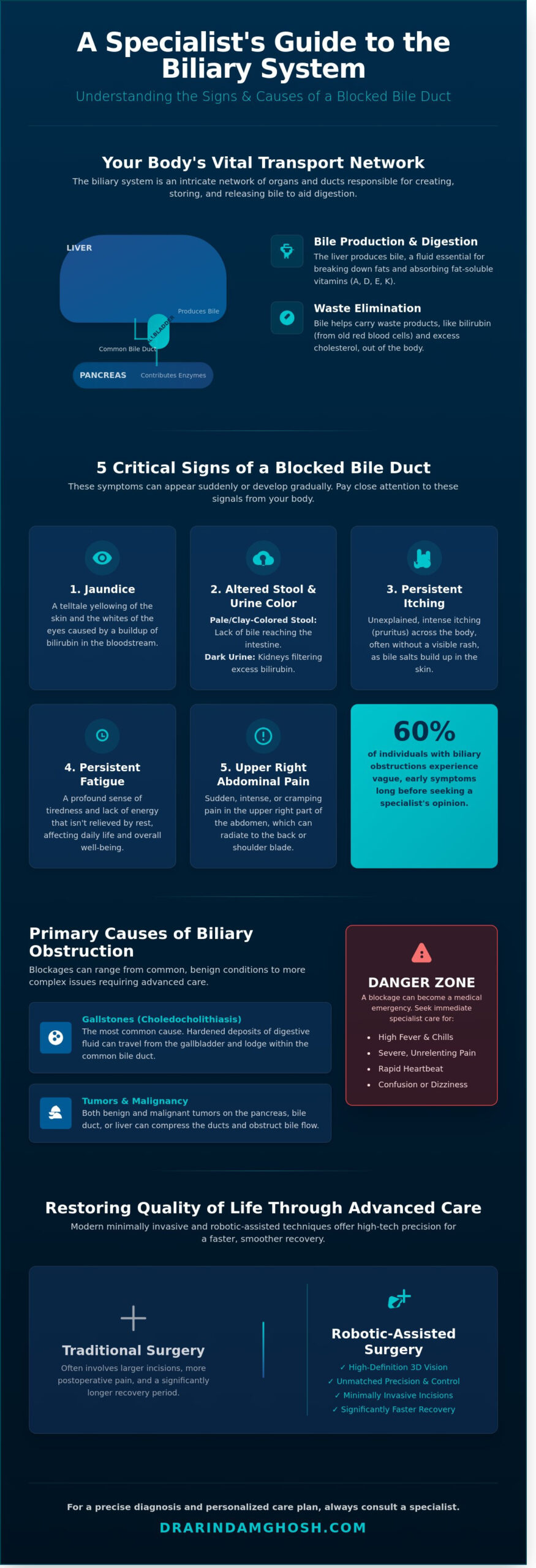
Imagine waking up one morning with a persistent, unexplained itch that no topical treatment can soothe, or noticing a subtle yellowing in your eyes that wasn’t there forty-eight hours ago. These are often the first physical signs of a blocked bile duct, yet it’s natural to feel a deep sense of unease when your body sends such quiet, confusing signals. You might worry that these internal changes represent a complex condition or that the road to recovery involves a long, invasive hospital stay. Clinical data suggests that nearly 60% of individuals with biliary obstructions experience these vague symptoms long before seeking a specialist’s opinion.
I understand the anxiety that comes with undiagnosed health issues. It’s common to feel overwhelmed by symptoms like persistent fatigue or darkened urine. In this specialist’s guide, you’ll learn how to decode these warnings and discover why timely intervention is vital for your long-term health. We’ll examine the specific physical indicators of biliary obstruction and discuss how modern, robotic-assisted techniques can restore your quality of life with remarkable precision and minimal recovery time.
Key Takeaways
- Learn how your biliary system functions as a vital transport network and why maintaining healthy bile flow is essential for your overall digestive health.
- Identify the five critical signs of a blocked bile duct, distinguishing between gradual chronic symptoms and acute red flags that demand urgent attention.
- Understand the primary causes of biliary obstruction, ranging from common gallstones to complex tumors, and the importance of distinguishing between benign and malignant conditions.
- Recognize the “Danger Zone” symptoms that signal a medical emergency, ensuring you know exactly when to seek immediate specialist intervention in the UAE.
- Explore how modern minimally invasive and robotic-assisted surgical techniques can restore your quality of life through high-tech precision and compassionate care.
Understanding the Biliary System: Why Bile Duct Flow is Vital for Health
Your biliary system serves as the body’s essential transport network, carefully orchestrating the delivery of digestive enzymes and bile. This intricate plumbing system involves the liver, gallbladder, and pancreas working in multidisciplinary harmony to ensure your digestion remains seamless. The liver produces bile, the gallbladder stores and concentrates it, and the pancreas contributes vital enzymes that facilitate the breakdown of nutrients. When this system operates correctly, it maintains your metabolic balance and overall wellness.
Bile’s primary job involves breaking down fats and eliminating waste products like bilirubin. Bilirubin is a byproduct of the natural breakdown of red blood cells; it’s what gives bile its distinct color. If the flow remains steady, these toxins and metabolic byproducts exit the body safely. However, when the ducts narrow or a physical blockage occurs, the entire system fails. This disruption leads to the clinical signs of a blocked bile duct, which require immediate professional attention to restore your quality of life.
The Anatomy of the Bile Ducts
The biliary tree is divided into two main segments. Intrahepatic ducts are the small tubes located inside the liver, while extrahepatic ducts are found outside the organ. These branches eventually merge into the common bile duct, which connects directly to the small intestine. A Common bile duct stone (choledocholithiasis) is one of the most frequent reasons for a physical obstruction in this pathway. The common bile duct acts as the final gateway for bile to enter the digestive tract, making any obstruction here a significant medical concern. At Dr. Arindam Ghosh’s practice, we utilize robotic precision to address these anatomical challenges, ensuring a holistic recovery for every patient.
The Biological Importance of Bile Flow
Bile flow is essential for the absorption of fat-soluble vitamins, specifically vitamins A, D, E, and K. Without adequate bile, your body cannot process these nutrients, leading to long-term deficiencies and compromised immunity. Beyond nutrition, the system manages the elimination of cholesterol and old red blood cells. When bile cannot reach the small intestine, toxins back up into the bloodstream rather than being excreted. This systemic backup is what triggers the visible signs of a blocked bile duct.
5 Critical Signs of a Blocked Bile Duct You Should Never Ignore
Identifying the signs of a blocked bile duct is the first step toward restoring your health and comfort. These indicators don’t always follow a predictable pattern. Some patients experience an acute onset of symptoms that appear suddenly, often after a heavy meal. Others may notice a slow, chronic progression where symptoms build over several weeks or months. Monitoring the frequency and intensity of these changes is vital. It provides your medical team with the necessary data to determine the cause of the obstruction, whether it’s a gallstone or a more complex biliary issue.
Jaundice: The Telltale Yellowing
Jaundice is perhaps the most recognizable signal of a biliary problem. It happens when bilirubin, a yellowish pigment formed during the normal breakdown of red blood cells, accumulates in the blood because it can’t flow through the bile duct. This buildup causes the skin and the sclera, which are the whites of the eyes, to take on a yellow hue. In the early stages, the change might be so subtle that it’s only visible under natural sunlight. As the blockage persists, the yellowing becomes more pronounced. According to clinical research on Diagnosing and Managing Biliary Obstruction, jaundice serves as a primary clinical marker that requires immediate diagnostic evaluation to prevent further complications.
Changes in Stool and Urine Color
Your digestive system relies on bile to process fats and give stool its typical brown color. When a blockage prevents bile from reaching the intestines, bowel movements often become pale, grey, or clay-colored. This “clay-colored stool” is a significant diagnostic clue for GI specialists. At the same time, your kidneys attempt to filter the excess bilirubin from your bloodstream. This process turns your urine a dark orange or tea-colored shade, even if you’re drinking plenty of water. If you notice these two changes occurring simultaneously, it’s a clear signal that your biliary system needs professional attention. Early detection allows for a more comprehensive care approach that prioritizes your long-term wellness.
Upper Abdominal Pain and Persistent Itching
Pain associated with biliary obstruction usually concentrates in the upper right quadrant of the abdomen, just below the ribs, or directly under the breastbone. This discomfort can range from a persistent dull ache to sharp, stabbing sensations that radiate toward the back. Another distressing but common symptom is Pruritus, or intense itching. This isn’t caused by a skin rash but by bile salts that deposit in the skin tissues when they can’t be excreted properly. This itching can be relentless and often worsens at night. You should also watch for these related indicators:
- Chronic nausea or bouts of vomiting, especially after eating fatty foods.
- Unexplained fatigue that persists despite adequate rest.
- A low-grade fever, which may suggest the start of an infection in the bile ducts.
Recognizing these signs of a blocked bile duct early can lead to more effective, minimally invasive treatments that protect your quality of life. Don’t wait for symptoms to become severe before seeking a specialist’s opinion.
Common Causes of Biliary Obstruction: From Gallstones to Complex Tumors
Understanding why the biliary system fails is the first step toward effective treatment. Causes generally fall into two categories: benign conditions and malignant growths. While benign causes like gallstones are more common, malignant obstructions require a rapid, multidisciplinary approach to ensure the best possible outcomes for your long-term health. We look at these challenges through a lens of clinical precision, aiming to restore the natural flow of your digestive system as quickly as possible.
Gallstones and Biliary Sludge
Gallstones are the primary driver of biliary issues, representing the cause in approximately 70% to 80% of cases seen in clinical practice. These hardened deposits of bile form in the gallbladder. When a stone migrates into the common bile duct, a condition known as choledocholithiasis, it creates an immediate physical barrier. Biliary sludge, a thick mixture of particulate matter and mucus, often acts as a precursor to these stones. Even if a total blockage hasn’t occurred, sludge can impede flow and trigger the initial signs of a blocked bile duct, such as mild jaundice or digestive discomfort. Maintaining gallbladder health is essential because a single wandering stone can compromise the entire ductal system.
Inflammation, Cysts, and Trauma
Chronic inflammation leads to the formation of strictures, which are narrowings of the duct caused by scar tissue. Primary Sclerosing Cholangitis (PSC) is a notable inflammatory condition where the ducts progressively harden and narrow over time. Some patients are born with choledochal cysts, which are congenital dilations that disrupt the smooth transit of bile. We also monitor for obstructions caused by external factors. Abdominal trauma or unintended scarring from previous gallbladder surgeries can compress the duct from the outside. These mechanical issues require precise diagnostic imaging to distinguish them from other pathologies and to plan a personalized recovery path.
Tumors of the Pancreas and Bile Ducts
Malignant obstructions are serious medical challenges that demand sophisticated intervention. Tumors located in the head of the pancreas often press against the common bile duct, causing a “painless jaundice” that is a hallmark clinical indicator. Cholangiocarcinoma, or bile duct cancer, originates within the ductal walls themselves and can block the flow of bile from the inside. Early detection remains the most critical factor for successful oncological outcomes. By identifying these signs of a blocked bile duct early, we can utilize robotic-assisted surgery and targeted therapies to remove the obstruction. Our goal is always to restore your quality of life through a combination of surgical precision and holistic support from our specialized medical teams in the UAE.
Diagnosis and Danger Zones: When a Blockage Becomes a Medical Emergency
Identifying the signs of a blocked bile duct is the first step toward recovery, but the diagnostic process is what transforms uncertainty into a clear plan of action. Modern medical technology has reached a point where we can identify the exact location and cause of an obstruction with incredible speed. This precision isn’t just about clinical accuracy; it’s about providing you with the peace of mind that comes from knowing exactly what’s happening inside your body. In the UAE, advanced gastrointestinal specialists use a structured, multidisciplinary approach to ensure that no time is wasted when your health is on the line.
Diagnostic Tools: Imaging and Endoscopy
The journey to a clear diagnosis usually begins with non-invasive imaging. Ultrasound and CT scans serve as the frontline tools, offering a rapid look at the gallbladder and biliary tree. These scans are highly effective at spotting gallstones or visible masses that might be causing the obstruction. If we need a more detailed view, we turn to MRCP (Magnetic Resonance Cholangiopancreatography). This specialized MRI scan provides a high-resolution map of the bile ducts without the need for radiation or invasive instruments. It boasts an accuracy rate often exceeding 90% in detecting the cause of biliary symptoms.
When the situation requires both a closer look and immediate action, ERCP (Endoscopic Retrograde Cholangiopancreatography) becomes the gold standard. This procedure combines endoscopy and X-ray technology. It allows us to not only visualize the blockage but also to clear it during the same session. Whether it’s removing a stone or placing a stent to open a narrowed duct, ERCP represents the perfect marriage of diagnostic insight and therapeutic intervention.
Acute Cholangitis: The Emergency Red Flags
While some blockages develop slowly, others can trigger a rapid decline in health. We monitor patients closely for what’s known as Charcot’s Triad. This is a specific combination of three symptoms: high fever with chills, jaundice (yellowing of the skin and eyes), and sharp abdominal pain in the upper right quadrant. If you experience these three together, it indicates that the stagnant bile has become infected. This condition, called acute cholangitis, is a serious threat that can lead to sepsis or permanent liver damage if treatment is delayed beyond 24 to 48 hours.
“When a blockage is accompanied by high fever and chills, it is no longer just a digestive issue; it is a medical emergency that demands immediate intervention.”
Delayed treatment risks the spread of bacteria into the bloodstream, a life-threatening condition known as sepsis. It can also lead to liver abscesses or long-term scarring that compromises your quality of life. However, you should feel reassured that modern emergency protocols in the UAE are designed for rapid response. By combining robotic precision with compassionate care, we can often resolve these emergencies and set you on a path to a full recovery.
If you or a loved one are experiencing these symptoms, don’t wait for them to worsen. Seek professional guidance to protect your liver health. Consult with Dr. Arindam Ghosh for expert diagnostic care and personalized treatment plans.
Modern Surgical Pathways: Restoring Quality of Life Through Advanced GI Care
Surgery is no longer the daunting prospect it once was for patients in the UAE. The medical field has moved away from traditional open procedures that required large incisions and lengthy hospital stays. Instead, we now prioritize precision and minimal disruption to the body. When a patient presents with the signs of a blocked bile duct, the focus immediately shifts to identifying the most effective, least invasive route to restoration. This proactive approach isn’t just about clinical success; it’s about returning you to your daily routine with confidence and comfort.
Laparoscopic and Robotic Precision
Laparoscopic Cholecystectomy and common bile duct exploration represent the gold standard in modern biliary care. By using small incisions and specialized cameras, we achieve high levels of accuracy without the trauma of open surgery. Robotic-assisted surgery takes this a step further. It provides a three-dimensional, high-definition view of the complex biliary anatomy, allowing for movements that exceed the human hand’s natural range. For patients in Dubai and Abu Dhabi, these innovations mean significantly less post-operative pain and reduced scarring. Most individuals now experience hospital stays as short as 24 to 48 hours, a 60% reduction compared to older surgical methods.
Comprehensive Care and Recovery
True healing requires more than just technical skill in the operating room. We utilize a multidisciplinary approach, where surgical expertise meets nutritional guidance and personalized follow-up care. Every treatment plan is tailored to the specific cause of the obstruction, whether it stems from gallstones or more complex biliary structures. Post-operative recovery is a structured journey. We guide you through a gradual return to a normal diet, ensuring your digestive system adapts smoothly to the changes. This holistic perspective ensures that the signs of a blocked bile duct are addressed at their source while protecting your long-term wellness.
Seeking expert intervention early is the most reliable way to ensure a positive outcome. Modern GI care is designed to be a bridge back to the activities you love. By combining robotic precision with a deeply human touch, we focus on your “quality of life” as the ultimate metric of success. You don’t have to manage these symptoms alone. Expert help is available to guide you toward a healthy, vibrant future.
Restoring Your Health Through Expert Biliary Care
Recognizing the signs of a blocked bile duct early is the first step toward preventing serious complications like liver damage or systemic infection. Whether your symptoms stem from gallstones or complex tumors, understanding that jaundice and persistent pain are signals from your body is vital. Modern surgical pathways now offer highly effective solutions that move beyond traditional surgery, focusing on rapid recovery and minimal discomfort.
Dr. Arindam Ghosh provides a unique blend of clinical authority and empathy, backed by over 25 years of specialized experience in complex GI and hepatobiliary surgery. He utilizes advanced robotic-assisted and laparoscopic techniques across the UAE’s premier medical facilities to deliver robotic precision with a deeply human touch. This multidisciplinary approach ensures that every patient receives a personalized treatment plan designed to restore their quality of life. You can trust in a pathway to recovery that combines world-class innovation with compassionate, patient-centered care.
Take control of your digestive wellness with a specialist who understands the gravity of your diagnosis. Schedule a consultation with Dr. Arindam Ghosh today to explore your options for advanced surgical care. Your journey toward a healthier, more vibrant life starts with a single, informed conversation.
Frequently Asked Questions
Can a blocked bile duct clear itself without medical intervention?
A blocked bile duct rarely clears itself without professional medical intervention, especially when the cause is a gallstone or a structural stricture. While a tiny stone under 5mm might occasionally pass into the intestine, most blockages require clinical procedures to prevent life-threatening infections. Ignoring the signs of a blocked bile duct often leads to ascending cholangitis, a severe condition that requires immediate treatment in UAE hospitals to ensure patient safety.
How long can you live with a partially blocked bile duct before it becomes dangerous?
You shouldn’t wait more than 24 to 48 hours if you suspect a partial blockage, as it can escalate into a total obstruction or a systemic infection very quickly. Chronic partial blockages can lead to secondary biliary cirrhosis and permanent liver scarring over several months. Our multidisciplinary team focuses on early diagnosis and rapid intervention to prevent these complications and protect your long-term quality of life.
Is a blocked bile duct always caused by cancer?
No, a blocked bile duct isn’t always caused by cancer; in fact, gallstones account for approximately 70% of biliary obstructions seen in clinical practice. Other non-cancerous causes include benign strictures from previous surgeries or chronic inflammation of the pancreas. However, we use advanced diagnostic tools to rule out malignancies like cholangiocarcinoma, ensuring you receive a personalized care plan that addresses the specific root cause of your condition.
What happens if a blocked bile duct is left untreated for several weeks?
Leaving a blockage untreated for several weeks risks irreversible liver failure and life-threatening sepsis. Bilirubin levels can spike above 20 mg/dL, leading to intense jaundice and severe internal organ stress. In the UAE, clinical data suggests that untreated biliary sepsis carries a mortality rate between 10% and 30%, which is why our team prioritizes emergency drainage and compassionate, high-tech care to stabilize patients immediately.
Does removing the gallbladder prevent future bile duct blockages?
Removing the gallbladder significantly reduces the risk of future obstructions but doesn’t eliminate it entirely. Stones can still form directly within the common bile duct in about 5% of patients after a cholecystectomy. We often utilize robotic-assisted surgery for gallbladder removal to ensure maximum precision, yet we continue to monitor our patients for any recurring signs of a blocked bile duct during their routine wellness follow-ups.
What is the difference between a gallbladder attack and a blocked bile duct?
A gallbladder attack typically involves temporary, sharp pain when a stone blocks the cystic duct, whereas a blocked bile duct involves a persistent obstruction in the main drainage path. You’ll notice distinct symptoms like yellowing of the skin and tea-colored urine with a duct blockage that don’t always appear during a standard attack. While an attack might subside in 6 hours, a blocked duct requires a professional procedure to restore bile flow.
Can diet changes help unblock a bile duct?
Diet changes cannot physically unblock a bile duct once a mechanical obstruction like a stone or tumor is present. While a low-fat diet helps prevent the formation of new cholesterol gallstones, it won’t dissolve a stone that’s already lodged in the system. We combine nutritional guidance with modern surgical techniques to provide a holistic recovery path, focusing on restoring your health through both advanced intervention and sustainable lifestyle adjustments.
What is the recovery time after a laparoscopic procedure to clear a bile duct?
Most patients return to light daily activities within 3 to 7 days after a laparoscopic or robotic-assisted procedure to clear a biliary blockage. Full recovery and a return to strenuous exercise typically take about 14 days depending on the individual’s overall health. This minimally invasive approach reduces post-operative pain and allows for a faster return to your routine, reflecting our commitment to combining robotic precision with a gentle human touch.