

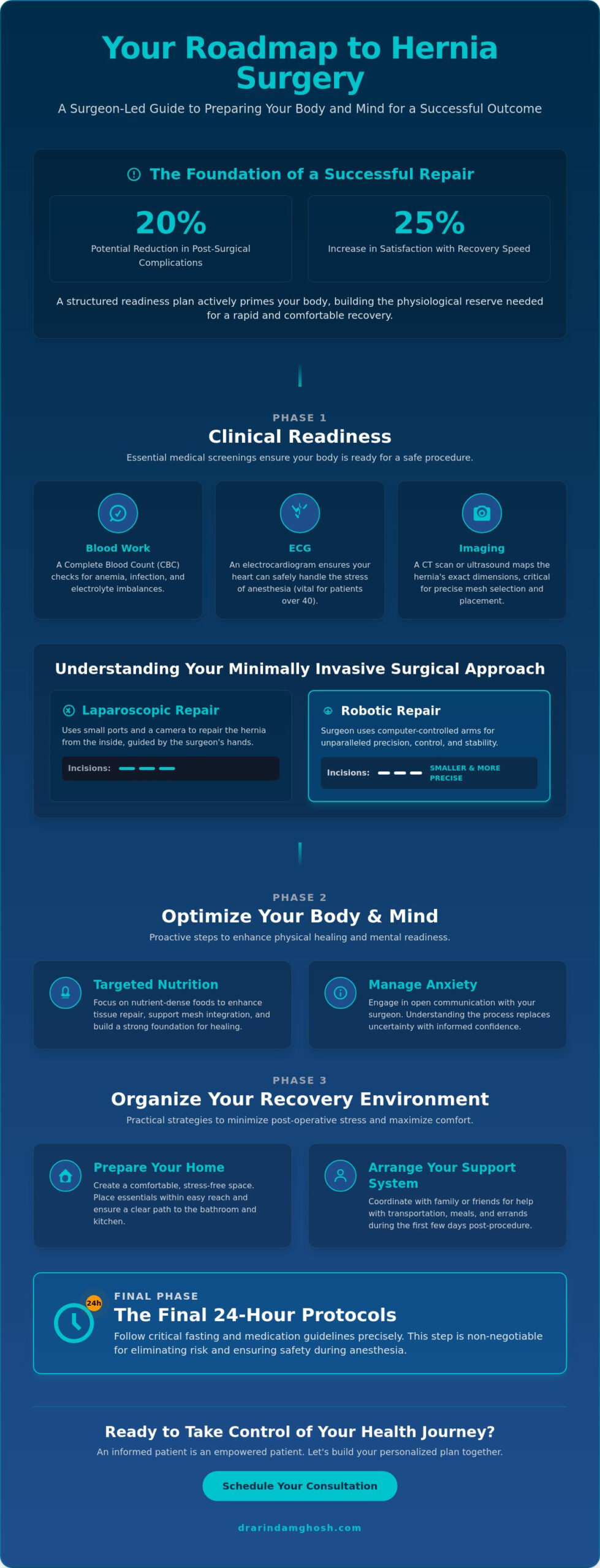
Could the most vital step in your surgical journey happen before you even arrive at the hospital? While modern robotic precision has made repairs safer than ever, your personal hernia surgery preparation is the foundation of a complication-free outcome. It’s completely normal to feel uncertain about fasting schedules or how much help you’ll need at home in the days following your procedure. You want a recovery that’s defined by minimal pain and a rapid return to your active lifestyle here in the UAE. Clinical data suggests that patients who engage in a structured readiness plan report a 25% increase in satisfaction with their recovery speed. I promise that by following this surgeon-led roadmap, you’ll replace anxiety with informed confidence. We’ll explore exactly how to manage your medications, organize your home environment, and optimize your physical readiness for the best possible results. This comprehensive guide ensures you’re fully prepared for every stage of the process, from the final pre-operative check to your first comfortable steps toward a restored quality of life.
Key Takeaways
- Understand why a holistic approach to hernia surgery preparation is the foundation for reducing clinical risks and accelerating your journey back to health.
- Learn how to navigate essential medical screenings and manage underlying conditions to ensure your body meets the highest standards of surgical readiness.
- Discover practical strategies for organizing your home environment and support system in the UAE to minimize post-operative stress and maximize comfort.
- Explore the biological impact of targeted nutrition on tissue repair and mesh integration, alongside effective techniques for managing pre-surgical anxiety.
- Gain clarity on the final 24-hour protocols, including critical fasting guidelines, to eliminate uncertainty and approach your procedure day with confidence.
The Foundation of a Successful Hernia Repair: Why Preparation Matters
Effective hernia surgery preparation is much more than a simple checklist for the night before your procedure. It’s a holistic journey that starts the moment we decide on a surgical path. By treating this period as a proactive phase, you’re not just waiting for a date on the calendar; you’re actively priming your body for a successful outcome. Clinical data suggests that patients who engage in structured pre-operative optimization can reduce their risk of post-surgical complications by up to 20%. This phase is about building a physiological reserve that supports your body through the stress of surgery.
A deep dive into understanding hernia repair surgery reveals that the procedure’s success depends heavily on the physiological state of the patient. This preparation accelerates recovery times, allowing you to transition back to your professional and personal life in the UAE with minimal downtime. It’s a collective effort involving your surgical team, your family, and, most importantly, you. We utilize a multidisciplinary approach to ensure every aspect of your health, from nutrition to chronic disease management, is aligned before you enter the operating room.
The ultimate goal is a seamless return to the activities you love, whether that is playing padel in Dubai or enjoying a weekend in the desert. We don’t just want to fix a physical defect; we want to restore your quality of life. By focusing on these early steps, we set the stage for a repair that is durable and a recovery that is as comfortable as possible.
Understanding Your Surgical Approach: Laparoscopic vs. Robotic
Traditional open surgery often requires larger incisions, but modern techniques in the United Arab Emirates focus on minimally invasive methods. Laparoscopic surgery uses small ports and a camera to repair the wall from the inside. Preparation for these procedures often involves specific instructions regarding gut health and mobility. Robotic hernia repair is a sophisticated method where the surgeon uses computer-controlled arms to achieve unparalleled precision and control. This high-tech approach allows for smaller incisions and often results in less post-operative discomfort, meaning your “pre-hab” will focus heavily on preparing for a rapid return to light activity.
The Surgeon-Patient Partnership
Transparency during your consultation is the cornerstone of safety and trust. I encourage you to share your full medical history, including any supplements or traditional remedies common in the region, to ensure no contraindications exist. This partnership merges clinical expertise and robotic precision with the human touch of personalized care. You aren’t a passive recipient of a procedure. Instead, you’re an active participant in a process designed to restore your health. When you understand the “why” behind your hernia surgery preparation, you become empowered to take the steps necessary for a complication-free recovery.
Clinical Readiness: Medical Steps Before Your Procedure
Clinical readiness represents the essential bridge between your initial diagnosis and a successful, complication-free recovery. As your surgeon, my priority is to ensure your body is in its most resilient state before we step into the operating theatre. This phase of hernia surgery preparation is not a series of administrative hurdles; it is a meticulous data-gathering process that allows our multidisciplinary team to tailor a robotic or laparoscopic approach to your unique physiology. By understanding your internal landscape, we can apply robotic precision with the highest level of safety.
Pre-operative Screening and Testing
In the UAE, standard clinical protocols often require specific tests to be completed within 30 days of your procedure. These screenings provide a snapshot of your current health and help us anticipate how your body will respond to surgery. Common requirements include:
- Blood Work: A Complete Blood Count (CBC) and metabolic panel check for anemia, infection, or electrolyte imbalances.
- ECG (Electrocardiogram): This is vital for patients over age 40 or those with a history of heart conditions to ensure the heart can safely handle the stress of anesthesia.
- Imaging: While a physical exam often suffices, a CT scan or ultrasound helps us map the exact dimensions of the hernia, which is critical for selecting the correct mesh size and placement.
These tests allow the anesthesiologist to create a personalized plan for your comfort. They act as the guardians of your vital signs, monitoring your stability while I focus on the surgical repair. When we have clear data, we eliminate variables, which significantly enhances your safety and peace of mind.
Managing Medications and Supplements
Your current medication regimen plays a decisive role in your surgical outcome. It’s vital to provide a comprehensive list of all prescriptions, over-the-counter drugs, and herbal supplements. Certain substances can interfere with blood clotting or interact poorly with anesthesia. For instance, blood thinners like aspirin or clopidogrel are typically paused five to seven days before surgery to prevent the risk of a hematoma, which is a localized collection of blood that can complicate healing. Taking proactive steps now, including following tips for a smooth recovery regarding your home setup, ensures that your clinical readiness translates into a seamless post-operative experience.
If you manage chronic conditions like hypertension or diabetes, we must ensure they are stable. In my practice, we look for an HbA1c level below 7.0% for diabetic patients to minimize the risk of site infections. High blood pressure must also be controlled to prevent cardiovascular strain during the procedure. This collaborative effort between you, your primary physician, and your surgical team is what defines high-quality, patient-centered care. As you plan your procedure, understanding the hernia surgery cost in Dubai and what is included in your surgical package can help you budget confidently and avoid unexpected expenses. If you have questions about your specific medical history, scheduling a personalized surgical consultation can provide the clarity you need to move forward with confidence.
Organizing Your Recovery Environment and Support System
Successful hernia surgery preparation involves more than just clinical tests; it requires a thoughtful arrangement of your personal space. Many patients feel anxious about the downtime associated with recovery. However, a well-organized home significantly reduces physical strain and speeds up the return to daily life. During the initial 48 to 72 hours, your body focuses its energy on cellular repair. You’ll likely experience limited mobility, making it difficult to perform basic tasks like reaching for a glass of water or standing up from a deep sofa without assistance.
Designate a recovery captain before your procedure. This individual, whether a spouse, family member, or close friend, provides the essential human touch that complements the robotic precision of your surgery. They’ll handle medication schedules and monitor your progress during those first three critical days when fatigue is most common. Having a dedicated person to manage household logistics allows you to focus entirely on healing, which is a vital component of restoring your quality of life.
Creating a Healing Space at Home
Your environment should prioritize ease of movement. Choose a firm, upright chair with armrests for your primary resting spot. Soft, low-slung sofas are difficult to exit without engaging core muscles, which can cause unnecessary tension on your incision. Place all daily essentials, such as phone chargers, medications, and water bottles, at waist height to eliminate the need for bending or stretching. Proper nutrition is equally vital. Stock your kitchen with high-fiber foods like lentils and whole grains, alongside plenty of water, to maintain healthy digestion and prevent post-operative strain. This proactive approach ensures your recovery is as smooth as the surgical intervention itself.
The Essential Supplies Checklist
Preparation ensures you aren’t rushing to a pharmacy while you should be resting. Gather these items at least 48 hours before your surgery to create a seamless transition from the hospital to your home:
- Loose-fitting clothing: Soft fabrics and elastic waistbands prevent pressure on the surgical site.
- Ice packs: These are effective for managing localized swelling during the first two days post-op.
- Stool softeners: Post-operative medications can often lead to constipation; having these on hand is a proactive step for your comfort.
- Abdominal binder: If your surgical team recommends one, ensure it’s sized correctly to provide gentle support for your core.
- Curated entertainment: Books, podcasts, or a watchlist of films help you stay stationary and avoid the temptation of premature physical activity.
By organizing these elements in advance, you transform your home into a professional-grade recovery suite. This level of detail in your hernia surgery preparation minimizes the risk of accidental injury and provides the mental peace of mind necessary for a successful outcome.
Optimizing Your Body and Mind for Surgical Success
Preparing for a procedure shouldn’t feel like a list of restrictive chores. Think of this phase as a strategic period where you empower your biology to respond effectively to treatment. Your role in hernia surgery preparation is just as vital as the robotic precision I bring to the operating theater. By focusing on your internal environment, you’re setting the stage for a faster return to your daily routine and a higher quality of life.
Nutritional Optimization for Healing
Tissue repair relies on specific biological building blocks that your body cannot manufacture without help. Protein is essential because it provides the amino acids needed for muscle and fascia repair. I recommend increasing your intake of lean proteins in the weeks leading up to your date. Vitamins A and C are equally critical; they act as catalysts for collagen production. This helps the surgical site knit together and ensures the mesh integrates securely with your natural tissue. Hydration is another pillar of success. Maintaining fluid levels supports your kidney function and keeps your blood volume stable during the procedure. Optimal nutrition can reduce the risk of surgical site infections by nearly 50% in many clinical scenarios.
The Importance of Smoking Cessation
Smoking creates a significant hurdle for your body’s natural healing mechanisms. Nicotine constricts blood vessels, which directly impairs the delivery of oxygen and vital nutrients to the healing tissues. This lack of oxygen doesn’t just slow down recovery; it actively weakens the repair. Clinical data indicates that smokers face a significantly higher risk of hernia recurrence, sometimes up to four times the rate of non-smokers. I compassionately encourage you to pause smoking for at least four weeks before your surgery. This window allows your lungs to clear and your vascular system to recover. It’s a powerful step toward ensuring your surgical outcome remains permanent.
Anxiety is a natural response to any surgical journey, but it doesn’t have to control your experience. We view your care through a holistic lens where your mental well-being is a priority. Managing stress through deep breathing or light walking helps stabilize your heart rate and blood pressure. You aren’t just a patient on a schedule; you’re a partner in a multidisciplinary approach designed to restore your health. Taking control of these lifestyle factors transforms you from a passive participant into an active healer of your own body.
The Day of Surgery: Final Steps and What to Expect
The final 24 hours before your procedure are focused on mental and physical readiness. By following these specific steps, you eliminate the fear of the unknown and ensure your body is in the optimal state for a successful outcome. Your hernia surgery preparation culminates in these precise, manageable actions designed for your safety.
The Night Before and Morning Of
Preparation begins at home with a thorough pre-operative shower. Use an antibacterial soap, such as chlorhexidine gluconate, which is standard in many UAE surgical protocols. This simple step reduces skin bacteria by up to 90 percent, significantly lowering the risk of surgical site infections. Focus on the area around the incision site, but avoid shaving the hair yourself, as small nicks can actually increase infection risks. We will handle any necessary hair removal in the sterile environment of the clinic.
When dressing for the hospital, choose loose, comfortable clothing like a soft cotton tracksuit or a simple Kandura. Avoid wearing any jewelry, watches, or makeup, as these can interfere with monitoring equipment. The most critical instruction is the fasting rule. You must have nothing to eat or drink after midnight. This “Nil Per Os” (NPO) status includes water, chewing gum, and breath mints. If your stomach contains even a small amount of liquid, it increases the risk of pulmonary aspiration during anesthesia. This safety protocol is a non-negotiable part of your hernia surgery preparation.
Entering the Operating Suite
Upon arrival at the surgical center in Dubai or Abu Dhabi, the check-in process is designed to be seamless. Once you’re in the pre-operative holding area, you’ll meet your multidisciplinary team. This group consists of specialized nurses, a surgical technologist, and your anesthesiologist. They’ll review your vitals and confirm your medical history one last time to ensure every detail is aligned with your personalized care plan.
As you transition to the operating room, you’ll see the advanced technology we use to ensure your safety. We often utilize robotic-assisted tools that deliver precision technology for restoring quality of life and act as a high-precision extension of the surgeon’s hands. These systems provide a 3D, high-definition view of the surgical field, allowing for movements that are more precise than the human wrist alone. This combination of robotic precision and the human touch ensures that the repair is as durable as possible while minimizing trauma to the surrounding tissue.
You’re in expert hands. Every member of the team is dedicated to your safety and the restoration of your quality of life. We view this procedure as a collaborative journey toward your wellness. Modern surgical innovation, backed by years of clinical expertise, is focused entirely on your successful recovery and long-term health.
Taking the First Step Toward a Pain-Free Life
Effective hernia surgery preparation is a collaborative process that balances clinical precision with personal readiness. By organizing your recovery space and following a tailored medical plan, you’re setting the stage for a successful outcome. My approach integrates over 25 years of surgical expertise with a patient-centric multidisciplinary strategy to ensure you feel supported at every turn. We combine the human touch with advanced robotic-assisted hernia repair techniques to prioritize your long-term quality of life and safety.
Success in the operating room begins weeks before the procedure. It’s about optimizing your physical health and mental well-being through a structured, professional framework. In the United Arab Emirates, patients benefit from world-class standards of care that bridge the gap between complex medical challenges and sustainable wellness. You don’t have to navigate this path alone; our team is here to provide the clinical rigor and compassionate guidance you deserve.
Your health is your most valuable asset, and we’re committed to helping you restore it with confidence and care.
Frequently Asked Questions
How long before hernia surgery should I stop eating and drinking?
You must stop consuming all solid foods and liquids at least six hours before your scheduled arrival time at the hospital. This fasting period is a critical safety measure for your anesthesia. While clear liquids might be permitted up to two hours beforehand in specific cases, you should follow the exact timeline provided during your pre-operative assessment to ensure a smooth surgical experience. Proper fasting is a vital step in your hernia surgery preparation to prevent complications during the procedure.
Can I take my blood pressure medication on the morning of the surgery?
You should typically take your blood pressure medication on the morning of your procedure with a small sip of water. Managing your cardiovascular health is vital for a stable recovery. However, you must avoid blood thinners or specific diabetic medications as instructed by your multidisciplinary team. Always confirm your specific list of medications during your final consultation in Dubai to prevent any delays on the day of the operation.
How much help will I actually need at home after a robotic hernia repair?
You’ll need a responsible adult to stay with you for the first 24 to 48 hours after you return home. While robotic precision often leads to less post-operative discomfort, the effects of anesthesia can linger for a full day. This companion should assist you with basic tasks like preparing meals or moving around your home safely during the initial phase of your recovery journey. Having support ensures you can focus entirely on your healing.
When can I return to work or heavy lifting after the procedure?
Most patients return to light desk work within 3 to 7 days, but you must avoid lifting anything heavier than 5 kilograms for at least 6 weeks. This timeline ensures the surgical mesh or repair site has adequate time to integrate with your tissues. Resuming strenuous activity too early increases the risk of recurrence. We’ll provide a gradual activity plan during your follow-up visits to help you safely return to your normal quality of life.
Is it normal to feel anxious before surgery, and how can I manage it?
It’s entirely normal to feel anxious, as approximately 60% to 80% of surgical patients report some level of pre-operative stress. We manage this through thorough education and a clear understanding of the robotic-assisted techniques we use. Focusing on your improved health outcomes and practicing deep breathing exercises can help calm your nerves. Our team is here to provide the human touch and support you need to feel empowered throughout the process.
What should I bring with me to the hospital on the day of the operation?
You should bring your Emirates ID, insurance card, and a list of all current medications to the hospital. Wear loose, comfortable clothing that won’t press against your abdomen after the procedure. Leave valuables like jewelry at home. Having these essentials ready is a key part of your hernia surgery preparation, ensuring you can focus entirely on your health and wellness when you arrive at the facility.
What are the signs of a complication I should look for during preparation?
You must contact our clinic immediately if you develop a fever over 38 degrees Celsius or experience severe, worsening pain before your surgery. Other warning signs include persistent vomiting or an inability to pass gas. These symptoms can indicate a strangulated hernia, which requires urgent intervention. Early communication allows us to provide the necessary care and adjust your treatment plan to ensure your safety and successful outcome.
Will I need to stay in the hospital overnight after my hernia surgery?
Most hernia repairs in the UAE are performed as day-care procedures, meaning you can return home on the same day. Approximately 15% of patients might require an overnight stay for observation if they have complex medical histories or if the repair was particularly extensive. We prioritize your comfort and safety, only discharging you when we’re confident you’re stable and your pain is well-controlled. Our goal is always a safe transition back to your home environment.