

What if the most effective way to reclaim your health wasn’t through a large, invasive incision, but through a series of tiny, precise movements guided by the latest robotic technology? It’s completely understandable to feel a deep sense of dread when a specialist mentions Colorectal Cancer Resection. You’re likely worried about the physical toll of the procedure, the possibility of living with a stoma, or simply how long it’ll take to feel like yourself again. These concerns are valid, and they deserve a compassionate, evidence-based response that respects both the gravity of the diagnosis and your desire for a swift recovery.
My goal is to replace that uncertainty with the confidence that comes from clinical clarity. You’ll gain a thorough understanding of how advanced, minimally invasive techniques are designed to remove the tumor while preserving your bowel function and restoring your quality of life. We’ll examine the specific benefits of robotic versus open surgery and walk through a recovery process tailored for patients here in the United Arab Emirates, ensuring you have the knowledge to move forward with peace of mind. By combining surgical excellence with personalized care, we can focus on a future defined by wellness rather than illness.
Key Takeaways
- Understand how modern surgical intervention serves as a definitive pathway to removing cancerous tissue and preventing recurrence while preserving your long-term health.
- Discover how advanced Colorectal Cancer Resection techniques, including robotic and laparoscopic precision, significantly reduce post-operative pain and hospital stays.
- Learn why tailored surgical procedures and precise margins are critical for ensuring the comprehensive removal of cancer cells based on your unique diagnosis.
- Gain insights into the “prehabilitation” process, using nutrition and lifestyle adjustments to build surgical resilience for a smoother journey back to wellness.
- Identify the value of a multidisciplinary team that combines clinical authority with a compassionate human touch to restore your quality of life after surgery.
Understanding Colorectal Cancer Resection: Purpose and Goals
A Colorectal Cancer Resection is the surgical removal of a portion of the large intestine or rectum affected by a malignant tumor. This procedure is the primary method for treating these cancers. The main goal is to extract the primary tumor along with a safety margin of healthy tissue. This careful approach reduces the risk of the cancer returning to the same site later. Surgery is the most effective way to achieve long-term remission for localized malignancies.
During the procedure, we perform a lymphadenectomy. This involves removing nearby lymph nodes to check if the cancer has spread beyond the original site. It’s a vital step for accurate staging. Knowing the exact stage helps the clinical team decide if you need additional treatments like chemotherapy after you recover. For those seeking a foundational overview of the procedure, Understanding Colectomy provides essential context on the various surgical approaches used to treat intestinal diseases.
When is Resection Recommended?
We recommend surgery after a thorough assessment using a diagnostic colonoscopy and high-resolution imaging like CT or MRI scans. These tools help us see the tumor’s exact location and size. For early-stage cancers, surgery is often the first and most crucial step. In more advanced cases, we evaluate how much the tumor has invaded nearby structures to determine the best surgical path. Colorectal cancer resection serves as a definitive curative intervention for patients with localized disease.
The Role of GI Oncology in Surgical Planning
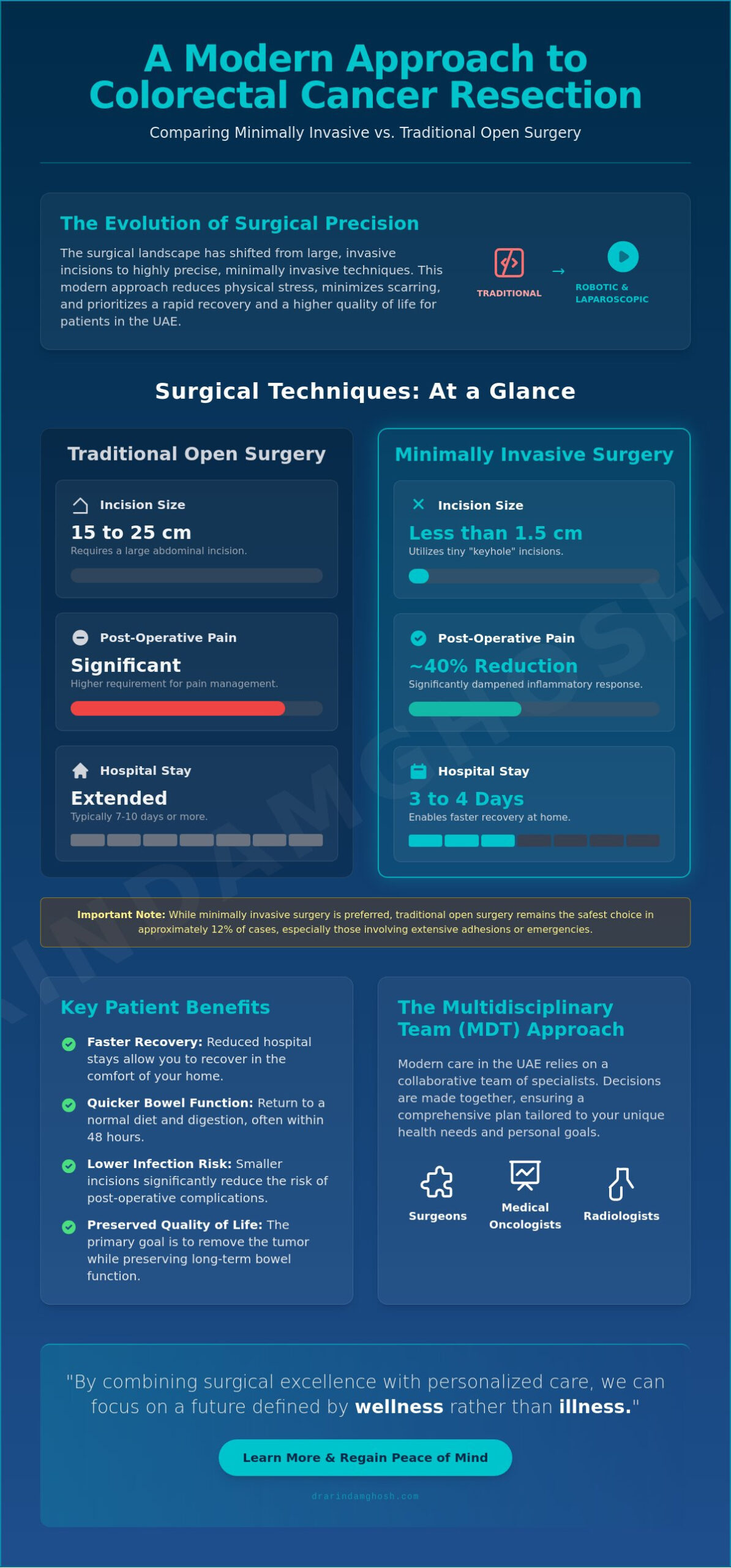
Modern care in the UAE relies on a multidisciplinary team (MDT) approach. We don’t make decisions in isolation. Instead, surgeons, medical oncologists, and radiologists meet to review every detail of your case before the first incision. This collaborative environment ensures we choose the right path for your specific health needs and personal goals.
Sometimes, we use neoadjuvant therapy. This involves giving chemotherapy or radiation before the surgery to shrink the tumor. It makes the resection safer and more effective, especially in complex cases. Our focus is always on a patient-centric model of care. We combine robotic precision with a compassionate human touch to protect your quality of life. We want you to return to your daily activities with confidence. This structured planning is what makes modern gastrointestinal cancer surgery so successful in restoring health to our patients.
Advanced Surgical Techniques: Robotic and Laparoscopic Precision
The surgical landscape for Colorectal Cancer Resection has evolved from invasive open procedures to highly precise, minimally invasive techniques. This shift isn’t just about smaller scars; it’s about reducing the physiological stress on your body. By utilizing “keyhole” incisions, surgeons perform complex removals with minimal disruption to surrounding healthy tissue. This modern approach is now the benchmark for oncology care in the UAE, where leading medical centers prioritize rapid recovery and long-term quality of life. It’s a transition that moves away from the trauma of large abdominal incisions toward a more refined, patient-centered methodology.
Laparoscopic vs. Open Resection
Laparoscopic surgery involves inserting a camera and specialized tools through incisions often smaller than 1.5 centimeters. Compared to traditional open surgery, which requires a 15 to 25-centimeter incision, the laparoscopic method significantly dampens the body’s inflammatory response. Patients typically experience a 40% reduction in post-operative pain and often leave the hospital within 3 to 4 days. While open surgery is still the safest choice in about 12% of cases involving extensive adhesions or emergency complications, the goal is always the least invasive path possible. For a detailed look at what these procedures entail, this patient guide to colectomy offers a clear roadmap of the clinical expectations and preparation steps.
- Reduced Hospital Stay: Shorter stays allow you to recover in the comfort of your home in Dubai or Abu Dhabi much sooner.
- Faster Bowel Function: Minimally invasive techniques lead to a quicker return to normal diet and digestion, often within 48 hours.
- Lower Infection Risk: Smaller incisions naturally reduce the surface area vulnerable to post-surgical complications.
Robotic-Assisted Colorectal Surgery
Robotic technology serves as an extension of the surgeon’s expertise, providing a level of dexterity that surpasses the human hand. In the cramped, narrow environment of the pelvic cavity, robotic instruments offer a 360-degree range of motion. This flexibility is crucial when dissecting delicate tissues near the rectum, bladder, and pelvic nerves. The system’s high-definition 3D visualization provides 10x magnification, allowing the surgical team to identify and preserve microscopic nerve structures that are essential for maintaining bladder and sexual function. It’s a fusion of robotic precision and the human touch, ensuring that the Colorectal Cancer Resection is as accurate as possible. If you’re weighing these advanced options, you can learn more about personalized surgical plans tailored to your unique health profile.
Types of Resection: Tailoring Surgery to the Diagnosis
Every Colorectal Cancer Resection is a personalized strategy designed to eliminate the tumor while safeguarding your long-term wellness. The surgical team prioritizes “clear margins,” which involves removing the malignancy along with a surrounding buffer of healthy tissue. Pathologists examine these edges to ensure a 0% presence of residual cancer cells at the boundary. Following the removal, we perform an anastomosis. This delicate process involves suturing or stapling the healthy bowel segments back together to restore digestive continuity. Our focus remains on ensuring your body functions as naturally as possible after the healing phase, combining robotic precision with a deep commitment to your recovery.
Right and Left Colectomy
A right colectomy targets the ascending colon, while a left colectomy addresses the descending colon. The extent of the resection depends on the blood supply and lymphatic drainage patterns associated with the tumor’s location. By removing the primary blood vessels and surrounding lymph nodes, we significantly reduce the risk of recurrence. Modern Advanced Surgical Techniques for Colorectal Cancer allow us to perform these procedures with minimally invasive methods, often resulting in faster recovery times. Most patients in the UAE return to a normal diet and functional bowel movements within 4 to 6 weeks after the procedure. This methodical approach ensures that the cancer is removed while preserving the healthy sections of your digestive tract.
Low Anterior Resection and Abdominoperineal Resection
Rectal cancers present unique challenges because they sit deep in the pelvis near the anal sphincters. In a Low Anterior Resection (LAR), we remove the cancer while preserving the sphincter muscles to maintain natural bowel control. A temporary stoma may be used to allow the bowel to heal before we perform a reversal surgery. If the cancer is too close to the sphincter, an Abdominoperineal Resection (APR) is necessary, which requires a permanent colostomy. Our multidisciplinary team utilizes specialized tools to protect the nerves responsible for bladder and sexual function, ensuring that your quality of life remains a top priority throughout the surgical journey.
The prospect of a stoma is often a patient’s primary concern, but it’s important to view it as a tool for healing. Whether it’s a colostomy or an ileostomy, these are frequently temporary measures that protect the surgical site. In the UAE, dedicated stoma care nurses provide comprehensive education to ensure you feel confident and supported. Many temporary stomas are reversed within 3 to 6 months, allowing for a full return to a meaningful and healthy existence. We don’t just treat the diagnosis; we walk with you through every step of the restoration process.
The Path to Recovery: Preparation and Post-Operative Care
Success in a Colorectal Cancer Resection begins long before you enter the operating theater. We focus on a process called prehabilitation. This proactive phase involves optimizing your nutritional intake and physical resilience to help your body withstand the stress of surgery. Clinical data indicates that patients who engage in light aerobic exercise and high-protein diets for just 14 days before their procedure see a 30% reduction in post-operative complications. It’s about building a physiological reserve that supports faster healing and better outcomes.
In our practice, we utilize the Enhanced Recovery After Surgery (ERAS) protocol. This evidence-based framework has transformed surgical care in the UAE, moving away from outdated practices like prolonged fasting. Instead, ERAS focuses on early mobilization and specialized pain management that minimizes the use of heavy sedatives. Most patients now find they’re able to sit up and take a few steps within the first 24 hours. This early movement is crucial. It prevents blood clots, protects lung function, and encourages the digestive system to resume its natural rhythm. By following these modern standards, we often reduce hospital stays from the traditional seven days down to just three or four. For a broader perspective on how these protocols apply across different procedures, our comprehensive guide to gastrointestinal cancer surgery and recovery outlines the latest innovations shaping patient outcomes in 2026.
Preparing for Your Procedure
Meticulous preparation ensures your safety. You’ll receive a specific bowel preparation kit to clear the colon, which is essential for a sterile surgical environment. Managing chronic conditions is a collaborative effort; our multidisciplinary team will review your medications, especially if you’re managing diabetes or heart disease. We typically adjust blood thinners or insulin dosages 5 to 7 days before the surgery. Mental readiness is just as vital as physical prep. We encourage you to share your anxieties openly. Clear communication helps lower stress hormones, which directly benefits your recovery speed.
Life After Colorectal Resection
Your journey toward restoring your quality of life continues at home. During the first few weeks, you’ll adopt a low-fiber diet to allow the intestinal sutures to heal without irritation. You can usually transition back to your favorite meals within 6 weeks. Physical activity should be a gradual progression; start with short walks in climate-controlled environments before resuming more strenuous tasks. Vigilance is key during this time. You should contact us immediately if you experience red flags like a fever above 38°C, persistent nausea, or sudden abdominal pain. Long-term wellness requires consistent monitoring, including a follow-up colonoscopy typically scheduled 12 months after your Colorectal Cancer Resection.
If you’re preparing for surgery and want to learn more about our patient-centered approach, consult with Dr. Arindam Ghosh today to discuss your personalized recovery plan.
Choosing the Right Surgical Partner for Your Journey
Selecting a surgeon for a colorectal cancer resection is a decision that carries immense weight for both the patient and their family. It requires a delicate balance of high-level technical skill and profound emotional intelligence. Dr. Arindam Ghosh integrates over 25 years of specialized experience with the most advanced surgical technologies available in the UAE. By practicing in the region’s premier multidisciplinary hospital environments, he ensures that every procedure is backed by world-class infrastructure and a culture of clinical excellence.
While robotic precision and laparoscopic tools are essential for modern outcomes, the human touch remains the cornerstone of healing. Dr. Ghosh views himself as a compassionate ally in your recovery. He understands that cancer care is as much about managing anxiety and providing clarity as it is about the surgery itself. This philosophy bridges the gap between clinical facts and the human experience of illness, creating a sense of security during a period of uncertainty. It’s this blend of seasoned judgment and empathy that defines his practice.
The Multidisciplinary Approach
Successful recovery depends on a collective effort. Dr. Ghosh works closely with a team of oncologists, radiologists, and nutritionists to ensure every aspect of your health is addressed. This team-based strategy allows for a comprehensive review of each case from multiple perspectives. The primary goal is always the restoration of your quality of life. Rather than just treating a diagnosis, the focus remains on holistic healing through specific interventions:
- Developing personalized care plans tailored to your unique physiology and lifestyle.
- Coordinating post-operative nutrition to accelerate the body’s natural healing process.
- Utilizing advanced imaging to monitor progress with extreme precision.
- Prioritizing minimally invasive techniques to reduce pain and shorten hospital stays.
Next Steps: Consultation and Empowerment
Your first consultation is an opportunity to move from a state of uncertainty toward informed empowerment. We encourage patients to arrive prepared with their medical history and a list of specific concerns. Education is a vital part of the treatment process. When you understand the mechanics of your colorectal cancer resection and the expected recovery timeline, you can participate more actively in your own healing. Dr. Ghosh prioritizes transparent communication, ensuring no question goes unanswered and no concern is overlooked.
Taking the first step toward surgical intervention can feel daunting, but you don’t have to face it alone. Expert guidance and compassionate care are available to help you move forward with confidence. Restoring your health is a collaborative process that begins with a single conversation.
Schedule a consultation with Dr. Arindam Ghosh to discuss your surgical options.
Taking the Next Step Toward Your Recovery
Navigating a diagnosis requires a clear roadmap and a steady hand. Modern surgical care has evolved to prioritize your long-term quality of life through minimally invasive techniques. Whether you’re undergoing a robotic-assisted procedure or a laparoscopic intervention, the focus remains on surgical precision and faster recovery times. Choosing a specialist who understands the nuances of Colorectal Cancer Resection is the most critical step in your treatment plan.
Dr. Arindam Ghosh brings over 25 years of specialized surgical experience to every case he manages. His expertise in advanced robotic and laparoscopic techniques ensures that patients across premier hospitals in the UAE receive world-class care tailored to their unique medical needs. You don’t have to face this journey alone. By combining clinical rigor with a compassionate, multidisciplinary approach, we help you move from a state of uncertainty to one of informed empowerment. Your health is a lifelong investment, and we’re here to protect it.
Consult with Dr. Arindam Ghosh for Expert Colorectal Cancer Care and take the first step toward a healthier future today. You deserve a partner who values your recovery as much as you do.
Frequently Asked Questions
Is a colorectal cancer resection a major surgery?
Yes, a colorectal cancer resection is considered a major abdominal procedure because it involves the removal of a diseased segment of the colon or rectum. In UAE surgical centers, this operation requires general anesthesia and a hospital stay of 3 to 7 days. While it’s a significant intervention, our use of minimally invasive techniques reduces the physical impact on your body and promotes a faster return to wellness.
How long is the recovery time after a colectomy?
Most patients return to light activities within 14 to 21 days after the procedure. Full internal healing typically takes 6 to 8 weeks. During the first 14 days, you’ll focus on short walks to prevent blood clots. In our clinical practice, we see patients returning to office-based work by day 21, though you must avoid lifting objects over 5 kilograms for at least 2 months.
Will I need a permanent colostomy bag after colorectal cancer surgery?
No, more than 90% of patients who undergo a colorectal cancer resection don’t require a permanent stoma. A temporary bag might be used for 3 to 6 months to allow the intestinal connection to heal safely. Permanent bags are usually only necessary if the tumor is located within 5 centimeters of the anal sphincter. Our priority is always to preserve your natural function and quality of life.
What are the risks associated with colorectal resection?
Primary risks include anastomotic leaks, which occur in approximately 3% to 6% of cases, and localized infections. Other potential complications include temporary bowel paralysis or bleeding. We use Enhanced Recovery After Surgery (ERAS) protocols to lower these risks by 30%. Your multidisciplinary team provides constant monitoring to ensure any post-operative challenges are managed with immediate clinical authority and care.
Can colorectal cancer be cured by surgery alone?
Yes, surgery is often the primary cure for Stage I and some Stage II cancers where the 5-year survival rate exceeds 91%. For Stage III cases, we typically combine surgical intervention with chemotherapy to eliminate any remaining microscopic cells. Every treatment plan is personalized. We evaluate your specific pathology to determine if surgery alone is sufficient or if a more comprehensive approach is required for long-term health.
How soon can I eat normally after bowel resection surgery?
You’ll typically begin a clear liquid diet within 24 hours of your surgery. We usually progress to soft foods by day 3 and a regular diet within 7 days. It’s vital to avoid high-fiber foods like raw skins or seeds for the first 4 weeks to prevent irritation at the surgical site. This measured approach allows your digestive system to adapt comfortably while ensuring proper nutrition for healing.
What is the difference between laparoscopic and robotic colorectal surgery?
Robotic surgery provides a 3D high-definition view and greater instrument maneuverability compared to the 2D perspective of standard laparoscopy. While both are minimally invasive, the robotic system allows for 360-degree wrist rotation. This precision is especially beneficial when working in the narrow pelvic cavity. These technological advancements lead to less blood loss and a more precise removal of cancerous tissue than traditional open methods.
How do I know if my surgeon is qualified for complex GI oncology?
Look for a surgeon who is board-certified and performs at least 50 colorectal procedures annually. It’s important that they operate within UAE-accredited hospitals and utilize a multidisciplinary team approach. A qualified specialist should be transparent about their success rates and proficient in robotic-assisted tools. Choosing an expert who balances technical precision with a compassionate, patient-centered philosophy ensures you’re in safe hands throughout your recovery journey.
One comment
Pingback: Gastrointestinal Cancer Surgery: A Comprehensive Guide to Advanced Treatment and Recovery