

Approximately 20% of the Western population lives with gallstone disease as of May 2026, yet many people choose to delay care until a clinical crisis occurs. It’s natural to feel a sense of hesitation or even fear when considering surgical options, especially if you aren’t currently in constant pain. You might find yourself asking what happens if gallstones are left untreated and whether those “silent stones” truly require professional intervention. This uncertainty is understandable, but ignoring these small calcifications can lead to a cascade of complex digestive challenges that impact your long-term wellness.
I recognize that the prospect of surgery can be daunting, but my goal is to provide you with the clarity needed to make an empowered decision for your health. In this article, you’ll discover the potential risks of ignoring gallbladder symptoms and learn exactly when medical intervention becomes essential for your safety. We’ll explore the progression from simple stones to serious conditions like acute cholecystitis or pancreatitis, and how our multidisciplinary team uses robotic precision to restore your quality of life. By understanding these red flags, you can move from a state of anxiety toward a path of lasting recovery.
Key Takeaways
- Recognize the transition from simple biliary colic to severe inflammation, helping you understand the clinical progression of gallbladder disease.
- Gain a clear understanding of what happens if gallstones are left untreated, specifically regarding the risk of stones migrating to the bile ducts or pancreas.
- Identify the specific criteria surgeons use to evaluate asymptomatic stones, ensuring you know exactly when it’s time to prioritize your long-term wellness.
- Explore the benefits of Laparoscopic Cholecystectomy, the modern gold standard that uses precision techniques to restore your quality of life quickly.
Table of Contents
- Understanding Gallstones: The Risks of the "Wait and See" Approach
- From Discomfort to Emergency: How Untreated Gallstones Progress
- Beyond the Gallbladder: Life-Threatening Complications in the Pancreas and Bile Ducts
- Silent Gallstones vs. Symptomatic Disease: Determining When to Act
- Modern Surgical Solutions: Restoring Quality of Life Through Precision Care
Understanding Gallstones: The Risks of the “Wait and See” Approach
The gallbladder acts as a vital reservoir, storing bile produced by the liver to assist in the digestion of fats. When this delicate chemical balance is disrupted, solid particles known as cholelithiasis can form. While many patients live with “silent” stones for years without awareness, the discovery of these deposits often leads to a difficult question: is it safe to wait? Understanding what happens if gallstones are left untreated is essential for anyone weighing the risks of a “watchful waiting” approach against the benefits of proactive medical care. Biliary colic, characterized by sudden and intense pain in the upper right abdomen, serves as the primary warning sign that your gallbladder is in distress and requires clinical attention.
How Gallstones Form and Why They Persist
Gallstones typically develop due to an imbalance between cholesterol and bilirubin in the bile. Unlike kidney stones, which are often small enough to pass through the urinary tract, gallstones reside within a sac-like organ and rarely exit the body naturally. Many patients hope that strict dietary changes or holistic flushes can dissolve these existing hardened masses. However, once a stone has formed, it remains a physical presence within the gallbladder. Clinical data from May 2026 indicates that approximately 20% of the Western population is affected by this condition. While diet can manage symptoms, it cannot eliminate the stones themselves. For a deeper look at the biology of these deposits, Understanding Gallstones provides a comprehensive overview of how these chemical imbalances lead to symptomatic disease.
The Distinction Between Asymptomatic and Symptomatic Stones
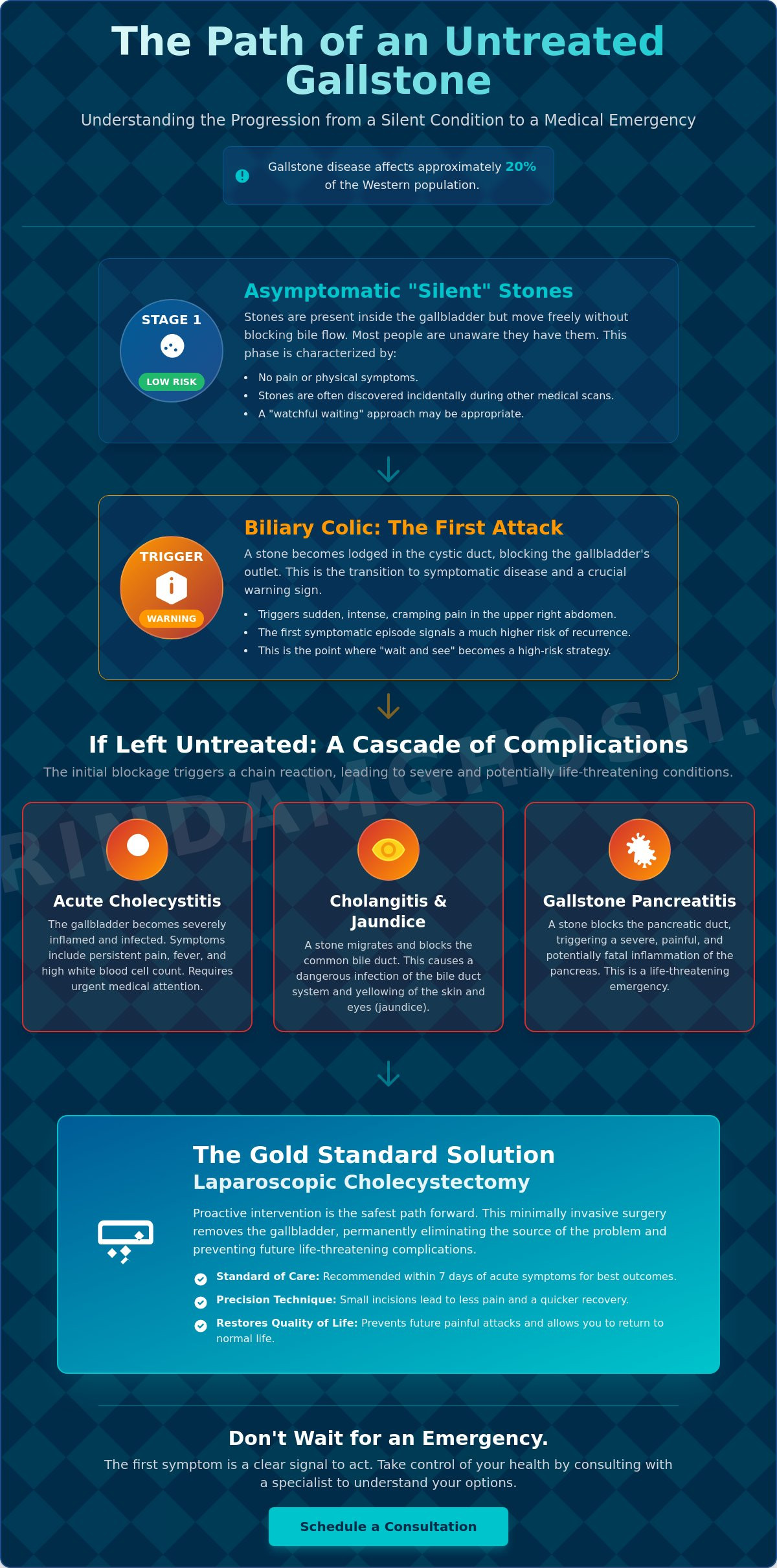
Asymptomatic stones are frequently discovered during routine abdominal scans for unrelated issues. In this “silent” phase, the stones move freely within the gallbladder without obstructing the flow of bile. The critical transition point occurs when a stone becomes lodged in the cystic duct, preventing the gallbladder from emptying properly. This blockage triggers the first painful “attack,” which is a significant clinical predictor. Statistics show that once a patient experiences their first symptomatic episode, they face a much higher risk of recurring and more severe complications. I view this first episode not just as a moment of pain, but as a vital signal from the body that your long-term wellness is under threat. It’s the point where “wait and see” often transitions into a necessity for surgical intervention to protect your quality of life.
From Discomfort to Emergency: How Untreated Gallstones Progress
When a gallstone moves from a “silent” state to an obstructive one, the clinical landscape changes rapidly. Many patients experience biliary colic—a sharp, cramping pain—and hope it will simply pass. However, understanding what happens if gallstones are left untreated requires looking closely at the physical mechanics of the gallbladder. When a stone blocks the cystic duct, bile remains trapped, and the gallbladder continues to contract against the obstruction. This creates intense internal pressure that compromises the organ’s lining. According to the Risks of untreated gallstones, this progression can move from simple discomfort to life-threatening infection if the blockage isn’t resolved.
Clinical guidelines updated on January 27, 2026, emphasize that early intervention is the standard of care. For those facing acute symptoms, performing a Laparoscopic Cholecystectomy within seven days of hospital admission significantly reduces the risk of long-term complications. Delaying treatment allows the condition to evolve from localized inflammation into systemic danger, often requiring more invasive emergency measures rather than a planned, precise procedure.
Acute Cholecystitis: When Inflammation Becomes Critical
Acute cholecystitis occurs when a trapped stone triggers a cycle of chemical and bacterial irritation. You may notice persistent pain that doesn’t subside after a few hours, often accompanied by a fever and an elevated white blood cell count (leukocytosis). If the bile becomes infected, it can lead to empyema, where the gallbladder fills with pus. In severe cases, the tissue begins to die, a condition known as gangrene. Once this level of inflammation sets in, surgical intervention becomes more complex, as the surrounding tissues become “friable” and difficult to navigate with the usual surgical precision.
The Danger of Gallbladder Perforation
The most alarming stage of untreated disease is gallbladder perforation. This happens when the gallbladder wall, starved of blood supply due to extreme pressure and swelling, eventually gives way. This rupture allows infected bile and stones to spill into the abdominal cavity, leading to peritonitis. Peritonitis is a true surgical emergency that can cause sepsis and organ failure. The surgical risks for an emergency rupture are significantly higher than those for an elective, minimally invasive procedure. Choosing to address symptoms early through personalized surgical care ensures that we can use the most advanced laparoscopic tools to protect your health before an emergency arises.
Beyond the Gallbladder: Life-Threatening Complications in the Pancreas and Bile Ducts
While localized inflammation is a serious concern, the risks of biliary disease extend far beyond the gallbladder itself. To fully grasp what happens if gallstones are left untreated, we must look at the intricate network of ducts that connect the liver, gallbladder, and pancreas. Choledocholithiasis occurs when a stone migrates out of the gallbladder and becomes lodged in the common bile duct. This creates a critical bottleneck, preventing bile from reaching the small intestine. This blockage doesn’t just cause pain; it triggers a backup of toxins into the liver and bloodstream, shifting the clinical focus from a single-organ issue to a complex, multi-organ challenge that requires a multidisciplinary approach to resolve.
When stones move into these shared pathways, the potential for systemic illness increases. A stone blocking the biliary tree can lead to ascending cholangitis, a severe infection that can rapidly progress to sepsis. Treating these advanced stages is significantly more complex than a standard gallbladder removal, often requiring coordinated care between surgical oncology experts and gastroenterologists. Recognizing the symptoms of gallstone complications early is the most effective way to prevent these systemic crises and protect your long-term wellness.
Gallstone Pancreatitis: A Serious Medical Emergency
The common bile duct and the pancreatic duct often share a single exit point into the small intestine. If a small stone becomes lodged at this junction, it can block the flow of pancreatic enzymes. These powerful enzymes, intended to digest food, instead become trapped and begin to irritate the pancreas itself. This results in gallstone pancreatitis, characterized by a severe, “boring” pain that often radiates through to the back. If treatment is delayed, the resulting inflammation can lead to permanent tissue damage or necrosis. In my practice, I prioritize stabilizing the pancreas before performing a definitive surgical solution to ensure the best possible recovery and quality of life.
Jaundice and Bile Duct Obstruction
A clear sign that a stone has migrated into the ductal system is the onset of jaundice. You may notice a distinct yellowing of the eyes and skin, accompanied by dark, tea-colored urine and pale, clay-colored stools. These symptoms indicate that bilirubin, a waste product usually excreted in bile, is backing up into your system. This systemic toxicity can affect multiple organs and requires immediate intervention. We often utilize ERCP (Endoscopic Retrograde Cholangiopancreatography) as a specialized tool to identify and remove these ductal stones before proceeding with a laparoscopic cholecystectomy. Addressing these obstructions promptly is essential to restoring your body’s natural balance and preventing further digestive trauma.
Silent Gallstones vs. Symptomatic Disease: Determining When to Act
Many patients tell me during our first meeting, “I don’t want surgery because it doesn’t hurt yet.” I understand this hesitation. It’s human nature to avoid a procedure when you aren’t in active distress. However, it’s vital to distinguish between “watchful waiting” and “active neglect.” Understanding what happens if gallstones are left untreated involves recognizing that even silent stones can pose a hidden risk. For instance, a condition known as a “porcelain gallbladder,” where the gallbladder wall becomes calcified, carries a heightened risk of future complications despite a lack of pain. In these specific cases, my multidisciplinary team recommends intervention to protect your long-term wellness.
The contrast between elective and emergency surgery is significant. Elective procedures are performed under controlled conditions, allowing us to utilize robotic precision and laparoscopic tools for a recovery that is typically swift and predictable. In contrast, emergency surgery for an infected or ruptured gallbladder involves higher clinical risks and a much more taxing recovery process. Initiating a surgical consultation process early allows us to map out a personalized treatment plan, giving you the power to choose health on your own terms rather than during a medical crisis.
Identifying Your “Red Flags” for Immediate Care
Knowing when to seek emergency care can be life-saving. If you experience a high fever, yellowing of the eyes or skin, or vomiting that won’t stop, you must visit an emergency department immediately. These are signs that a stone has likely caused a dangerous blockage or infection. During a physical examination, I often look for “Murphy’s Sign,” which is a sharp catch in breath when I apply pressure to the gallbladder area while you breathe deeply. A positive Murphy’s sign is a strong indicator of acute inflammation. You shouldn’t rely on over-the-counter pain relief to mask these symptoms. While they might provide temporary comfort, they can hide a dangerous progression that requires urgent surgical attention.
The Role of Diagnostic Imaging in UAE Clinical Practice
In our local clinical practice, ultrasound remains the gold standard for gallbladder evaluation due to its non-invasive nature and high accuracy rate. It allows us to see the size and number of stones clearly. If we suspect that stones have migrated into the bile ducts, we utilize more advanced tools like MRCP (Magnetic Resonance Cholangiopancreatography) or CT scans to create a detailed map of your biliary tree. These high-tech imaging techniques ensure that our surgical approach is methodical and precise. For those with known “silent” stones, regular follow-up scans are a prudent way to monitor for changes, ensuring your quality of life remains uncompromised. If you’re uncertain about your current diagnosis, booking a diagnostic review can provide the clinical clarity you need to move forward with confidence.
Modern Surgical Solutions: Restoring Quality of Life Through Precision Care
Laparoscopic Cholecystectomy has emerged as the global gold standard for resolving gallbladder disease, offering a path back to health that prioritizes both safety and comfort. While the earlier sections of this guide detailed the systemic dangers and what happens if gallstones are left untreated, modern surgical advancements provide a hopeful and effective resolution. My approach centers on a philosophy of human touch with robotic precision, ensuring that every procedure is as minimally invasive as possible. By utilizing small incisions and high-definition visualization, we can remove the source of inflammation while preserving the integrity of the surrounding tissues. This precision allows patients to return to their normal diets and active lifestyles without the constant shadow of a potential biliary crisis.
Why “Gold Standard” Laparoscopic Surgery is Preferred
The shift toward laparoscopic techniques has revolutionized patient outcomes. In uncomplicated cases, most patients benefit from a 24-hour recovery window, often returning home the same day or the following morning. This is a significant improvement over traditional open surgery, which required longer hospital stays and more extensive healing times. As of May 2026, clinical data confirms that minimally invasive gallbladder removal significantly reduces post-operative complications such as wound infections and respiratory issues. I often reassure my patients that living without a gallbladder doesn’t hinder digestion. Your liver continues to produce bile, which then flows directly into the small intestine to assist with fat breakdown, allowing you to maintain a full and healthy existence.
Choosing Expert Care for Complex GI Conditions
When dealing with the complexities of the digestive system, the expertise of your surgical team is paramount. With over 25 years of experience in complex procedures and gastrointestinal cancer surgery, I’ve seen how a multidisciplinary approach can transform a patient’s recovery journey. We don’t just view surgery as a technical task; it’s a collaborative effort to restore your long-term wellness. By addressing symptoms before they escalate into emergencies, we can ensure the highest standards of safety and clinical rigor.
Ultimately, the goal of intervention is to protect your quality of life. Understanding what happens if gallstones are left untreated is the first step toward making an informed choice. Whether you’re managing silent stones or recurring pain, choosing proactive care allows you to avoid the risks of emergency complications like pancreatitis or cholangitis. I invite you to view surgery not as an obstacle, but as a gateway to a meaningful and healthy life, free from the constraints of gallbladder disease.
Choosing Proactive Care for Lasting Wellness
We’ve explored how seemingly silent stones can transition into acute cholecystitis or life-threatening complications like gallstone pancreatitis. The clinical reality is that “watchful waiting” should never become a state of active neglect. Gaining clarity on what happens if gallstones are left untreated allows you to move from a place of uncertainty toward a pathway of informed empowerment. Modern advancements in robotic and laparoscopic tools mean that resolving gallbladder disease is safer and more precise than ever before.
With over 25 years of specialized GI surgical experience, I offer comprehensive care across premier hospitals in the UAE. My focus remains on restoring your quality of life through a blend of clinical authority and deep empathy. You don’t have to wait for a painful emergency to prioritize your digestive health. Consult with Dr. Arindam Ghosh for an expert evaluation of your gallbladder health. Your journey to wellness is a collaborative process, and we’re here to support you every step of the way.
Frequently Asked Questions
Can gallstones go away on their own without surgery?
Gallstones don’t go away on their own or dissolve naturally. While some small stones might pass into the intestine, they often cause significant pain or dangerous blockages during the process. Data from May 2026 shows that approximately 20% of the Western population is affected by these deposits. Relying on “cleanses” is ineffective because the underlying chemical imbalance in the bile remains, making surgery the only definitive solution for symptomatic patients.
What are the first warning signs that gallstones are becoming dangerous?
The first signs of a clinical emergency include a high fever, yellowing of the eyes or skin, and abdominal pain that lasts longer than six hours. These symptoms indicate that a stone has moved from the gallbladder into a duct, potentially causing infection or organ damage. If you experience these “red flags,” it’s a clear signal of what happens if gallstones are left untreated for too long, requiring immediate surgical evaluation to protect your health.
Is it possible to live a normal life after gallbladder removal?
You can live a perfectly healthy and normal life without a gallbladder. The organ’s primary role is bile storage, but after a Laparoscopic Cholecystectomy, the liver simply sends bile directly into the small intestine to aid digestion. Most patients return to their regular diet within a few weeks of the procedure. Modern surgical precision ensures that your quality of life is restored without long term digestive restrictions or significant lifestyle changes.
What happens if a gallstone gets stuck in the bile duct?
A stone lodged in the common bile duct causes a backup of bile, leading to jaundice and systemic toxicity. This condition, known as choledocholithiasis, can trigger life threatening infections like ascending cholangitis or lead to gallstone pancreatitis. Treatment usually involves a multidisciplinary approach, often requiring an ERCP procedure to clear the duct before the gallbladder itself is removed to prevent future recurrences and ensure your long term wellness.
How long can I safely wait before having gallbladder surgery?
For asymptomatic stones, a “watchful waiting” approach might be appropriate under professional supervision. However, clinical guidelines updated in January 2026 recommend that patients with acute symptoms undergo surgery within seven days of hospital admission. Delaying treatment after the first symptomatic “attack” significantly increases the risk of emergency complications, such as gallbladder rupture or gangrene, which are much harder to manage than elective, planned cases.
Are there any non-surgical treatments for gallstones in the UAE?
While oral medications to dissolve stones exist, they’re only suitable for a small percentage of patients with specific types of cholesterol stones. These treatments often take years to work and have a high recurrence rate once the medication is stopped. In the UAE, specialized surgical centers prioritize laparoscopic and robotic assisted procedures because they offer a permanent solution with minimal recovery time compared to the uncertainty of lifelong medication management.
What is the difference between a gallbladder attack and indigestion?
A gallbladder attack typically causes intense, steady pain in the upper right abdomen that may radiate to the right shoulder. Unlike indigestion, which often involves bloating or a burning sensation that responds to antacids, gallbladder pain is sharp and can last for several hours. If the pain is accompanied by nausea or occurs specifically after fatty meals, it’s likely a sign of gallbladder distress rather than simple gastric upset.
Can untreated gallstones lead to cancer?
Chronic inflammation caused by long term stone presence is a recognized risk factor for gallbladder cancer. While this complication is rare, it underscores what happens if gallstones are left untreated over many years. Conditions like a porcelain gallbladder, where the wall calcifies due to chronic irritation, significantly increase this risk. Early intervention through a multidisciplinary team ensures these long term oncology risks are managed effectively before they impact your quality of life.