

Did you know that over 600,000 people each year find relief from gallbladder disease through a procedure that now carries a 95 to 97% success rate? If you’re struggling with the sharp, unpredictable pain of biliary colic, you’re likely searching for a permanent solution that doesn’t involve a long, painful recovery. It’s natural to feel anxious about the idea of surgery or to worry about how your digestion will change once your gallbladder is removed. You deserve a path forward that combines clinical excellence with a deep understanding of your personal health journey.
I promise that a modern Laparoscopic Cholecystectomy offers exactly that; a minimally invasive, precision-driven intervention designed to restore your quality of life. Today’s surgical standards, including the April 2026 SAGES guidelines on routine intraoperative imaging, ensure the highest level of safety and anatomical accuracy. This guide explores the latest 2026 cost data, clarifies dietary transitions, and explains how most patients return to their family and work within just 3 to 5 days. We’ll bridge the gap between advanced medical technology and the compassionate care you need to feel whole again.
Key Takeaways
- Understand the mechanics of gallbladder disease and how identifying common triggers can help you move from chronic pain to a state of digestive wellness.
- Explore the advanced technology behind a Laparoscopic Cholecystectomy and how high-definition visualization ensures surgical precision while prioritizing patient safety.
- Identify the specific advantages of minimally invasive “keyhole” techniques over traditional open surgery, focusing on reduced scarring and shorter hospital stays.
- Access actionable strategies for managing your recovery at home, including essential tips for navigating the critical first 48 hours after your procedure.
- Learn how a personalized, patient-centric approach to surgical care can permanently resolve biliary colic and restore your long-term quality of life.
Understanding Gallbladder Disease and the Need for Intervention
The gallbladder serves as a vital storage organ for bile, a fluid produced by the liver to assist with fat digestion. For most people, this process happens seamlessly behind the scenes. However, when the chemical balance of bile is disrupted, gallstones can form. This condition, known as cholelithiasis, often starts quietly. You might not notice anything until a stone shifts and blocks a duct, leading to the sudden, intense pain often associated with gallbladder disease. This disruption to your digestive system can turn a simple meal into a source of significant anxiety.
Recognizing the warning signs is the first step toward reclaiming your health. While some individuals experience silent stones that show no symptoms, others face acute attacks that signal a need for urgent intervention. If you find yourself frequently adjusting your diet or losing sleep due to abdominal discomfort, watchful waiting might no longer be the safest path. Delaying treatment can lead to complications like infection or jaundice, which significantly increase the complexity of your care. Taking action early allows for a more controlled, elective approach to your recovery.
The Progression of Gallbladder Conditions
Silent stones can remain dormant for years, but once they become symptomatic, the likelihood of future attacks increases by roughly 70%. It’s essential to understand how gallstone symptoms dictate the surgical timeline. Untreated inflammation, or cholecystitis, can lead to gallbladder scarring or even rupture. My multidisciplinary approach focuses on intervening before these risks escalate, ensuring a smoother recovery and a quicker return to your family and work.
Why Surgery is the Gold Standard
Non-surgical treatments, such as medications to dissolve stones, often fail because they don’t address the underlying cause of stone formation. As detailed in Wikipedia’s page on Cholecystectomy, surgical removal is the only definitive way to prevent recurring biliary colic and life-threatening issues like gallstone pancreatitis. A Laparoscopic Cholecystectomy is the modern standard for permanent relief, utilizing small incisions and advanced optics to remove the diseased organ with minimal impact on the body. By choosing this precision-driven path, you are not just treating a symptom; you’re protecting your long-term wellness and preventing the complications associated with emergency procedures.
The Laparoscopic Approach: Precision and the Human Touch
Minimally invasive surgery represents a fundamental shift in how we approach the healing process. It isn’t just about smaller scars; it’s a philosophy of achieving maximum surgical impact with minimal disruption to your body’s natural state. During a Laparoscopic Cholecystectomy, I utilize a specialized camera called a laparoscope that projects a high-definition, magnified view of your internal anatomy onto a monitor. This visual clarity allows for a level of detail that traditional open surgery simply cannot match. By seeing the delicate structures of the biliary system in such vivid detail, I can operate with a degree of accuracy that protects healthy tissue and promotes faster healing.
Safety is the cornerstone of every procedure I perform. This begins long before you enter the operating room, with meticulous surgical planning tailored to your unique anatomy. We lean on the latest clinical standards to ensure every movement is deliberate. You can find a detailed breakdown of these procedural advantages in the SAGES patient guide to gallbladder removal, which explains why this technique is the preferred choice for modern surgeons and patients alike.
Inside the Operating Theatre
Success in the operating room is the result of a highly coordinated multidisciplinary team. My team and I work in a synchronized rhythm, where every member understands their specific role in your safety. We follow a methodical process to safely detach the gallbladder from the liver bed and the cystic duct. By integrating robotic-assisted tools, we achieve a level of “robotic precision” that is especially beneficial when navigating complex or inflamed biliary structures. This synergy between human expertise and advanced technology ensures that the organ is removed safely through one of the small “keyhole” incisions.
Technology Meets Compassion
I often speak about “high-tech compassion” because I believe that advanced tools lose their value if they aren’t guided by empathy. It’s natural to feel anxious about surgery, which is why I prioritize clear, unhurried communication during our pre-operative consultations. We use this time to answer your questions and build a foundation of trust. Modern energy devices utilize advanced thermal technology to minimize blood loss and surrounding tissue trauma during the procedure. This focus on surgical excellence and emotional support is why so many patients feel confident when they reach out to discuss their surgical options. My goal is to ensure you feel like a partner in your own care, moving toward a pain-free life with clarity and hope.
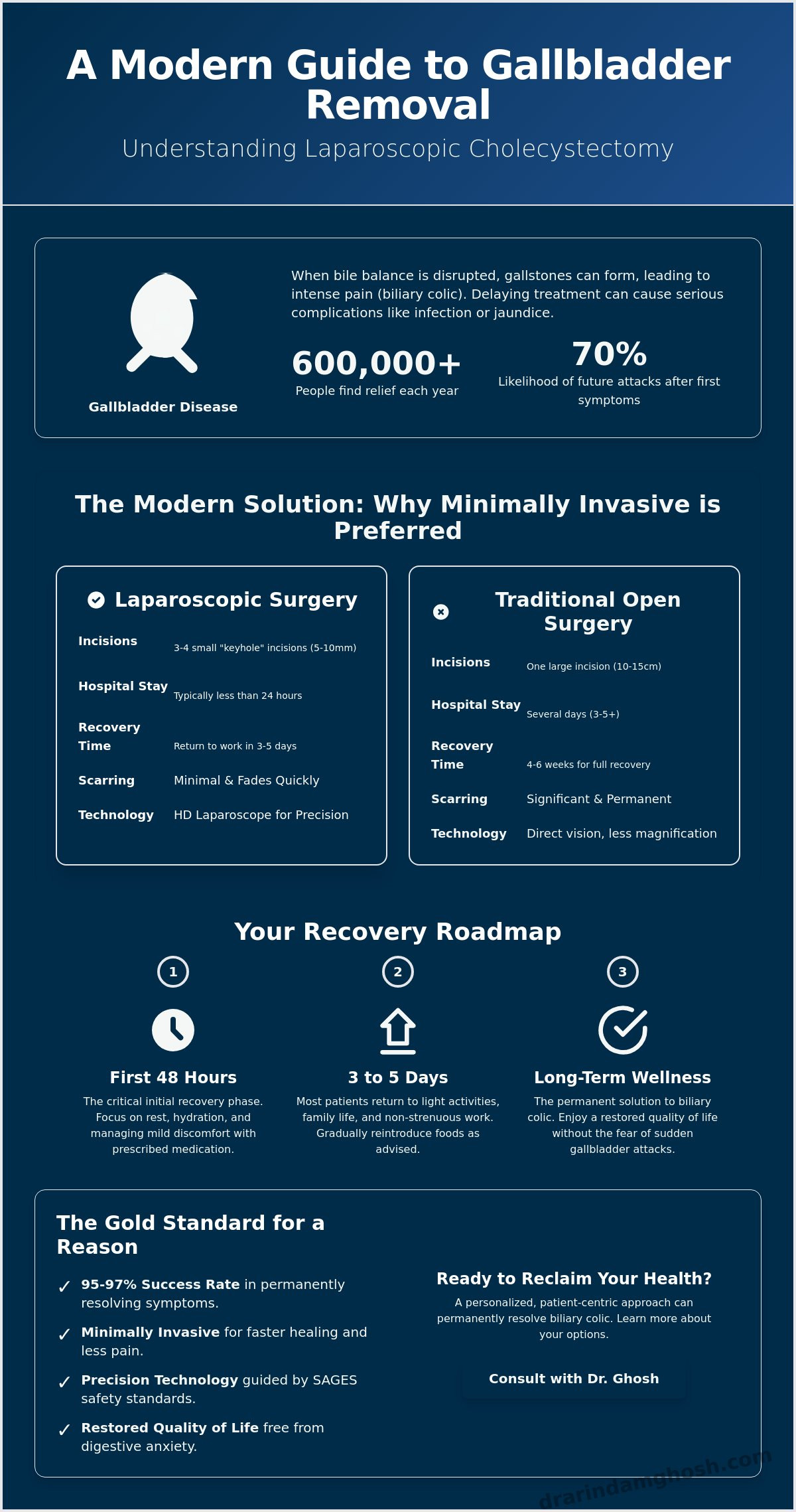
Laparoscopic vs. Open Surgery: Why Minimally Invasive is Preferred
Choosing between surgical methods is a pivotal moment in your treatment journey. Traditional open surgery requires a large subcostal incision, usually 10 to 15 centimeters long, to provide the surgeon with direct access to the gallbladder. In contrast, a Laparoscopic Cholecystectomy utilizes three or four “keyhole” incisions, with the largest often measuring less than 1.5 centimeters. This dramatic reduction in physical trauma is the foundation of a faster, more comfortable recovery. By minimizing the disruption to your abdominal wall, we significantly lower the risk of post-operative infections and incisional hernias, which are more common with larger, traditional wounds.
The long-term cosmetic outcomes are equally reassuring. While open surgery leaves a prominent scar, laparoscopic ports heal into tiny, faint marks that often become nearly invisible over time. This aesthetic benefit is a reflection of the precision-driven nature of the procedure. Clinical data, such as this Laparoscopic Cholecystectomy Overview, confirms that the minimally invasive approach is the gold standard because it prioritizes both your clinical safety and your long-term quality of life.
Evaluating the Benefits
The most immediate advantage you’ll notice is a significant reduction in post-operative pain. Smaller incisions mean you’ll likely require less heavy pain medication, which in turn helps your body recover its natural rhythms faster. We focus on a quick return to normal bowel function, allowing you to transition back to a regular diet sooner than traditional surgery would allow. While open surgery often requires a multi-day hospital stay for monitoring, most laparoscopic patients are discharged the same day, returning to the comfort of their own homes within hours of waking up.
When is Open Surgery Necessary?
While my goal is always to provide a minimally invasive solution, your safety remains the absolute priority. In approximately 1% to 5% of cases, a surgeon may decide to convert to an open procedure. This isn’t a failure of the technique; rather, it’s a disciplined clinical decision made when complex anatomy, severe inflammation, or extensive scarring from previous operations prevents a clear view of the biliary structures. If a conversion becomes necessary, it’s a proactive step taken by your multidisciplinary team to ensure the most secure outcome. Regardless of the method used, our commitment to your holistic wellness and successful recovery never wavers.
Navigating Your Recovery: A Roadmap to Wellness
Your journey toward a pain-free life doesn’t end when the surgery is over; it transitions into a structured recovery phase designed to restore your vitality. Most patients who undergo a Laparoscopic Cholecystectomy are pleasantly surprised by how quickly they can return to their personal routines. In the first few hours after waking up, you’ll be monitored by our multidisciplinary team to ensure your vitals are stable and your pain is well-managed. It’s common to feel some shoulder discomfort or bloating caused by the carbon dioxide used during the procedure, but gentle movement and deep breathing exercises help these sensations resolve quickly. Because this is a minimally invasive approach, most individuals are ready for discharge on the same day, allowing them to begin their healing in the comfort of their own homes.
The first 48 hours at home are about prioritizing rest and hydration. You don’t need to stay in bed, but you should listen to your body’s signals and avoid overexertion. Managing your comfort involves a combination of prescribed medication and simple home care strategies. If you notice a fever over 101 degrees Fahrenheit, worsening abdominal pain, or any yellowing of the skin or eyes, it’s vital to contact our surgical team immediately. These signs are rare, but early communication ensures that your roadmap to wellness remains on track. If you have specific questions about your unique healing process, you can consult with Dr. Ghosh’s team to receive personalized guidance.
The First Week of Recovery
Maintaining the integrity of your small “keyhole” incisions is a straightforward process. You’ll need to keep the wound sites clean and dry, usually following specific showering instructions provided at discharge. While heavy lifting (anything over 10 pounds) is restricted for at least two to four weeks, gentle walking is highly encouraged to promote circulation and digestion. Most patients find they can return to desk-based work and light daily activities within 3 to 7 days, depending on their individual comfort levels and the physical demands of their roles. This rapid timeline is one of the most significant benefits of modern laparoscopic techniques.
Long-term Dietary Adjustments
Without a gallbladder to store bile, your liver now releases this digestive fluid directly into the small intestine in a continuous, steady flow. Most people adapt to this change without any long-term issues, but the first few weeks require a mindful transition. During this adaptation phase, it’s wise to identify “trigger foods,” which are often high-fat, greasy, or spicy items that might cause temporary bloating or loose stools. Start with small, frequent meals rather than three large ones to give your digestive system time to adjust. The ultimate goal is a return to a balanced, unrestricted diet where you can enjoy your favorite foods without the fear of a biliary colic attack.
Restoring Your Quality of Life with Expert Surgical Care
Living with the constant threat of a gallbladder attack creates a persistent shadow over every meal and social gathering. Successful surgery lifts this heavy burden, allowing you to rediscover the simple joy of eating and living without fear. My approach to a Laparoscopic Cholecystectomy is rooted in the belief that every patient deserves a treatment plan as unique as their own biology. With over 25 years of experience in advanced gastrointestinal surgery, I’ve seen firsthand how precision-driven care transforms lives. It’s about more than just a successful clinical outcome; it’s about restoring your confidence and your future. We don’t treat cases; we care for individuals with families, careers, and dreams.
This collaborative journey requires a surgeon who views themselves as your partner in digestive health. By combining clinical authority with profound empathy, we create an environment where you feel heard and protected. We take the time to explain the nuances of your condition, ensuring that you move from a state of uncertainty to a state of informed empowerment. If you’re curious about the full scope of specialized care available to you, understanding what does a gastrointestinal surgeon do in UAE can help you approach your consultation with greater confidence. Our multidisciplinary team is dedicated to your safety, using every modern tool at our disposal to ensure your transition back to health is as smooth and predictable as possible.
Beyond the Procedure
Holistic wellness requires more than a single operation. It’s a continuous commitment to your health that extends well into the months and years following your procedure. Regular follow-up consultations are vital because they allow us to monitor your digestive adaptation and address any subtle concerns before they become obstacles to your happiness. This standard of excellence isn’t limited to gallbladder removal. Whether we’re discussing Robotic Hernia Repair or other complex abdominal reconstructions, the goal remains the same: high-tech precision paired with a human touch. We view every intervention as a meaningful step toward restoring your body’s optimal function and resilience.
Choosing Your Surgical Partner
Selecting a surgeon is one of the most personal decisions you’ll ever make. You deserve a partner who balances the latest surgical innovations with unwavering integrity and profound empathy. From your initial diagnostic evaluation through to your full recovery, my multidisciplinary team provides a seamless, supportive continuum of care. We’ve built our practice on the foundation of transparency and patient empowerment. We don’t just perform procedures; we advocate for your long-term wellness and peace of mind. If you’re ready to leave gallbladder pain behind and move toward a healthier, more vibrant existence, I invite you to Schedule a consultation with Dr. Arindam Ghosh today. Let’s work together to restore your quality of life through surgical excellence and compassionate care.
Reclaiming Your Digestive Health and Future Wellness
Living with the shadow of gallbladder pain is a challenge you don’t have to face alone. Modern surgical advancements have turned a once-daunting procedure into a precise, minimally invasive path toward permanent relief. By prioritizing the “Critical View of Safety” and leveraging high-definition visualization, a Laparoscopic Cholecystectomy ensures your recovery is as swift as it is secure. Most patients successfully return to their desk-based work within 3 to 7 days, leaving behind the chronic anxiety of dietary triggers and biliary colic.
Your journey to wellness deserves the highest standard of clinical expertise and emotional support. Dr. Arindam Ghosh brings over 25 years of specialized surgical experience and a mastery of high-precision robotic and laparoscopic techniques to every patient’s care. This multidisciplinary approach is designed to restore your quality of life and ensure long-term wellness through a personalized, compassionate lens. Don’t let chronic discomfort dictate your future any longer. We invite you to Consult with Dr. Arindam Ghosh for Expert Gallbladder Care and take the first step toward a healthier, pain-free existence. You’re a partner in a journey toward a meaningful and healthy life.
Frequently Asked Questions
Can I live a normal life after gallbladder removal surgery?
Yes, you can absolutely live a healthy, normal life without your gallbladder. Your liver continues to produce the bile necessary for digestion, but instead of being stored, it flows directly into your small intestine. Most patients report a significant improvement in their quality of life because they’re no longer limited by the chronic pain or digestive distress caused by gallstones.
How long does a laparoscopic cholecystectomy procedure take?
A typical Laparoscopic Cholecystectomy usually takes between 45 and 90 minutes to complete. The exact timing depends on your specific anatomy and whether there is significant inflammation or scarring from previous gallbladder attacks. Our multidisciplinary team focuses on procedural precision rather than speed to ensure the highest level of patient safety throughout the operation.
What are the most common side effects after the surgery?
The most frequent side effects include temporary bloating and shoulder discomfort caused by the carbon dioxide gas used during the procedure. You might also experience mild nausea or a temporary change in bowel habits as your digestive system adapts to the new bile flow. These symptoms are generally mild and typically resolve within the first week of your recovery journey.
Is laparoscopic cholecystectomy considered a major operation?
It is considered a major operation because it involves the removal of an internal organ under general anesthesia. However, the minimally invasive nature of the laparoscopic approach means it carries a much lower physical toll than traditional surgery. By using small “keyhole” incisions, we achieve the same surgical goals with significantly less pain and a much faster return to your daily routine.
Will I have permanent dietary restrictions after my gallbladder is removed?
Most individuals don’t require permanent dietary restrictions once their body has fully adapted. During the first two to four weeks, we recommend a lower-fat diet to help your system adjust to the continuous bile flow. After this brief transition period, you can gradually reintroduce your favorite foods and eventually return to a balanced, unrestricted diet without the fear of triggering an attack.
How soon can I exercise after laparoscopic gallbladder surgery?
You should start gentle walking on the same day as your surgery to promote circulation and aid digestion. Most patients can resume light activities and desk-based work within 3 to 7 days. However, it’s essential to avoid heavy lifting over 10 pounds or strenuous abdominal exercises for at least four weeks to allow your internal incisions to heal completely.
What happens if I decide not to have surgery for my gallstones?
Choosing not to have surgery for symptomatic gallstones carries a 70% risk of future painful attacks. Untreated stones can eventually lead to severe complications such as gallbladder infection, jaundice, or life-threatening gallstone pancreatitis. Opting for a Laparoscopic Cholecystectomy earlier allows for a controlled, elective procedure rather than an emergency intervention when complications arise.
Are there any risks associated with laparoscopic cholecystectomy?
While this procedure is the gold standard for gallbladder removal, it carries a low overall complication rate of approximately 0.5%. Potential risks include bile duct injury, bleeding, or infection at the incision sites. We mitigate these risks by adhering to the “Critical View of Safety” and using advanced imaging technology to ensure every anatomical structure is clearly identified before any part of the procedure is performed.
3 comments
Pingback: What Happens if Gallstones Are Left Untreated? Risks and Complications
Pingback: Essential Questions to Ask a Surgeon Before Gallbladder Removal in 2026
Pingback: Constant Bloating and Gas: Causes, Clinical Insights, and When to Seek Specialist Care