

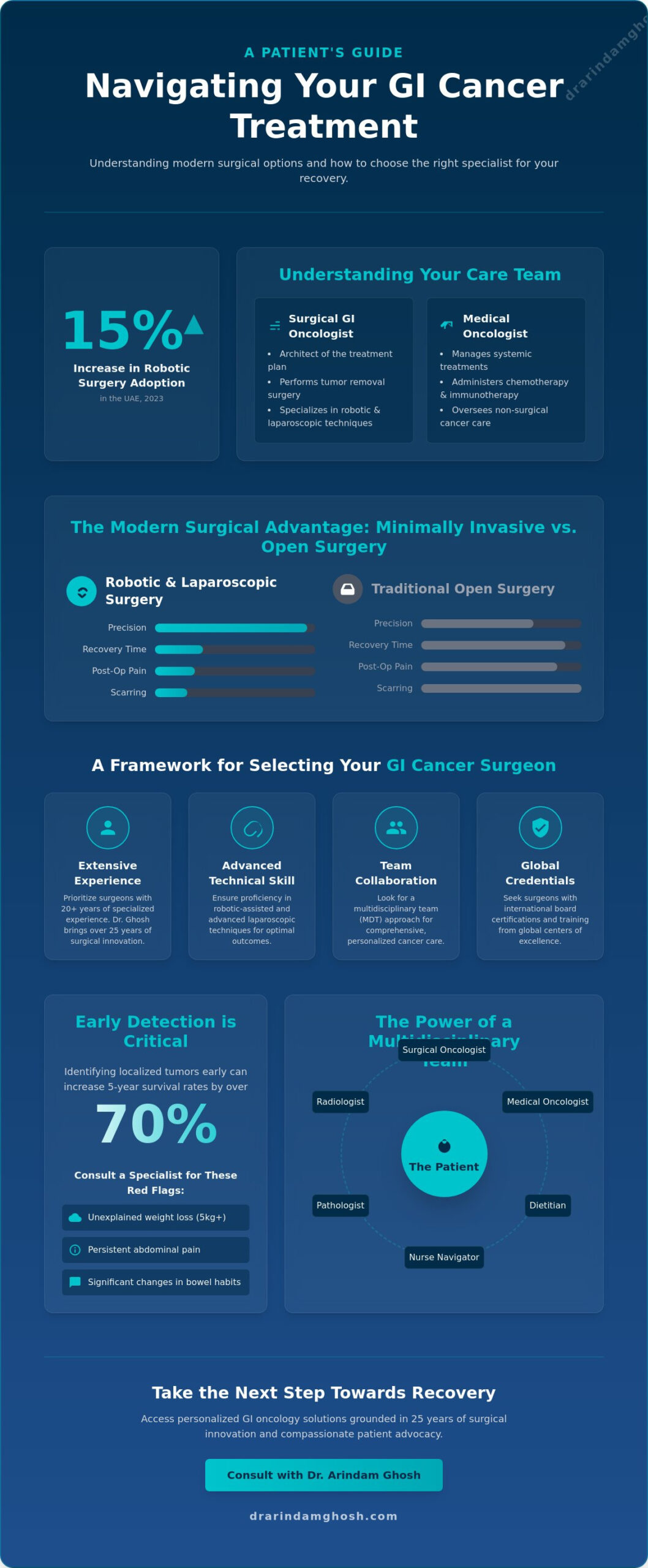
What if the most critical factor in your cancer recovery isn’t just the treatment itself, but the synergy between robotic precision and a surgeon’s clinical empathy? Receiving a gastrointestinal diagnosis is often overwhelming. You likely feel a heavy weight of uncertainty regarding invasive procedures and how surgery might alter your daily life. Finding a specialized gi oncologist dubai doesn’t have to be a journey you take in the dark. It’s natural to feel concerned about recovery times or the impact on your long-term health. In 2023, the UAE’s healthcare sector saw a 15% increase in the adoption of robotic surgical platforms, reflecting a shift toward patient-centered innovation that prioritizes your comfort.
This guide provides a professional framework to help you select a surgical specialist who prioritizes both clinical excellence and your long-term wellness. You’ll learn how to distinguish between medical and surgical oncology roles while discovering the benefits of minimally invasive, robotic-assisted techniques. We’ll examine how a multidisciplinary team approach provides the comprehensive support you need to move from a state of uncertainty toward informed empowerment and a high quality of life.
Key Takeaways
- Understand the vital distinction between medical and surgical oncology to ensure your treatment plan is led by the most appropriate specialist for your specific diagnosis.
- Learn how to evaluate a gi oncologist dubai by prioritizing over 20 years of specialized surgical experience and a proven track record in managing complex gastrointestinal cases.
- Discover the clinical advantages of robotic-assisted and laparoscopic surgery, which offer enhanced precision, reduced recovery times, and a faster return to your daily quality of life.
- Explore the essential role of a multidisciplinary team (MDT) in providing a collaborative, holistic, and highly personalized pathway to cancer recovery.
- Gain insight into the advanced standards of cancer care in the UAE through the lens of Dr. Arindam Ghosh’s 25-year legacy of surgical innovation and compassionate advocacy.
Navigating Your Diagnosis: The Critical Role of a GI Oncologist
Receiving a cancer diagnosis feels like the world has paused. It’s a heavy, life-altering moment that requires both clinical precision and a compassionate hand to hold. A specialized gi oncologist dubai provides the clarity you need to move from a state of uncertainty toward a state of informed empowerment. Gastrointestinal (GI) oncology is a highly focused field dedicated to managing malignancies within the digestive tract. This includes everything from the esophagus down to the rectum. While the news is difficult, modern medical advancements mean that a diagnosis is the beginning of a strategic fight for your health.
It’s vital to understand the different roles within your medical team. A medical oncologist primarily manages systemic treatments like chemotherapy or immunotherapy. A surgical GI oncologist, however, often acts as the primary architect of your treatment plan. They evaluate the physical tumor and determine if surgical intervention can remove the threat entirely. This specialist combines the human touch of a dedicated healer with the robotic precision of modern tools to ensure the best possible outcome. Their goal isn’t just the successful completion of a procedure; it’s the restoration of your long-term quality of life.
The Spectrum of Gastrointestinal Cancers
The digestive system is complex, and Gastrointestinal cancer can manifest in various organs, each requiring specific surgical expertise. According to the Global Cancer Observatory (Globocan) 2020 report, colorectal cancer is the second most common cancer in the UAE for both sexes combined. This highlights the need for specialized care in the region. Whether the malignancy is in the esophagus, stomach, pancreas, or colon, the surgical approach must be tailored to the organ’s unique anatomy. Early intervention is the most powerful tool we have. For instance, identifying a localized tumor before it spreads can increase five-year survival rates by over 70% in many digestive tract cancers.
When to Seek a Specialist Consultation
You should seek a specialist when symptoms persist beyond general gastrointestinal discomfort. Red flags include unexplained weight loss of 5kg or more, persistent abdominal pain, or significant changes in bowel habits. While a general gastroenterologist often performs the initial diagnostic endoscopy or colonoscopy, a gi oncologist dubai should be consulted the moment a biopsy confirms malignancy. This ensures your care is managed by a multidisciplinary team from the start. Seeking a second opinion is a standard and vital step in oncology. It’s not a sign of doubt; it’s a commitment to your recovery. A second review can confirm the stage of the disease and ensure you’re accessing the most advanced laparoscopic or robotic-assisted options available in the UAE today.
A Framework for Selecting a Specialized GI Cancer Surgeon
Selecting a gi oncologist dubai patients can trust involves looking beyond basic qualifications. You need a specialist who combines decades of clinical experience with the latest technological advancements. Prioritize surgeons who possess over 20 years of specialized experience in managing complex gastrointestinal cases. This level of seniority ensures they’ve managed a wide spectrum of complications and anatomical variations. In the UAE, the gold standard includes surgeons with international board certifications and extensive training from global centers of excellence.
Surgical precision has evolved. Modern care dictates that your surgeon should be proficient in both advanced laparoscopic and robotic-assisted techniques. These minimally invasive methods aren’t just about smaller scars; they’re about faster recovery times and reduced post-operative pain. However, technical skill shouldn’t exist in a vacuum. Patients benefit most from a comprehensive, multidisciplinary approach where surgeons, medical oncologists, and radiologists collaborate on every case. This collective expertise ensures the treatment plan is tailored to your specific biology rather than a one-size-fits-all protocol.
Credentials and Clinical Experience
Volume is a critical indicator of surgical success. When consulting a specialist, ask specifically about their frequency in performing complex procedures like the Pancreaticoduodenectomy for pancreatic cancer or advanced laparoscopic colorectal resections. Statistics show that surgeons who perform these high-stakes operations regularly achieve significantly better outcomes. You should verify their track record with robotic systems, as these tools offer a degree of dexterity that traditional surgery cannot match. A surgeon’s commitment to high-volume, specialized practice is the best predictor of your safety and recovery.
Communication and Empathy
Expertise is hollow without a human touch. During your initial consultation, gauge how well the surgeon listens to your specific fears and goals. A truly patient-centric professional views you as a partner in care, not just a case number. They’ll explain the risks and benefits of a procedure with absolute clarity, avoiding overly dense jargon while maintaining clinical depth. This transparency is a hallmark of true expertise. It builds the trust necessary for the long journey of cancer treatment.
The ultimate goal of any intervention is the restoration of your quality of life. This means the surgeon considers how a procedure affects your long-term digestion, mobility, and daily comfort. They don’t just focus on removing the tumor; they focus on your life after the operation. If you’re looking for a surgical perspective that balances technical mastery with this level of personal care, you can schedule a consultation to explore your treatment pathway. Choosing a surgeon who prioritizes your functional well-being ensures that your recovery is as complete as possible.
Advancements in Surgical Precision: Robotic and Laparoscopic Oncology
Gastrointestinal cancer surgery has undergone a radical transformation over the last two decades. In the past, large “open” incisions were the only way for a surgeon to access the complex structures of the abdomen. Today, a leading gi oncologist dubai utilizes minimally invasive techniques to achieve superior clinical results while prioritizing the patient’s comfort. These modern methods reduce physical trauma to the body significantly. On average, patients undergoing minimally invasive procedures experience 40% less blood loss compared to traditional open surgeries. This evolution isn’t just about smaller scars; it’s about preserving the integrity of healthy tissue while ensuring the meticulous removal of malignant cells. For a deeper understanding of how these innovations translate into real patient outcomes, our comprehensive guide to gastrointestinal cancer surgery covers the latest robotic platforms and treatment protocols in detail.
Robotic-assisted surgery represents the current pinnacle of this surgical evolution. The surgeon operates from a specialized console, controlling instruments that mimic the human wrist but with a range of motion and stability that exceeds human capability. This “robotic precision” is vital when navigating the narrow, crowded spaces of the pelvis or when working near major blood vessels. It’s essential to understand that the “human touch” remains the guiding force of the procedure. The robot doesn’t perform the surgery; it acts as a highly sophisticated extension of the surgeon’s own hands, translating their expertise into micro-movements that protect vital nerves and organs.
The Advantages of Robotic-Assisted Surgery
The robotic platform provides a high-definition, 3D view of the surgical field, magnifying the anatomy up to ten times. This clarity allows for more precise tumor margin clearance, which is a critical factor in preventing cancer recurrence. In complex liver and pancreatic surgeries, the enhanced dexterity allows for intricate suturing and reconstruction that was once difficult to achieve through small ports. Clinical data indicates that robotic approaches can reduce hospital stays by 2 to 3 days, helping patients return to their home environment and improve their immediate quality of life.
Laparoscopic Excellence in GI Care
Laparoscopic techniques remain the gold standard for many gastrointestinal resections, particularly for colorectal and gastric cancers. By using incisions often smaller than 1.5 centimeters, we minimize the body’s inflammatory response. This approach doesn’t just accelerate physical healing; it also supports a patient’s psychological recovery by reducing the visible impact of the intervention. Most importantly, a faster recovery allows a gi oncologist dubai to transition the patient to adjuvant therapies, such as chemotherapy, up to 20% sooner than traditional surgery allows. This timing is often a decisive factor in the overall success of the multidisciplinary treatment plan.
Beyond the Procedure: The Value of Multidisciplinary Cancer Care
Effective cancer treatment isn’t a solo effort. It’s a collective strategy. In modern oncology, the Multidisciplinary Team (MDT) represents the gold standard of care. This team brings together surgeons, medical oncologists, radiologists, and pathologists to review every detail of a patient’s case. Instead of a single perspective, you benefit from a collective board of experts who debate and refine your treatment plan. This collaborative approach ensures that the path chosen is the most effective one for your specific diagnosis.
Surgeons work closely with radiologists to map out the tumor’s exact boundaries, while medical oncologists determine if chemotherapy or immunotherapy is needed to shrink the tumor before surgery. This synergy replaces “one-size-fits-all” protocols with personalized treatment pathways. Many patients ask if surgery alone is enough to treat their cancer. While a successful resection is a major milestone, GI cancers often require a combination of therapies to prevent recurrence. According to clinical data, multimodal treatment can improve survival outcomes by more than 20% in complex gastrointestinal cases compared to isolated interventions. Partnering with a dedicated gi oncologist dubai ensures that these various specialties are coordinated seamlessly under one clinical vision.
Integrated Diagnostic Services
Precision begins long before the first incision. Advanced imaging and pathology provide the essential blueprint for surgical planning. Diagnostic tools like colonoscopy and gastroscopy aren’t just for detection; they inform the surgical approach by identifying the tumor’s precise depth and involvement with nearby vessels. We also prioritize pre-operative nutrition and wellness. Strengthening the body’s reserves before a procedure can reduce post-operative complications by as much as 15%, helping you face the intervention with greater resilience.
Post-Operative Support and Recovery
The journey toward health continues well after you leave the operating room. Rigorous follow-up care is vital for monitoring your recovery and screening for any signs of recurrence. We utilize modern pain management strategies that prioritize patient comfort while minimizing the side effects of traditional medications. The ultimate goal is restoring your digestive function and overall quality of life. Whether it’s adjusting your diet after a gastric resection or monitoring bowel health after colorectal surgery, our focus remains on your return to a meaningful, active existence. A specialized gi oncologist dubai provides the long-term oversight necessary to navigate these transitions safely.
Your recovery deserves a strategy that looks at the whole person, not just the disease. Schedule a consultation with Dr. Arindam Ghosh to discuss a comprehensive, multidisciplinary plan tailored to your needs.
Personalized GI Oncology Solutions with Dr. Arindam Ghosh
Dr. Arindam Ghosh has spent more than 25 years as a cornerstone of the UAE’s surgical community. He’s widely regarded as a leading gi oncologist dubai patients turn to for complex cancer care. His career is a testament to the evolution of surgical oncology in the region, combining decades of local experience with global medical standards. He focuses on the integration of robotic-assisted and laparoscopic surgery, which allows for smaller incisions, less blood loss, and a quicker return to daily life.
His practice operates on a philosophy he calls “high-tech compassion.” This means that while he utilizes the most advanced robotic systems available, the focus remains on the human being on the operating table. He understands that a cancer diagnosis is life-changing, and he meets that challenge with a calm, balanced perspective that builds trust between the surgeon and the family. This emotional safety is just as vital as the clinical precision he brings to the operating room.
Specialized Procedures Offered
As a specialized gi oncologist dubai families rely on, Dr. Ghosh provides a wide range of advanced surgical interventions designed to tackle aggressive gastrointestinal malignancies. His expertise includes:
- Colorectal Cancer Resection: He utilizes minimally invasive techniques to remove tumors while prioritizing the preservation of normal bowel function and long-term health. Patients seeking detailed guidance on this procedure can explore our comprehensive guide to Colorectal Cancer Resection, covering everything from surgical preparation to recovery milestones.
- Liver Resection: Precision is vital when removing primary or metastatic liver tumors, and Dr. Ghosh’s experience ensures the highest level of safety for the surrounding healthy tissue.
- The Whipple Procedure: This is a sophisticated surgery for pancreatic cancer. It involves the removal of the head of the pancreas, part of the small intestine, and the gallbladder, requiring immense technical skill and anatomical knowledge. Patients seeking a deeper understanding of this operation can explore our comprehensive patient guide to the Pancreaticoduodenectomy procedure, which covers every stage from surgical preparation to post-operative recovery milestones.
- Gastric and Esophageal Care: Comprehensive surgical management for upper GI tract cancers, focusing on complete tumor clearance and restoring the patient’s ability to eat and digest comfortably.
A Commitment to Quality of Life
Success in oncology isn’t just about the clinical removal of a tumor. Dr. Ghosh prioritizes functional outcomes, ensuring his patients can maintain a high quality of life after their procedure. He values integrity and innovation, refusing to settle for standard results when a more precise, tech-driven approach could offer a better recovery. This dedication provides patients with the peace of mind they need during a difficult time. He’s a protector and a mentor who views every surgery as a pathway to restoring health and dignity.
If you’re looking for a personalized treatment strategy that combines years of experience with modern technology, don’t wait to seek expert advice. Schedule a comprehensive oncology consultation with Dr. Arindam Ghosh to discuss your specific diagnosis and begin your journey toward recovery with a trusted professional who understands the local landscape and global best practices.
Empowering Your Journey Toward Lasting Wellness
Navigating a complex diagnosis requires a strategic partnership with a specialist who understands that every patient’s journey is unique. Choosing a gi oncologist dubai means prioritizing a surgeon who balances advanced robotic precision with a compassionate, multidisciplinary approach. Modern cancer care has moved beyond simple procedures to focus on comprehensive recovery and long-term quality of life. By utilizing minimally invasive laparoscopic techniques, patients often experience shorter recovery times and better clinical outcomes.
Dr. Arindam Ghosh offers over 25 years of specialized surgical experience, practicing within the most prestigious hospital groups in the UAE. His expertise in robotic-assisted oncology ensures that you receive the highest standard of technical care while feeling heard and supported. You don’t have to face uncertainty without a clear, actionable plan that prioritizes your physical and emotional well-being. It’s time to take the next step toward reclaiming your health with a mentor who values your future as much as you do.
Book a Specialist GI Oncology Consultation with Dr. Arindam Ghosh today to explore your personalized treatment options. Your path to healing starts with a single, informed decision.
Frequently Asked Questions
What is the difference between a GI surgeon and a GI oncologist?
A GI surgeon focuses on the physical removal of tumors, while a GI oncologist typically refers to a medical oncologist who manages systemic treatments like chemotherapy. However, a surgical gi oncologist dubai combines these roles by specializing in the complex surgical management of cancer within the digestive tract. This specialized expertise ensures that your surgical plan aligns with the broader oncological strategy for the best possible outcome.
Is robotic surgery better than traditional open surgery for GI cancer?
Robotic surgery offers superior precision and visualization compared to traditional open surgery, leading to 30% less blood loss in complex procedures. While open surgery requires a large incision, robotic systems use small 8mm ports, which reduces the risk of post-operative infections and shortens hospital stays. This advanced technology allows a gi oncologist dubai to perform intricate maneuvers in tight anatomical spaces that are difficult to reach with traditional methods.
How long is the recovery period after a laparoscopic colorectal resection?
Most patients return to light activities within 10 to 14 days following a laparoscopic colorectal resection. While traditional surgery might require a 7 day hospital stay, laparoscopic patients often go home after 3 or 4 days. Full recovery and a return to strenuous exercise typically occur within 6 weeks. This accelerated timeline is a key benefit of minimally invasive techniques that prioritize your long term quality of life.
What questions should I ask during my first oncology consultation?
You should ask about the specific stage of your diagnosis, the proposed treatment timeline, and the expected impact on your daily routine. Inquire how many similar procedures the surgeon has performed in the last 12 months to gauge their experience. It’s also vital to ask about the multidisciplinary team involved in your care and what support services are available to manage side effects during your recovery.
Does a GI oncologist also perform diagnostic procedures like colonoscopies?
Yes, a GI oncologist often performs diagnostic procedures such as colonoscopies and endoscopies to identify tumors and obtain biopsies. These procedures are foundational for staging the cancer accurately. By conducting the diagnostic phase, the specialist gains a firsthand understanding of the tumor’s location and characteristics, which informs a more precise and personalized surgical plan. This continuity of care ensures that no detail is overlooked.
Can all gastrointestinal tumors be removed via minimally invasive surgery?
Not all gastrointestinal tumors are suitable for minimally invasive surgery, as factors like tumor size over 10 centimeters or involvement of major blood vessels may require an open approach. Approximately 75% of colorectal cancers can be addressed laparoscopically or robotically, but the final decision depends on the tumor’s stage and location. Your surgeon will prioritize oncological safety and the complete removal of the cancer over the method of entry.
What does a “multidisciplinary approach” mean for my cancer treatment?
A multidisciplinary approach means a team of experts, including surgeons, medical oncologists, radiologists, and pathologists, collaborates to design your treatment plan. Instead of a single perspective, you benefit from a collective review where 5 to 10 specialists discuss your case in a tumor board meeting. This ensures that every facet of your health is considered, combining robotic precision with comprehensive medical oversight to enhance your quality of life.
How do I know if I am a candidate for robotic-assisted GI surgery?
Candidacy for robotic-assisted surgery is determined by your specific diagnosis, overall health, and the location of the tumor within the GI tract. Most patients with early to mid-stage cancers of the esophagus, stomach, or rectum are eligible for this high-tech intervention. During your consultation, your specialist will evaluate your medical history and imaging results to ensure that robotic tools provide the most effective and compassionate pathway to restoring your health.