

Last Tuesday, a patient arrived at our clinic clutching their side with the sharp, persistent abdominal pain that defines appendicitis, a condition that affects approximately 7% of individuals at some point in their lives. You’re likely feeling a mix of urgency and hesitation. It’s natural to worry about how a sudden surgical procedure might disrupt your professional life or family commitments here in the UAE. The uncertainty of a hospital stay can feel just as daunting as the physical pain itself.
I’m here to reassure you that a Laparoscopic Appendectomy offers a sophisticated, minimally invasive solution that prioritizes your long-term quality of life. You’ll learn how we combine clinical expertise with advanced technology to ensure a precision-led recovery that gets you back to your routine quickly. This guide provides a clear overview of the symptoms you shouldn’t ignore and the methodical steps we take to ensure your safety and well-being remain our primary focus throughout the journey.
Key Takeaways
- Recognize the critical symptoms of appendicitis and understand how a prompt, precision-led surgical response is essential for your long-term quality of life.
- Learn how a Laparoscopic Appendectomy utilizes advanced minimally invasive techniques to ensure smaller scars, less pain, and a faster recovery compared to traditional surgery.
- Navigate your healing journey with a clear roadmap of what to expect during the first 24 hours and how to effectively manage post-operative discomfort.
- Discover the benefits of a patient-centric approach that combines over 25 years of surgical expertise with the compassionate, personalized care of Dr. Arindam Ghosh.
Understanding Appendicitis and the Role of the Appendix
The appendix is a small, tube-like pouch located at the junction of the small and large intestines in the lower right quadrant of your abdomen. While it’s often considered a vestigial organ, its presence becomes impossible to ignore when it becomes inflamed or infected. This condition, known as appendicitis, typically occurs when the opening of the appendix is blocked by a hard piece of stool or swollen lymph tissue. This blockage creates a breeding ground for bacteria, leading to rapid swelling and a buildup of pressure within the organ.
Medical history shows a dramatic shift in how we treat this condition. Historically, surgeons relied on large “open” incisions that required longer recovery times and carried higher risks of scarring. Modern surgical evolution has replaced those invasive methods with the Laparoscopic Appendectomy, a technique that prioritizes patient comfort and clinical precision. This Appendectomy overview details the transition from traditional surgery to the minimally invasive standards we use today. Acting quickly is essential, as an inflamed appendix can progress to a dangerous rupture within 48 to 72 hours of the first symptoms appearing.
Common Symptoms You Should Not Ignore
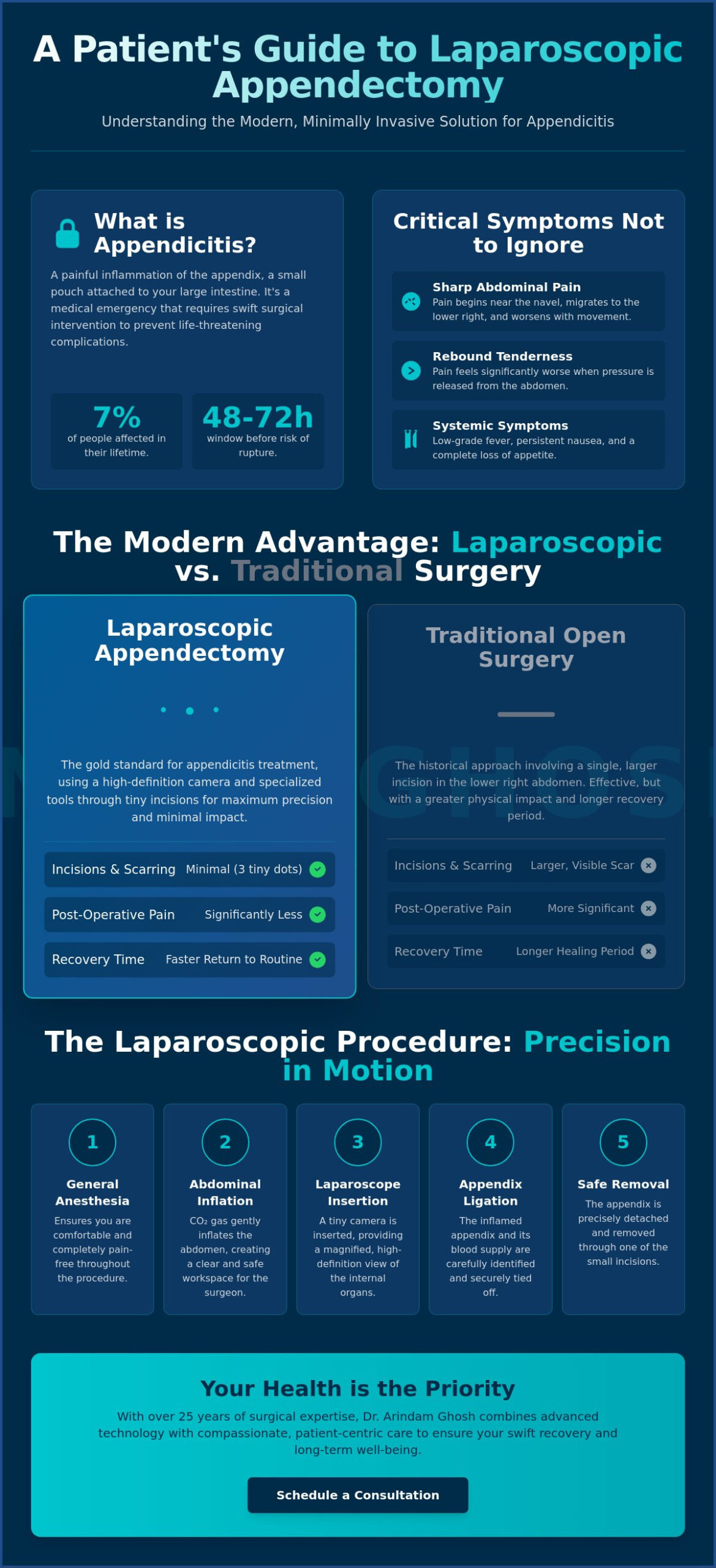
Recognizing the early warning signs of appendicitis is the first step toward a successful recovery. Most patients describe a sudden, dull pain that begins near the navel and eventually migrates to a sharp, localized sensation in the lower right abdomen. This pain often intensifies when you cough, walk, or make sudden movements. A hallmark clinical sign is “rebound tenderness,” where the pain feels significantly sharper when pressure is quickly released from the abdomen rather than when it’s applied. You might also experience a low-grade fever reaching 38 degrees Celsius, persistent nausea, and a complete loss of appetite that doesn’t improve with rest.
When the Appendix Becomes an Emergency
If the appendix is left untreated and subsequently ruptures, it can lead to peritonitis. This is a life-threatening infection of the lining of the abdominal cavity that requires immediate surgical and medical attention to prevent sepsis. Appendicitis is a surgical emergency requiring prompt intervention. To ensure an accurate diagnosis, healthcare providers in the UAE utilize advanced imaging technology. CT scans provide a 98% accuracy rate in adult cases, while ultrasound is frequently used for younger patients to avoid radiation. These diagnostic tools allow your surgical team to confirm the need for a Laparoscopic Appendectomy, ensuring you receive the highest standard of care to protect your long-term quality of life.
The Laparoscopic Appendectomy Procedure: Precision in Motion
The philosophy of modern surgery centers on achieving the best clinical outcome while minimizing the physical impact on your body. A Laparoscopic Appendectomy embodies this approach, replacing the large traditional incision with three tiny ports, usually between 5mm and 12mm in size. This method prioritizes your comfort and a swifter return to your daily routine in the UAE. By focusing on smaller entry points, we reduce the body’s inflammatory response, which often leads to less post-operative discomfort.
To ensure your safety and a completely painless experience, we perform the procedure under general anesthesia. This creates a controlled environment where your muscles are relaxed, allowing the surgical team to work with absolute focus. Once you’re asleep, we introduce medical-grade carbon dioxide gas into the abdominal cavity. This gentle inflation creates a clear workspace, lifting the abdominal wall away from the internal organs. A high-definition laparoscope, essentially a powerful camera, then transmits real-time, magnified images to monitors in the operating room. This visual clarity allows for a level of detail that traditional surgery often can’t match.
The Step-by-Step Surgical Process
The journey begins with the placement of trocars, which act as narrow pathways for our specialized instruments. We first locate the cecum, the start of the large intestine, to identify the base of the inflamed appendix. Precision is vital here. We carefully ligate, or tie off, the blood vessels and the appendix itself to prevent any leakage. Once secured, the appendix is removed through one of the small ports. Understanding the nuances of Appendectomy recovery and healing helps patients prepare for the days following this precise intervention.
Robotic-Assisted vs. Standard Laparoscopy
While standard laparoscopy is highly effective, robotic-assisted technology offers an extra layer of refinement, especially for complex cases where the appendix is in an atypical position. The robotic system provides a 3D, high-definition view and instruments that mimic the human wrist’s range of motion but with greater stability. This advanced technology reduces physical trauma to the abdominal wall and enhances our ability to handle delicate tissues with extreme accuracy. It’s about combining the surgeon’s expertise with the best tools available to protect your quality of life.
If you’re seeking a consultation regarding your digestive health, you can learn more about our personalized surgical approach to ensure a smooth and safe recovery.
Key Advantages of the Minimally Invasive Approach
Choosing a Laparoscopic Appendectomy represents a shift toward precision and patient-centered care. This technique uses small ports rather than the long, muscle-cutting incisions required in traditional surgery. The clinical results are measurable. Patients typically experience a 40% reduction in post-operative pain scores. This allows for a significant decrease in the need for heavy analgesics; many individuals manage their recovery with simple over-the-counter options. Smaller incisions also lead to a lower risk of wound complications. Clinical data indicates that laparoscopic methods reduce the incidence of surgical site infections by over 50% compared to open procedures.
- Minimal Scarring: Surgeons use three tiny incisions, often only 5 to 10 millimeters in length, which heal with significantly less visible marking.
- Rapid Recovery: Most patients in the UAE return to their homes within 24 to 48 hours of the procedure.
- Bowel Function: The gentle handling of internal organs allows the digestive system to resume normal activity much faster than traditional methods.
- Reduced Hernia Risk: Smaller abdominal wall disruptions mean the long-term risk of incisional hernias is significantly lower.
Comparing Laparoscopic and Open Appendectomy
The laparoscopic method is the gold standard for most uncomplicated cases of appendicitis because it offers a clearer view of the entire abdominal cavity. Surgeons can inspect other organs to rule out additional issues during the same session. However, safety remains the priority. If a surgeon encounters a severely ruptured appendix or dense scar tissue from previous surgeries, they may convert to an open procedure. This transition occurs in approximately 5% of cases globally to ensure the highest level of patient safety. From an aesthetic perspective, the incisions are strategically placed near the navel or the bikini line, making them almost invisible once healed.
Impact on Long-Term Wellness
Minimal trauma to the abdominal wall leads to fewer internal adhesions. These bands of scar tissue can cause chronic pain or bowel obstructions years after a surgery; reducing their formation is a vital component of holistic wellness. The ultimate goal of laparoscopic surgery is a faster return to daily life. Beyond the physical benefits, the psychological impact is profound. Patients often feel less anxiety when they know their recovery journey won’t involve weeks of restricted movement. This high-tech approach combines robotic precision with a human touch, ensuring that your path to health is as smooth and comfortable as possible, ultimately restoring your quality of life.
Your Roadmap to Recovery and Healing
The transition from the operating room to the comfort of your home is a structured process designed to prioritize your safety and comfort. In the first 24 hours following your Laparoscopic Appendectomy, the focus remains on monitoring your vital signs and managing the immediate effects of anesthesia. You might experience a unique sensation known as “gas pain,” which often manifests as discomfort in the shoulders or chest. This happens because carbon dioxide is used to expand the abdominal cavity during the procedure. The most effective solution for this isn’t bed rest, but gentle movement.
Early mobilization is a cornerstone of modern surgical recovery. We encourage patients to begin walking within 4 to 6 hours after surgery. This simple act stimulates circulation, prevents the formation of blood clots in the legs, and helps your digestive system resume its normal functions. Your dietary transition follows a logical progression to ensure your gut isn’t overwhelmed. You’ll start with clear liquids such as water, apple juice, or clear broth. Once your body demonstrates it can handle these, typically within 12 to 18 hours, you’ll progress to soft foods and eventually a standard, fiber-rich diet that supports healthy digestion. Patients who have undergone other abdominal procedures may find additional guidance in our gallbladder surgery recovery guide, which covers similar dietary milestones and post-operative healing strategies.
The First Week at Home
Once you’re discharged, your primary responsibility is caring for the tiny incision sites. It’s essential to keep these areas clean and dry; most patients can shower 48 hours after surgery, but you should avoid soaking in baths or pools for at least 10 to 14 days. You can usually resume driving within 5 to 7 days, provided you’re no longer taking prescription pain medications and can comfortably wear a seatbelt. Watch for “red flags” that require medical attention, such as a fever above 38.5°C, persistent nausea, or increasing redness and warmth around the incisions. These symptoms occur in fewer than 5% of cases but require prompt evaluation.
Returning to Full Activity
Restoring your quality of life involves a gradual reintroduction of physical strain. While walking is encouraged, you should avoid heavy lifting—anything over 5 kilograms—for approximately 2 to 4 weeks. This timeframe allows the internal abdominal wall to regain its structural integrity. We’ll schedule a follow-up consultation within 10 to 14 days to monitor the internal healing process and ensure your recovery aligns with our clinical expectations. Long-term, you can expect to live a vibrant, full life. The appendix is not vital for adult health, and its removal won’t hinder your immune system or your ability to enjoy your favorite activities in the UAE.
If you have questions about your surgical recovery or need expert guidance on abdominal health, book a consultation with our specialized surgical team today.
Comprehensive Care with Dr. Arindam Ghosh
Choosing the right surgeon for a Laparoscopic Appendectomy involves looking beyond the procedure itself. It requires finding a professional who balances technical mastery with a genuine commitment to your well-being. Dr. Arindam Ghosh brings over 25 years of specialized surgical expertise in advanced gastrointestinal procedures to the United Arab Emirates. His practice is built on a foundation of clinical authority and profound empathy, ensuring you feel supported at every stage of your surgical journey.
Dr. Ghosh operates in state-of-the-art hospitals equipped with the most advanced surgical technology available. This infrastructure allows for the implementation of his signature “High-Tech Compassion.” It’s a philosophy where robotic precision and laparoscopic tools meet a gentle, human touch. He views surgery as a pathway to restoring your quality of life, not just a clinical task to be completed. This dedication to excellence has made him a trusted name for patients facing complex health challenges across the region.
A Multidisciplinary Team Approach
Successful outcomes are rarely the result of a single person’s work. Dr. Ghosh utilizes a multidisciplinary team approach that combines surgical oncology insights with gastrointestinal expertise. This collaboration ensures that your Laparoscopic Appendectomy is handled with a level of detail that considers your entire health profile. We focus on personalized pre-operative planning, carefully reviewing your specific health history to create a tailored surgical strategy. This meticulous preparation reduces the likelihood of complications and speeds up the return to your daily routine.
- Access to the latest surgical innovations and facilities in the UAE.
- Comprehensive pre-operative and post-operative support structures.
- Focus on minimally invasive techniques to ensure faster healing.
- A dedicated team focused on your long-term wellness and recovery.
Scheduling Your Consultation
Whether you’re dealing with the sudden onset of acute abdominal pain or a persistent, chronic ache, professional intervention is vital. Seeking an expert opinion early can prevent complications and provide the clarity you need. The consultation process is designed to be a collaborative experience. We’ll discuss your symptoms, review your diagnostic results, and decide on the most effective surgical path together. Dr. Ghosh’s steady and measured communication style helps replace anxiety with informed confidence. It’s about moving from a state of physical distress toward a state of empowerment and health.
Take Control of Your Path to Recovery
Navigating an appendicitis diagnosis can feel overwhelming, but modern surgical advancements have transformed the journey toward healing. Opting for a Laparoscopic Appendectomy means you’re choosing a minimally invasive approach designed to reduce post-operative pain and accelerate your return to daily activities. This method combines advanced robotic precision with a focus on preserving your long-term quality of life, ensuring that the intervention is as gentle as it is effective.
Dr. Arindam Ghosh offers a unique blend of high-tech innovation and compassionate care, backed by more than 25 years of surgical experience. As a specialist in robotic and laparoscopic surgery, he leads a multidisciplinary team dedicated to providing patient-centric solutions tailored to your unique needs. You don’t have to navigate this medical challenge without a trusted ally by your side. We prioritize clinical rigor alongside a genuine human touch to ensure your safety and comfort at every stage of the procedure.
Book a consultation with Dr. Arindam Ghosh for expert GI care and start your journey toward a healthier future today. We’re committed to helping you restore your wellness with the expertise and empathy you deserve.
Frequently Asked Questions
Is a laparoscopic appendectomy considered a major surgery?
Yes, a laparoscopic appendectomy is a major surgical procedure because it requires general anesthesia and entry into the abdominal cavity. While the incisions are small, usually measuring between 5mm and 10mm, the internal work remains significant. Our team uses high-precision tools to ensure your safety. This modern approach reduces trauma to the body compared to traditional open surgery, which helps protect your long-term quality of life.
How long does the actual appendix removal procedure take?
The actual surgical time for a laparoscopic appendectomy typically ranges from 30 to 60 minutes. This duration can vary based on the clinical findings and the presence of inflammation or adhesions. Our multidisciplinary team works with robotic precision to ensure the procedure is efficient and thorough. We prioritize a methodical approach to ensure every step of the removal is handled with the highest level of clinical rigor.
Will I have visible scars after a laparoscopic appendectomy?
You’ll have three very small scars that typically measure less than 1 centimeter each. These incisions are strategically placed to be as discreet as possible. Over a period of 6 to 12 months, these marks usually fade into thin, faint lines that are barely noticeable. We combine the latest surgical technology with a human touch to ensure your physical recovery is as aesthetically pleasing as it’s functional.
Can I live a normal life after my appendix is removed?
You can absolutely live a normal, active life without your appendix. Medical data shows that removing this vestigial organ doesn’t negatively impact your digestion or immune system in the long term. Most patients return to their regular diet and hobbies within weeks. Our goal is to restore your health so you can enjoy a meaningful existence without the fear of recurring appendicitis or painful complications.
What is the typical hospital stay after a laparoscopic appendectomy?
Most patients in the UAE stay in the hospital for 24 to 48 hours following the procedure. If your surgery is uncomplicated, you might even go home the next day. This short stay allows our medical team to monitor your initial recovery and manage any post-operative discomfort. We focus on a personalized care plan that ensures you’re stable and confident before you transition back to your home environment.
What are the risks associated with laparoscopic appendix surgery?
While generally safe, risks include wound infection, internal bleeding, or minor injury to adjacent organs, which occur in fewer than 5% of patients. Some individuals might experience temporary bloating from the carbon dioxide gas used during the procedure. We mitigate these risks through meticulous surgical techniques and a comprehensive care approach. Our clinical team monitors you closely to prevent and address any rare complications immediately.
When can I return to work after having my appendix removed?
Most patients return to office-based work within 7 to 14 days. If your job involves physical labor or heavy lifting, you’ll likely need 3 to 4 weeks of recovery time. It’s important to listen to your body’s signals during this period. We provide specific guidance tailored to your professional needs to ensure your return to work is safe and doesn’t compromise your healing process.
How soon can I start exercising after a laparoscopic procedure?
You can start gentle walking within 24 hours, but you should wait 4 to 6 weeks before resuming strenuous exercise or lifting weights over 5kg. Light activity promotes blood flow and aids the healing process. However, the internal tissues need time to regain their full strength. We view your recovery as a collaborative journey, and we’ll help you create a safe timeline for returning to the gym or sports.