

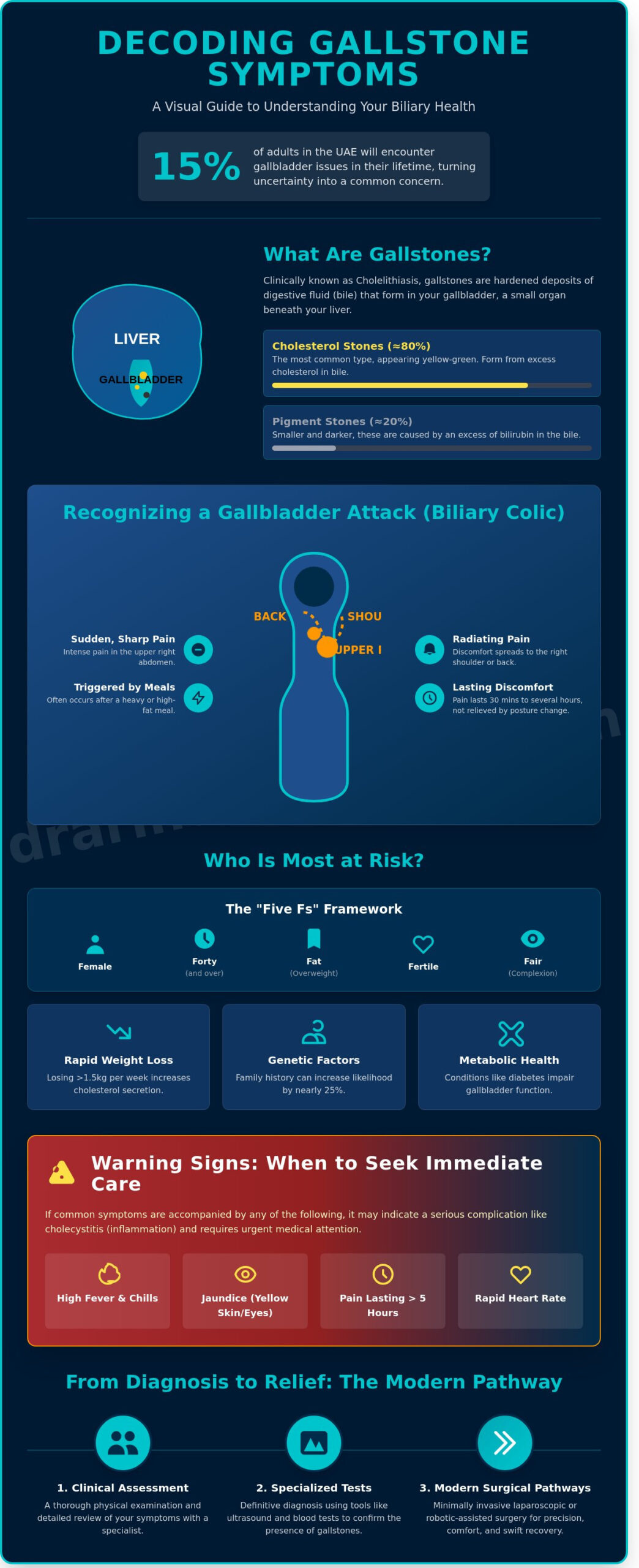
What if that persistent, sharp pressure you feel after a meal at a favorite restaurant isn’t just common indigestion, but a silent signal from your gallbladder? It’s exhausting to live with the unpredictability of recurring abdominal pain, especially when you’re unsure whether it warrants a clinic visit or just a change in diet. You’re not alone in this uncertainty; clinical data suggests that approximately 15% of adults in the UAE will encounter these issues during their lifetime. My goal is to help you clearly identify gallstone symptoms, from subtle discomfort to severe warning signs, so you can understand when professional surgical intervention is necessary to restore your quality of life.
We’ll walk through the diagnostic process together and explore how modern, robotic-assisted surgery offers a level of precision that prioritizes your comfort and a swift recovery. This guide bridges the gap between clinical facts and your personal experience, moving you from a state of anxious uncertainty toward a path of informed empowerment and lasting wellness.
Key Takeaways
- Understand the anatomy of the gallbladder and how hardened deposits can disrupt your natural digestive process and biliary health.
- Learn to identify common gallstone symptoms, including the specific timing and location of biliary colic, to better communicate your concerns with a specialist.
- Recognise the critical warning signs that transition from manageable discomfort to medical emergencies, ensuring you seek timely intervention to prevent complications.
- Gain insights into the professional diagnostic journey, moving from a clinical physical assessment to the specialized tests required for a definitive diagnosis.
- Discover how modern, minimally invasive surgical pathways can provide a precise and compassionate route to restoring your long-term quality of life.
Understanding Gallstones and the Anatomy of Biliary Pain
Gallstones, clinically referred to as cholelithiasis, are hardened deposits that form within the gallbladder. This small, pear-shaped organ sits just beneath your liver on the right side of your abdomen. Its primary role is to act as a reservoir for bile, a digestive fluid produced by the liver that’s essential for breaking down fats. When you eat, the gallbladder contracts to release this fluid into the small intestine. However, when the chemical composition of bile becomes imbalanced, it can crystallize into solid masses.
Most stones form when there’s an excess of cholesterol or bilirubin in the bile. Approximately 80% of gallstones are cholesterol-based, appearing yellow-green in color. The remaining 20% are pigment stones, which are smaller and darker, typically caused by an overabundance of bilirubin. Many patients carry these stones for years without any discomfort. These are known as “silent stones” and often don’t require treatment. The situation changes when a stone moves and obstructs the biliary tree, leading to the onset of gallstone symptoms that can range from mild discomfort to severe, localized pain.
The Mechanics of a Gallbladder Attack
A gallbladder attack, or biliary colic, happens when a stone migrates and becomes trapped in the cystic duct. This creates a temporary blockage that prevents bile from exiting the organ. As the gallbladder continues to contract against the obstruction, internal pressure rises and triggers acute pain. If the stone remains lodged, it can cause significant inflammation of the gallbladder wall, a condition known as cholecystitis. This transition from a simple stone to an inflamed organ represents a shift from a manageable issue to a potential medical emergency that requires a multidisciplinary approach to care.
Who is Most at Risk for Developing Symptoms?
Medical professionals often identify high-risk groups using the “Five Fs” framework: Female, Forty, Fat, Fertile, and Fair. While these are traditional markers, modern research in the United Arab Emirates shows that lifestyle and metabolic health are equally critical. Sedentary routines and diets high in processed fats contribute to gallbladder stasis, where bile remains in the organ too long and thickens into sludge.
- Rapid Weight Loss: Losing more than 1.5kg per week can cause the liver to secrete extra cholesterol into the bile, increasing stone risk.
- Genetic Factors: A family history of biliary disease increases your likelihood of developing stones by nearly 25%.
- Metabolic Health: Conditions like diabetes and high triglyceride levels can impair gallbladder motility.
Understanding these risk factors is vital for early detection. When you recognize the initial gallstone symptoms, it allows for a more controlled, laparoscopic or robotic-assisted surgical solution rather than an emergency intervention. My goal is always to guide you toward a pathway that prioritizes your long-term quality of life through precise, compassionate care.
Recognising Common Gallstone Symptoms and Biliary Colic
The experience of a gallbladder attack is rarely subtle. The primary indicator of gallstone symptoms is a sudden, sharp pain localized in the upper right portion of your abdomen. This discomfort often intensifies rapidly, reaching a peak that can feel overwhelming. Unlike a typical stomach ache, this pain usually follows a heavy or high-fat meal. When you consume fats, your gallbladder contracts to release bile. If a stone blocks the duct, these contractions result in “biliary colic.”
Biliary colic typically lasts between 30 minutes and several hours. It doesn’t disappear with a change in posture or a trip to the bathroom. Many patients in the UAE report that the sensation is accompanied by intense nausea or vomiting. These digestive upsets often lead people to believe they’ve contracted food poisoning or a viral infection. However, the recurring nature of these episodes after eating suggests a more specific biliary issue that requires clinical attention.
The Classic Signs of a Gallbladder Attack
The pain doesn’t always stay in the abdomen. It frequently radiates to the right shoulder or settles between the shoulder blades. You might feel the most intense pressure in the “epigastrium,” which is the area just below your breastbone. During an acute episode, patients often pace the room or shift constantly. They can’t find a comfortable position. This restlessness is a clinical hallmark of the condition. If you experience this level of distress, consulting a specialist about personalized treatment options can help restore your quality of life.
Atypical Symptoms You Might Easily Miss
Not every case presents with sharp agony. Some people experience chronic indigestion, persistent bloating, or excessive gas. These subtle warning signs are easy to dismiss as general digestive sensitivity. In some instances, the pain manifests in the chest, leading patients to fear a heart attack. Others mistake the burning sensation for Gastroesophageal Reflux Disease (GERD). Referred pain might even appear strictly in the back, masking the true source of the problem.
Clinical data suggests that roughly 20% of patients initially misidentify their gallstone symptoms, delaying necessary care. This delay can lead to complications that require more complex interventions. Identifying these patterns early allows for a multidisciplinary approach to care. Modern surgical precision, including robotic and laparoscopic techniques, ensures that even complex cases are managed with a focus on long-term wellness and minimal recovery time.
Warning Signs: When Gallstone Symptoms Become an Emergency
While many patients initially experience biliary colic, which involves intermittent pain lasting between 1 and 5 hours, a transition to constant, escalating agony marks a medical emergency. It’s vital to recognize that ignoring these intensified gallstone symptoms can lead to severe complications like gallbladder rupture or acute pancreatitis. We view these emergency indicators as a critical turning point where the focus shifts from monitoring to immediate surgical consultation. This proactive approach is essential for preventing the progression of the disease and ensuring a safe, effective recovery process.
Acute cholecystitis is one of the most frequent reasons for urgent hospitalization in the surgical field. This condition occurs when a stone becomes permanently lodged in the cystic duct, causing the gallbladder to become severely inflamed and potentially infected. Without prompt medical intervention, the gallbladder wall can lose its blood supply, leading to tissue death or gangrene. Modern surgical techniques, including laparoscopic and robotic-assisted procedures, allow us to address these crises with high levels of precision, prioritizing your long-term wellness and safety.
Identifying Jaundice and Systemic Infection
A primary red flag is the development of jaundice, characterized by a visible yellowing of the skin and the whites of the eyes. This occurs when a stone migrates from the gallbladder into the common bile duct, creating a physical barrier that prevents bile from reaching the intestines. When bile backs up into the bloodstream, it affects the entire system. You should also remain vigilant for signs of systemic infection, which often manifest as a high fever exceeding 38°C, uncontrollable shaking chills, and a rapid heart rate. These systemic responses suggest that bacteria may be proliferating within the blocked ductal system.
Specific changes in bodily waste are also definitive indicators of a blockage. You might notice that stools become clay-colored or pale because bile is no longer reaching the digestive tract to provide its natural pigment. Simultaneously, urine may appear dark or tea-colored as the kidneys attempt to filter excess bilirubin from the blood. If you observe these changes, it’s a clear signal that your biliary health requires an immediate professional evaluation.
The Risks of Persistent Obstruction
The dangers of an untreated stone extend beyond the gallbladder itself. If a stone moves further down the digestive tract and blocks the pancreatic duct, it can trigger gallstone pancreatitis. This condition involves the premature activation of digestive enzymes within the pancreas, causing the organ to essentially attack itself. Patients often describe this as an intense, boring pain that radiates through to the back and is frequently accompanied by persistent vomiting. In the United Arab Emirates, we manage these complex cases using a multidisciplinary approach, where surgeons, gastroenterologists, and radiologists collaborate to provide comprehensive care tailored to the patient’s specific needs.
- Multidisciplinary Care: This involves a team of experts coordinating to stabilize inflammation before performing definitive surgery.
- Robotic Precision: Utilizing advanced technology to perform complex ductal clearances with minimal trauma.
- Quality of Life: Focusing on a rapid return to daily activities and the restoration of digestive health.
Biliary sepsis is a life-threatening response to an untreated infection within the bile ducts that requires immediate intensive care and emergency intervention. Our clinical philosophy centers on providing high-tech compassion, ensuring that every patient receives the most advanced care possible to restore their quality of life and prevent future health crises.
Navigating the Diagnostic Process: Beyond the Pain
Recognizing gallstone symptoms is the first step, but a clinical assessment provides the definitive certainty you need. While the pain is often localized in the upper right abdomen, a physical exam allows a specialist to rule out other gastrointestinal issues through targeted palpation. We look for specific indicators, such as Murphy’s sign, where pain increases during a deep breath while the gallbladder is examined. We use a methodical approach to map the biliary tree, ensuring every patient receives a personalized care plan. Modern diagnostics are non-invasive, highly accurate, and designed to minimize patient stress. This precision is the foundation of our high-tech compassion, allowing us to plan minimally invasive interventions with absolute clarity. The goal is to bridge the gap between clinical facts and your personal experience, ensuring you feel like a partner in your own care.
How Specialists Confirm Gallstones
The abdominal ultrasound remains the gold standard for detecting stones within the gallbladder. It’s a quick, painless procedure with over 95% accuracy for identifying larger stones. If we suspect a stone has migrated into the bile ducts, we utilize advanced imaging like Magnetic Resonance Cholangiopancreatography (MRCP) or CT scans. These tools provide a detailed 3D view of your internal anatomy, which is vital for planning robotic-assisted surgery. We also conduct blood tests to monitor liver function and check for elevated white blood cell counts. These tests help us identify signs of jaundice or pancreatitis early, preventing complications that could impact your recovery journey.
The “Silent Stone” Dilemma
Roughly 80% of people with gallstones don’t experience any immediate pain. These are “silent stones,” often discovered during routine check-ups for unrelated issues. You might not need surgery right away if you aren’t experiencing active gallstone symptoms. However, we consider prophylactic surgery for high-risk patients, such as those with porcelain gallbladders or stones larger than 3 centimeters. These specific cases carry a higher risk of future complications or malignancy. A professional consultation helps determine if intervention is necessary to protect your long-term quality of life. This collaborative approach ensures that even if surgery is recommended, you feel empowered by the data and the multidisciplinary team supporting you. We focus on a holistic approach to ensure the safest outcome for your specific health profile, prioritizing your long-term wellness.
If you’re concerned about your digestive health, book a comprehensive clinical consultation to discuss your diagnostic options.
From Diagnosis to Relief: Modern Surgical Pathways
Managing the persistent discomfort of gallstone symptoms often leads to a pivotal decision regarding surgical intervention. In the past, patients viewed surgery with hesitation, yet modern medical advancements have transformed the gallbladder removal process into a refined pathway toward lasting wellness. Today, surgery isn’t a last resort; it’s a proactive choice to restore your daily comfort and prevent severe complications like cholecystitis or biliary obstruction. Choosing treatment early can prevent emergency admissions, which account for nearly 25% of gallbladder-related hospital visits in the UAE.
The Role of Laparoscopic and Robotic Surgery
The gold standard for treatment is the Laparoscopic Cholecystectomy. This procedure utilizes small incisions, often ranging from 5mm to 10mm, to remove the gallbladder with incredible accuracy. By integrating robotic precision with a compassionate human touch, surgeons navigate the complex biliary anatomy using high-definition 3D visualization. This advanced technology allows for better identification of the cystic duct and artery, reducing the risk of injury to surrounding tissues. This high-tech approach offers several clinical advantages for patients:
- Significant reduction in post-operative pain compared to traditional open surgery.
- Minimal scarring, as the tiny ports heal quickly and discretely.
- A faster return to work and social activities, with many patients discharged within 24 hours.
- Lower risk of wound infections, which is vital for patients with underlying conditions like diabetes.
Reclaiming Your Quality of Life
Living with the constant threat of a gallbladder attack creates a cycle of anxiety and dietary restriction. Once the gallbladder is removed, the liver continues to produce bile; it simply flows directly into the small intestine to aid digestion. Most patients find they can return to a varied diet without the digestive distress that defined their experience with gallstone symptoms. Clinical data suggests that over 90% of patients report a complete resolution of biliary pain following minimally invasive surgery, allowing them to enjoy meals without fear.
Choosing to address these health challenges is a step toward holistic recovery. You don’t have to manage the pain alone. Our multidisciplinary team focuses on personalized care, ensuring your treatment plan aligns with your specific health goals. We invite you to schedule a consultation for expert evaluation to discuss how modern surgical techniques can help you return to a life of vitality and comfort. Taking this step ensures that your health remains in the hands of a dedicated specialist who values innovation and patient safety above all else.
Taking the Next Step Toward Lasting Relief
Identifying the subtle shifts in your body and understanding when biliary colic requires urgent attention is vital for your long-term wellness. While gallstone symptoms often start as manageable discomfort, they can quickly progress into complex medical challenges if left unaddressed. Modern diagnostic tools now provide a clear roadmap for treatment, moving beyond simple pain management toward definitive surgical solutions that restore your digestive health.
Dr. Arindam Ghosh offers a unique blend of robotic precision and human touch, backed by over 25 years of surgical expertise in advanced laparoscopy and GI oncology. As a specialist in minimally invasive and robotic-assisted cholecystectomy, he focuses on personalized care that prioritizes your quality of life. Whether you’re navigating a new diagnosis or seeking a multidisciplinary approach for gallbladder issues, you’ll find a dedicated ally in your recovery journey. Don’t let biliary pain dictate your daily routine when advanced surgical pathways are readily accessible in the UAE. Consult with Dr. Arindam Ghosh for Expert Gallbladder Care and begin your transition from uncertainty to informed empowerment today. It’s time to regain your health with the support of a compassionate expert who values your total well-being.
Frequently Asked Questions
Can gallstones go away on their own without surgery?
Gallstones don’t dissolve or disappear on their own once they’ve formed within the gallbladder. While some people live with “silent” stones, about 70% of those who experience an initial painful attack will face recurring episodes. We focus on restoring your quality of life through definitive treatments. Modern laparoscopic techniques allow us to remove the source of discomfort with high precision, ensuring you don’t face the uncertainty of future attacks.
What does gallstone pain feel like compared to regular stomach ache?
Gallstone pain, often called biliary colic, is a sharp, intense pressure in the upper right abdomen that differs from the dull, crampy bloating of a standard stomach ache. These gallstone symptoms typically peak within an hour and don’t improve with antacids or bowel movements. You’ll feel the discomfort most intensely just below your ribs, often accompanied by nausea. It’s a distinct, steady pain that demands your attention.
Are there any specific foods that trigger gallstone symptoms?
High-fat and fried foods are the most frequent triggers because they force the gallbladder to contract forcefully to release bile. You might notice discomfort after eating full-fat dairy, oily curries, or processed meats. In our UAE clinics, we see many cases triggered by heavy evening meals. Keeping a food diary helps us identify these patterns, though surgery remains the most effective long-term solution for symptomatic relief.
How long can I wait before having gallbladder surgery if I have symptoms?
You should consult a specialist as soon as you experience your first painful episode to avoid emergency complications. In the UAE, medical protocols often suggest scheduling an elective cholecystectomy within 6 weeks of the first symptom. Waiting too long increases the risk of the stone migrating. My team uses robotic-assisted tools to provide a safer, faster recovery, helping you return to your routine with confidence and peace of mind.
Can gallstones cause pain in the back or shoulder instead of the stomach?
Yes, it’s very common for gallstone pain to radiate to the right shoulder blade or the space between the shoulder blades. This referred pain occurs because the phrenic nerve, which supplies the gallbladder area, also connects to the shoulder. Identifying these gallstone symptoms early helps us plan a precise, minimally invasive approach to your care. It ensures we address the root cause before it impacts your daily comfort.
What happens if I ignore my gallstone symptoms for too long?
Ignoring these signs can lead to severe complications like acute pancreatitis or a blocked bile duct, which are medical emergencies. Data indicates that 1% to 3% of patients with untreated symptoms develop life-threatening infections each year. We prefer a proactive multidisciplinary approach to prevent these outcomes. By addressing the issue early, we use advanced surgical techniques to protect your health and ensure a smooth, predictable recovery process.
Is a fever always a sign of a gallbladder emergency?
A fever isn’t always present, but when it accompanies abdominal pain, it’s a clear sign of a serious infection or inflammation. A body temperature exceeding 38°C often indicates cholecystitis, which requires immediate clinical intervention. We treat these cases with the gravity they deserve, combining clinical rigor with a compassionate touch. If you have a fever and right-sided pain, please visit an emergency department in Dubai or your local area immediately.
Will I need to follow a special diet after my gallbladder is removed?
You’ll likely need to limit high-fat foods for the first 4 weeks after surgery while your digestive system adjusts. Your liver still produces bile, but it now flows directly into the digestive tract. Most patients return to their favorite foods quickly, reporting a significant improvement in their overall quality of life. We provide personalized nutritional guidance to ensure your transition is comfortable, focusing on a balanced, high-fiber intake for long-term wellness.
One comment
Pingback: Laparoscopic Cholecystectomy: A Patient-Centric Guide to Gallbladder Removal in 2026