

What if the 15 minutes you spend in a diagnostic suite could be the most painless, yet life-altering, step toward reclaiming your digestive health? It’s completely natural to feel a sense of hesitation when your physician recommends a gastroscopy procedure, especially when concerns about gagging or the uncertainty of sedation weigh heavily on your mind. You aren’t alone in these feelings. Many patients across the UAE share this initial anxiety before discovering how routine and comfortable modern endoscopy has become through advanced medical techniques and compassionate care.
Scheduling your consultation is a proactive choice for your future. If you’re experiencing persistent heartburn, unexplained weight loss, or upper abdominal pain, booking an appointment is the first step toward clarity. To maximize your time with the specialist, prepare a list of your current medications and a timeline of your symptoms. For those seeking specialized expertise, the Digestive Centre offers advanced diagnostic and surgical services that exemplify the standard of care required for these conditions. A comprehensive gastroscopy procedure is a common, highly safe intervention that provides essential peace of mind. It’s the most reliable way to rule out serious conditions and start a targeted treatment plan. Your health is the ultimate priority, and a clear diagnosis is the foundation of that goal. Don’t let uncertainty delay your path to wellness.
This guide is designed to replace that uncertainty with clinical clarity and empathetic support, ensuring you understand how we prioritize your comfort and precision at every stage. I promise to provide a clear roadmap that addresses your fears about fasting and sedation while highlighting how this diagnostic tool protects your long-term quality of life. We will walk through the essential preparation steps, the reality of the procedure itself, and the expert recovery process so you can approach your appointment with total confidence and informed empowerment.
Key Takeaways
- Discover how high-definition imaging during an OGD provides a precise internal evaluation to accurately diagnose and safeguard your digestive health.
- Learn the essential clinical protocols for fasting to ensure maximum visibility and patient safety throughout your clinical examination.
- Understand exactly what to expect during the 15-to-30-minute gastroscopy procedure and how specialized positioning is used to prioritize your comfort.
- Gain insights into the recovery phase, including how to manage minor post-procedure sensations to ensure a smooth return to your daily quality of life.
- Explore the clinical advantage of having a surgeon-endoscopist perform your evaluation, combining diagnostic precision with expert surgical-grade oversight.
What is a Gastroscopy? Understanding the Diagnostic Value
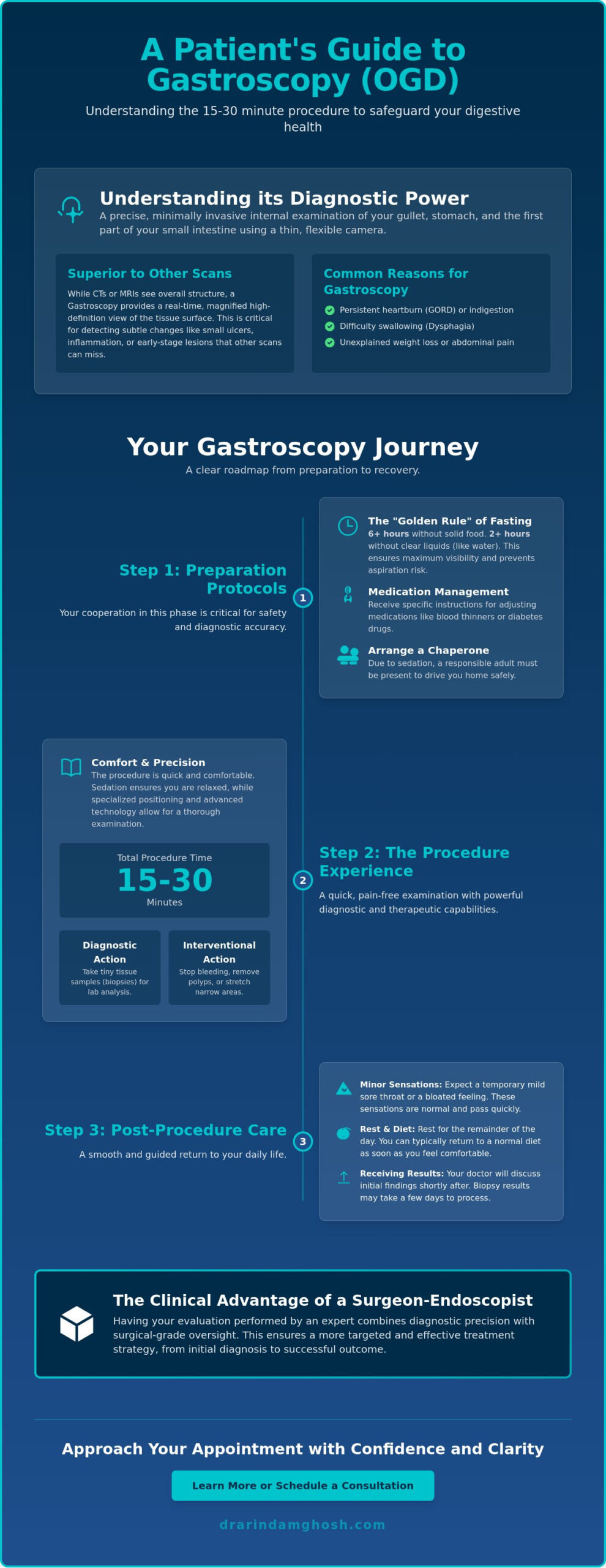
A gastroscopy, clinically referred to as an OGD (oesophago-gastro-duodenoscopy), is a precise, minimally invasive internal examination. It allows a direct, high-definition view of the upper digestive tract, covering the gullet, stomach, and the first part of the small intestine. For many patients in the UAE, understanding What is an Esophagogastroduodenoscopy (EGD) is the first step toward resolving chronic digestive discomfort and regaining peace of mind. The gastroscopy procedure involves the use of a gastroscope, which is a thin, flexible tube equipped with a sophisticated camera and light source at its tip.
While external imaging like CT scans or MRIs are excellent for assessing the overall structure of organs, they have limitations. These scans can miss subtle changes in the mucosal health, such as small ulcers, early-stage inflammation, or flat lesions. Gastroscopy is superior because it offers a real-time, magnified view of the tissue surface. This level of visual clarity is essential for an accurate diagnosis. In my practice, I’ve seen how this precision directly influences successful surgical outcomes; knowing exactly where a lesion sits allows for a more targeted and effective treatment strategy.
Common Indications: Why Your Doctor Recommended This
Physicians typically recommend a gastroscopy when symptoms don’t respond to standard lifestyle changes or medications. It’s a vital tool for investigating persistent dyspepsia or symptoms of GORD that cause daily discomfort. If you’re struggling with dysphagia or have noticed unexplained weight loss, this examination provides the answers needed to move forward. We use it to screen for several conditions, including:
- Gastric and duodenal ulcers: Identifying the depth and location of sores.
- Coeliac disease: Checking for damage to the intestinal lining.
- Early-stage malignancies: Detecting cancer when it’s most treatable.
- Oesophagitis: Assessing the severity of acid reflux damage.
Diagnostic vs. Interventional Gastroscopy
A gastroscopy isn’t just a tool for observation; it’s a versatile platform for immediate medical action. During a diagnostic session, I often take biopsies. These are tiny tissue samples that are analyzed in a lab to confirm the presence of bacteria like H. pylori or to check for abnormal cells. This diagnostic accuracy is the foundation of a multidisciplinary treatment plan, ensuring every specialist on your team has the data they need.
Beyond diagnosis, the gastroscopy procedure can be interventional. We can stop internal bleeding using heat or clips, stretch narrow sections of the oesophagus (strictures) to help you swallow better, or remove polyps before they become problematic. This combination of robotic precision and clinical insight allows us to treat issues during the same session, significantly improving your quality of life without the need for more invasive surgery.
Preparing for Your Gastroscopy: Clinical Protocols for Success
Preparation is the bridge between clinical excellence and your peace of mind. It’s the most critical phase where your cooperation directly impacts the accuracy of the diagnostic findings. The “Golden Rule” of fasting is a non-negotiable protocol designed for your safety. You must refrain from all solid food for at least six hours before the gastroscopy procedure. Clear liquids, such as water or plain apple juice, are permitted until two hours before your scheduled time. This strict window ensures your stomach is entirely empty, which provides the high-definition visibility I need to detect subtle mucosal changes and prevents the risk of aspiration during sedation.
Understanding what happens during a gastroscopy helps clarify why these steps are vital for a successful outcome. Managing chronic medications is equally important. If you take blood thinners or medications for diabetes, we’ll provide a specific schedule for adjustment. In the UAE, where metabolic health management is a priority, we meticulously coordinate these changes to maintain your physiological stability. Additionally, you must arrange for a responsible adult to act as your chaperone. Because sedation affects your coordination and judgment for up to 24 hours, you won’t be allowed to drive or leave the clinic alone. It’s a safety measure that ensures your journey home is as secure as the procedure itself.
The 24-Hour Countdown to Your Procedure
Your preparation intensifies the day before the test. I recommend sticking to light, easily digestible meals like clear broths or plain white rice to ensure a clear digestive tract. Gather your medical records and a comprehensive list of your current prescriptions to bring to the clinic. It’s natural to feel a sense of apprehension; however, mental preparation is key. Many of my patients find that practicing simple mindfulness or deep breathing techniques helps manage pre-procedure anxiety. If you have specific concerns about your digestive health, you can consult our multidisciplinary team for personalized guidance before your appointment.
Medical Disclosure and Consent
Transparency is the foundation of the trust we build together. You must disclose all known allergies, especially to latex or specific anaesthetics used in UAE clinical settings. We view the consent process not as a formality, but as a tool for patient empowerment. While the risks of the gastroscopy procedure, such as minor bleeding or a rare perforation, occur in fewer than 0.1% of cases, discussing them openly ensures you’re an informed partner in your recovery. This collaborative approach allows us to combine robotic-level precision with the human touch, prioritizing your long-term quality of life above all else.
The Procedure Experience: Precision Technology and Patient Comfort
A typical gastroscopy procedure is a streamlined, efficient process that usually concludes within 15 to 30 minutes. When you enter the procedure suite, the clinical environment is designed to balance advanced diagnostic technology with a sense of calm. You’ll be asked to lie on your left side. This specific positioning is the clinical standard because it aligns the stomach and oesophagus in a way that allows the endoscope to glide easily while minimizing the risk of fluid aspiration. It’s a small but vital detail that prioritizes your safety.
Your multidisciplinary team remains focused on your well being throughout the examination. While the surgeon operates the endoscope with precision, an endoscopy nurse stays by your side to monitor your comfort and breathing. This “human touch” is essential; the nurse provides a reassuring presence while the medical team tracks your heart rate, blood pressure, and oxygen levels using modern digital monitors. This collaborative care model ensures that even though we’re using sophisticated tools, the focus remains entirely on the individual patient.
Sedation vs. Throat Spray: Choosing Your Comfort Level
Patients in the UAE have distinct options for managing their comfort during the gastroscopy procedure. A local anaesthetic spray is a common choice for those who prefer to remain fully awake. It numbs the back of the throat within seconds, allowing you to follow instructions and see the monitor if you wish. This option offers the fastest recovery, often allowing you to leave the clinic shortly after the session ends.
Alternatively, conscious sedation offers a “twilight” sleep state. It isn’t general anaesthesia, but it induces a state of deep relaxation where you can still respond to simple cues. Most patients who choose sedation have little to no memory of the procedure afterward. In UAE facilities, choosing sedation requires a longer recovery period, typically involving 1 or 2 hours of observation in a dedicated wellness lounge before you’re discharged with a companion.
What the Surgeon Sees: Navigating the Upper GI Tract
As the endoscope moves through the upper GI tract, the surgeon receives a high-definition video feed of the internal lining. We first inspect the oesophagus for signs of inflammation, known as oesophagitis, or cellular changes like Barrett’s oesophagus. The journey continues into the stomach to look for gastric ulcers or gastritis, finally reaching the duodenum to check for signs of celiac disease or duodenal scarring. A small amount of air is introduced through the endoscope to gently expand the folds of the digestive tract, ensuring every millimeter of the lining is visible for a thorough inspection. This methodical approach is vital for early detection and for restoring your long-term quality of life.
Post-Procedure Care: Navigating Recovery and Results
Once the gastroscopy procedure concludes, you’ll be moved to a dedicated recovery bay. Our nursing team monitors your vital signs closely as the sedation begins to fade. You might feel groggy or “foggy” for approximately 60 minutes. It’s common to experience a mild sore throat during this time. This sensation happens because the endoscope gently brushes the lining of the esophagus during the exam. This discomfort typically clears up within 24 to 48 hours. Simple saltwater gargles or throat lozenges often provide quick relief.
You can usually have your first meal once your swallowing reflex returns to normal, which typically takes about one hour. It’s best to start with light, soft options like soup or yogurt. For your safety and in compliance with UAE medical guidelines, driving or operating heavy machinery is strictly prohibited for a full 24 hours after sedation. The medication affects your coordination and judgment even if you feel alert. Ensure a family member or friend is available to escort you home safely.
The Timeline for Results and Findings
Before you leave the clinic, your surgeon provides an initial verbal summary of the visual findings. If the doctor observed any inflammation or abnormalities, they’ll discuss these immediate observations with you. However, visual checks are only part of the process. If tissue samples were collected, you’ll need to wait for the histopathology report. These laboratory results usually take 3 to 5 working days to finalize. We integrate these findings into your comprehensive care plan to ensure a precise and personalized treatment path.
When to Contact Your Medical Team
While the gastroscopy procedure is a routine and safe diagnostic tool, you must stay vigilant during the first 48 hours. We prioritize your safety and provide clear channels to reach our multidisciplinary support team after hours. Contact us immediately if you notice any “red flag” symptoms, including:
- A fever higher than 38°C.
- Severe or worsening abdominal or chest pain.
- Persistent vomiting or difficulty breathing.
- Black or tarry stools.
The follow-up consultation is a vital step in your journey. This meeting allows us to review the final biopsy report in detail and discuss how the results impact your long-term wellness. If you have any concerns about your recovery timeline or symptoms, contact our clinical team to discuss your specific needs.
Why Expert Oversight Matters for Your Gastroscopic Evaluation
A surgeon’s perspective changes the nature of a gastroscopy procedure. While a standard diagnostic approach identifies issues, a surgeon-endoscopist evaluates the internal tissue with a view toward potential curative action. Dr. Ghosh brings years of expertise in surgical oncology and gastrointestinal health to the endoscopy suite. This background allows for a more nuanced interpretation of findings. The precision learned through performing hundreds of robotic and laparoscopic cases translates into a steady, methodical approach to diagnostic scopes. It ensures that every patient benefits from a level of clinical rigor that looks beyond the immediate diagnosis toward a permanent cure. In the UAE, patients have access to world-class, JCI-accredited facilities in Dubai and Abu Dhabi where these advanced standards are the baseline for care.
A Multidisciplinary Approach to GI Health
Effective GI care requires more than a single test; it demands a collaborative environment where different specialties converge. Dr. Ghosh integrates the results of your evaluation into a broader framework of long-term wellness. Whether your path involves simple lifestyle adjustments or advanced robotic surgery options, the focus remains on restoring your quality of life. This multidisciplinary approach ensures that you aren’t just another case file. You’re a partner in a journey toward recovery. High-tech tools are used to enhance human capability, not replace it. This balance of innovation and integrity defines the patient experience, moving from detection to healing with high-touch compassion.
Taking the Next Step Toward Wellness
Scheduling your consultation is a proactive choice for your future. If you’re experiencing persistent heartburn, unexplained weight loss, or upper abdominal pain, booking an appointment is the first step toward clarity. To maximize your time with the specialist, prepare a list of your current medications and a timeline of your symptoms. Ask questions about the findings and how they might impact your daily routine. A comprehensive gastroscopy procedure is a common, highly safe intervention that provides essential peace of mind. It’s the most reliable way to rule out serious conditions and start a targeted treatment plan. Your health is the ultimate priority, and a clear diagnosis is the foundation of that goal. Don’t let uncertainty delay your path to wellness.
- Expert Review: Every scan is interpreted by a specialist with advanced surgical training.
- Advanced Facilities: Procedures are conducted in state-of-the-art hospitals across the UAE.
- Actionable Results: Move directly from diagnosis to a personalized treatment strategy.
Empowering Your Journey Toward Digestive Wellness
A gastroscopy procedure is a definitive step toward understanding your internal health and resolving persistent symptoms. It combines advanced diagnostic technology with clinical precision to provide the answers you need for a tailored treatment plan. By prioritizing proper preparation and expert oversight, you ensure that the process is both comfortable and highly effective. This evaluation isn’t just a clinical task; it’s a vital pathway to restoring your quality of life and long-term comfort.
Dr. Arindam Ghosh offers over 25 years of specialized surgical and endoscopic experience to his patients. His mastery of both diagnostic and complex interventional endoscopy ensures that every evaluation meets the highest global standards. Practicing across premier hospitals in the UAE, Dr. Ghosh blends robotic precision with a compassionate, human-centric approach. You don’t have to navigate gastrointestinal concerns alone when world-class expertise is readily available.
Schedule a Specialist GI Consultation with Dr. Arindam Ghosh
Your health is your most valuable asset, and taking this proactive step today leads to a brighter, healthier tomorrow.
Frequently Asked Questions
Is a gastroscopy procedure painful?
A gastroscopy procedure is generally not painful, though it can feel slightly uncomfortable. We use a local anesthetic spray to numb your throat, which minimizes the gag reflex. For those who feel anxious, conscious sedation is available to ensure you remain relaxed and sleepy throughout the process. Most patients report feeling only a mild pressure or a bloated sensation during the 15 minute examination.
How long does the actual gastroscopy take?
The internal examination itself typically lasts between 10 and 15 minutes. While the procedure is brief, you should plan to spend approximately 2 to 3 hours at the facility. This timeframe includes the necessary pre-procedure clinical checks and a recovery period. Our multidisciplinary team monitors you closely during this time to ensure your safety and comfort before you’re discharged to go home.
Can I go back to work the same day as my gastroscopy?
You should plan to take the entire day off if you opt for sedation during your gastroscopy. The sedative medications can impair your coordination and judgment for up to 24 hours. If you choose to have only the local anesthetic throat spray, you might return to light duties after about 60 minutes. However, most patients prefer a full day of rest to prioritize their long term quality of life.
What happens if the doctor finds something during the procedure?
If I identify an abnormality, I will often take a small tissue sample, known as a biopsy, for laboratory analysis. This is a routine part of the diagnostic process and is not a cause for immediate alarm. In some cases, I can treat issues like small polyps or narrowed areas during the same session. Biopsy results in the UAE typically take 3 to 5 working days to be processed.
Is it better to be sedated or have the throat spray?
The decision depends on your personal preference, but about 85 percent of our patients choose conscious sedation for a more relaxed experience. Sedation helps you feel calm and often means you won’t remember much of the event. The throat spray is a practical alternative for those who wish to leave the clinic quickly. We’ll discuss both options during your consultation to determine which path best supports your comfort.
Can I drive myself home after the procedure?
You cannot drive yourself home if you’ve received any form of sedation. UAE safety regulations and medical guidelines require that a responsible adult accompanies you and drives you home. The sedative stays in your system for hours. It’s unsafe to drive or use machinery. If you only use the throat spray, you may be able to drive after the numbness has completely faded.
Are there any long-term side effects of a gastroscopy?
There are virtually no long term side effects associated with this diagnostic tool. Statistics show that serious complications occur in fewer than 1 in 10,000 cases. You might experience a mild sore throat or a sense of bloating for 24 to 48 hours. These minor symptoms resolve quickly, allowing you to return to your normal routine. My focus is always on using clinical expertise to ensure a safe outcome.
How soon can I eat after a gastroscopy?
You can usually begin drinking fluids and eating light snacks about 45 to 60 minutes after the exam. It’s essential to wait until the numbness in your throat from the anesthetic spray has fully subsided to prevent choking. Start with cool liquids or soft foods like yogurt before moving to a regular meal. This careful approach ensures your recovery is as smooth as possible, protecting your immediate well being.
One comment
Pingback: Understanding Diagnostic Colonoscopy: A Comprehensive Guide to Digestive Health