

Last Tuesday, a 52-year-old resident in Dubai sat in my clinic, clutching a referral for a diagnostic colonoscopy with a mixture of apprehension and uncertainty. It’s completely natural to feel a sense of anxiety when your physician moves beyond routine screening to investigate specific symptoms like persistent abdominal pain or unexplained changes in bowel habits. You aren’t alone in these feelings; clinical observations in the UAE suggest that over 40% of patients express significant concern specifically regarding the bowel preparation phase and the procedure’s findings.
I understand that the fear of a potential diagnosis can feel overwhelming, but knowledge is your most powerful ally. My promise is to provide you with a clear, expert-led roadmap of the entire process, ensuring you gain the peace of mind and clarity you deserve for your long-term wellness. We’ll examine the precise steps involved, how modern medical advancements prioritize your comfort, and how these findings lead to a personalized treatment plan designed to restore your quality of life through a multidisciplinary approach.
Key Takeaways
- Understand why a Diagnostic Colonoscopy is a vital tool for symptom-based evaluation and how it differs from routine screenings to protect your long-term digestive health.
- Learn how cutting-edge high-definition imaging technology provides the clarity needed to detect minute abnormalities with exceptional precision and clinical rigor.
- Prepare with confidence by following a guided approach to bowel preparation and sedation, ensuring your comfort and a clear path to accurate results.
- Gain insight into interpreting findings, from identifying different polyp types to understanding the next steps for your personalized wellness journey.
- Discover the clinical advantage of surgeon-led, multidisciplinary care in the UAE that focuses on restoring your quality of life through compassionate expertise.
What is a Diagnostic Colonoscopy and Why is it Essential?
A colonoscopy is a specialized internal visual examination that allows a physician to view the entire lining of the large intestine and rectum. This procedure uses a thin, flexible tube called a colonoscope, which is equipped with a high-definition camera and a sophisticated light source. While many patients recognize this as a preventative tool, a Diagnostic Colonoscopy serves a different, more immediate purpose. It’s specifically performed to investigate existing symptoms or abnormal findings discovered during other medical tests.
Understanding What is a Colonoscopy helps patients appreciate its role as the gold standard for digestive health. While a screening colonoscopy is a routine check for asymptomatic individuals, a diagnostic procedure is a focused medical inquiry. It allows us to identify inflammatory diseases, polyps, or early-stage cancers with exceptional precision. Early detection through this method remains the most effective way to manage colorectal health. It often leads to successful outcomes that preserve a patient’s quality of life. By combining advanced technology with a compassionate, patient-centered approach, we transform a clinical necessity into a pathway for healing.
When is a Diagnostic Colonoscopy Recommended?
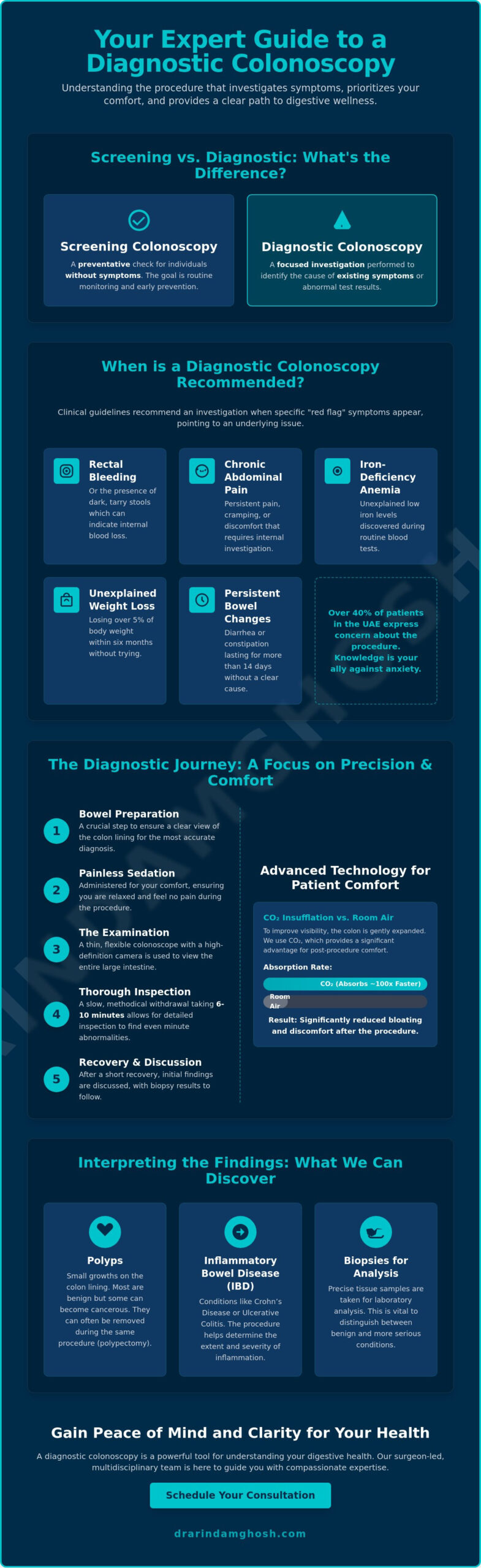
Clinical guidelines in the UAE recommend this investigation when specific “red flag” symptoms appear. We look for persistent changes in bowel habits, such as diarrhea or constipation that lasts longer than 14 days. Unexplained weight loss, often defined as losing more than 5% of body weight within six months without effort, also warrants a closer look. Other critical triggers include:
- Investigation of rectal bleeding or dark, tarry stools that suggest internal blood loss.
- Iron-deficiency anemia discovered during routine blood panels in UAE clinics.
- Chronic abdominal pain or cramping that requires direct internal visualization to understand.
The Goals of a Diagnostic Investigation
The primary objective is to identify the root cause of gastrointestinal distress rather than just treating the surface symptoms. During the procedure, we can take precise tissue samples, known as biopsies, for detailed laboratory analysis. This is a vital step in distinguishing between benign conditions and more serious concerns like gastrointestinal oncology. Additionally, the examination helps determine the exact extent and severity of inflammatory bowel diseases, including Crohn’s disease or Ulcerative Colitis. This detailed mapping is essential for creating a personalized, multidisciplinary treatment plan. It ensures we aren’t just treating a diagnosis, but supporting a human being. Our focus stays on restoring health through evidence-based interventions and modern medical advancements. For patients whose symptoms also involve the upper digestive tract, understanding the gastroscopy procedure as a comprehensive upper GI endoscopy can provide equally important clinical insights.
The Science of the Procedure: How Advanced Imaging Detects Abnormalities
Modern medicine transforms a standard examination into a high-precision intervention. During a Diagnostic Colonoscopy, we utilize high-definition video technology that captures mucosal details with exceptional clarity. The flexible colonoscope, a sophisticated instrument roughly the thickness of a finger, navigates the natural curves of the large intestine with grace. This maneuverability allows us to inspect areas that were once difficult to reach, ensuring a comprehensive view of your digestive health. It’s a process that balances technical rigor with a deep commitment to patient safety.
To improve visibility, we use CO2 insufflation to gently expand the colon walls. This technique is superior to using room air because the body absorbs CO2 approximately 100 times faster, which significantly reduces post-procedure bloating and discomfort for patients across the UAE. Allied Digestive Health explains the difference between screening and diagnostic colonoscopies, highlighting how the diagnostic approach is specifically tailored to investigate symptoms like persistent pain, anemia, or changes in bowel habits. A critical metric in this process is the withdrawal time. We dedicate a minimum of six to ten minutes to the withdrawal phase. This slow, methodical retreat is when the most thorough inspection occurs and the majority of minute lesions are identified.
Interventional Capabilities During the Exam
The procedure is both diagnostic and therapeutic. If we find a polyp, we perform a polypectomy immediately, removing these pre-cancerous growths using specialized wire loops or snares. If we encounter internal bleeding, we apply hemostasis techniques, such as hemoclips or thermal probes, to secure the site instantly. For patients suffering from strictures, or narrowed sections of the colon often caused by inflammation, we utilize dilation balloons to gently widen the passage. This immediate action often prevents the need for more invasive surgery later, restoring your quality of life with minimal downtime.
The Role of Artificial Intelligence and Enhanced Imaging
We’ve entered an era where robotic precision meets clinical intuition. Narrow Band Imaging (NBI) uses specific blue and green light wavelengths to highlight the vascular patterns of a lesion. This makes it easier to distinguish between benign and worrisome tissues without the need for traditional dyes. We also integrate AI-assisted polyp detection, known as CADe. This technology acts as a second set of expert eyes, using algorithms to flag abnormalities in real-time. Clinical data suggests that AI integration can increase the adenoma detection rate by up to 14 percent, ensuring nothing is overlooked. If you’re seeking a path toward better gut health, a personalized clinical evaluation can help determine the right diagnostic steps for your unique situation.
Navigating the Process: From Bowel Preparation to Painless Sedation
Preparing for a diagnostic colonoscopy begins several days before you arrive at the clinic. The journey starts with specific dietary modifications. You’ll transition from high-fiber foods to a low-residue diet, eventually moving to clear liquids 24 hours before the procedure. This phase is vital for calming the digestive tract and preparing it for the cleansing process. The bowel preparation itself involves consuming a prescribed solution to flush the colon entirely. While patients often worry about this step, modern protocols in the UAE now utilize high-efficacy, low-volume solutions that are significantly easier to manage than older versions.
On the day of your appointment, the clinical team conducts a pre-procedure evaluation. We record your vitals, including blood pressure and oxygen saturation, to ensure a safe baseline. Once you’re ready, a specialist administers conscious sedation or monitored anesthesia care. This step ensures you remain relaxed and comfortable. The actual diagnostic colonoscopy typically lasts between 30 and 60 minutes. During this window, the physician uses a flexible, high-definition endoscope to examine the intestinal lining with meticulous care, looking for any irregularities or signs of disease.
Demystifying the “Prep” Experience
A clean colon is the most critical factor for a successful outcome. If the view is obscured by residual waste, the physician might miss small polyps or early-stage lesions. To manage the liquid diet phase with minimal discomfort, we suggest drinking prep solutions chilled or through a straw to bypass the taste buds. Staying hydrated with clear broths and electrolyte-rich drinks helps maintain your energy levels. Modern medical advancements mean you no longer have to consume gallons of liquid; many current solutions require only a fraction of that volume while providing superior clarity for the medical team.
Ensuring Patient Comfort and Safety
Modern endoscopic techniques are designed to be essentially painless. We offer different levels of sedation based on your health profile and preference. Light sedation allows you to remain conscious but deeply relaxed, while deep anesthesia ensures you sleep through the entire process. Throughout the procedure, our multidisciplinary team uses advanced sensors to track your heart rate and oxygen levels continuously. This combination of robotic-level precision and a compassionate human touch ensures that your safety is never compromised. Our goal is to provide a seamless experience that prioritizes your quality of life while delivering the clinical insights necessary for your long-term wellness. Patients who require evaluation of both the upper and lower digestive tract will find that the same principles of comfort and precision apply to the gastroscopy procedure for upper GI endoscopy, making it an equally manageable experience.
Interpreting the Findings: Understanding Polyps, Biopsies, and Pathology
After your Diagnostic Colonoscopy, the immediate visual report provides the first glimpse into your digestive health. If the colon lining appears smooth and healthy, the result is classified as “normal.” For most patients in the UAE, a normal result means the next screening won’t be necessary for another 10 years, unless new symptoms arise. However, it’s common to find polyps during the procedure. These small growths are typically removed instantly to prevent future complications. We categorize these into two main types: hyperplastic polyps, which are generally benign and carry low risk, and adenomatous polyps, which are considered precancerous and require proactive management.
The tissue samples or polyps removed are sent to a specialized pathology lab for microscopic analysis. This scientific evaluation is the gold standard for diagnosis. In our practice, the timeline for receiving these results typically ranges from 3 to 7 business days. Once the pathology report is ready, we’ll meet for a follow-up consultation. This session isn’t just about reading data; it’s about providing you with a clear understanding of your internal health and ensuring your peace of mind.
Understanding Your Pathology Report
The report may contain the word “dysplasia,” which refers to how much the cells look like abnormal or cancerous tissue. We categorize this as low-grade or high-grade. High-grade dysplasia indicates a more significant risk profile and dictates a more frequent surveillance schedule. We also look for inflammatory markers that might suggest conditions like Ulcerative Colitis or Crohn’s disease. I focus on translating this complex medical jargon into a personalized health roadmap, ensuring you understand every detail of your recovery journey and long-term wellness.
Next Steps After an Abnormal Finding
An abnormal finding is a tool for prevention, not a cause for alarm. Depending on the size and number of polyps, we might recommend a repeat Diagnostic Colonoscopy in 3 or 5 years instead of the standard 10. If the findings are more complex, I leverage a multidisciplinary team approach, coordinating with specialists in gastrointestinal oncology to provide comprehensive care. For patients facing a confirmed diagnosis, understanding your options for gastrointestinal cancer surgery and advanced treatment is an essential next step toward informed decision-making. This collaborative effort often includes:
- Referrals for advanced robotic-assisted or laparoscopic evaluations if surgical intervention is necessary.
- Personalized dietary adjustments, such as increasing fiber intake to 30 grams daily to support mucosal health.
- Weight management strategies to reduce systemic inflammation.
My goal is to restore your quality of life through high-tech precision and human compassion. Every finding is a step toward a more informed and healthier future.
Schedule a consultation with Dr. Arindam Ghosh to discuss your symptoms and screening options.
Comprehensive Care: The Role of Expert Intervention in Colorectal Wellness
Choosing the right specialist for a Diagnostic Colonoscopy ensures that your screening is more than a simple data point. It becomes a foundational step in a long-term wellness strategy. When an experienced surgeon leads the endoscopy, the transition from identifying a concern to resolving it is seamless. Dr. Arindam Ghosh integrates over 25 years of clinical expertise with a multidisciplinary approach to manage complex gastrointestinal cases. This collaborative method ensures that every patient benefits from a collective pool of knowledge, spanning surgical oncology and advanced digestive health.
The ultimate clinical outcome isn’t just a successful procedure; it’s the restoration of your quality of life. By combining cutting-edge surgical technology with a deeply human touch, Dr. Ghosh moves beyond traditional medical boundaries. This philosophy prioritizes long-term health over short-term fixes, ensuring you return to your daily routine with confidence and clarity. Every clinical decision is backed by decades of experience in the UAE and internationally, providing a sense of safety that only a seasoned expert can offer.
Why a Surgical Perspective Matters
A surgeon’s unique understanding of abdominal anatomy provides an advantage during a Diagnostic Colonoscopy. If the procedure reveals a condition requiring intervention, a surgeon can transition directly to planning laparoscopic or Robotic Hernia Repair or robotic-assisted surgery. This integrated care model is vital for managing colorectal cancer and inflammatory bowel diseases. You won’t have to wait for a referral or repeat explanations to a new provider. The same expert who identifies the issue is equipped to fix it using robotic precision, minimizing recovery time and improving surgical outcomes. For patients whose colonoscopy findings point to abdominal conditions beyond the colon, a minimally invasive approach such as Laparoscopic Cholecystectomy for gallbladder removal may also be part of a comprehensive surgical plan.
- Direct transition from diagnosis to minimally invasive surgical intervention.
- In-depth knowledge of complex colorectal and inflammatory conditions.
- Use of advanced robotic tools to ensure precision and safety.
- Comprehensive follow-up care tailored to surgical recovery.
Scheduling Your Consultation
Your journey to digestive health begins with an open, transparent conversation. Dr. Ghosh prioritizes patient education, ensuring you understand every aspect of your procedure and the potential paths forward. These pre-procedure discussions are designed to empower you, replacing uncertainty with a structured plan for recovery. In the UAE’s evolving healthcare environment, having a globally minded yet locally grounded expert is essential for high-standard care. You can schedule a consultation with Dr. Arindam Ghosh today to discuss your symptoms and take a proactive step toward colorectal wellness. Professional guidance and compassionate care are just one appointment away.
Prioritizing Prevention for a Healthier Future
A proactive approach to gastrointestinal health starts with the realization that early detection is your most powerful tool. A Diagnostic Colonoscopy provides the clinical clarity needed to identify abnormalities before they progress into complex conditions. By combining advanced imaging with precise biopsy techniques, this procedure ensures your care plan is grounded in absolute accuracy. Modern medical standards in the UAE emphasize patient comfort, ensuring the process of bowel preparation and sedation is both manageable and safe.
When you choose a specialist, you aren’t just booking a procedure; you’re investing in a partnership focused on your long-term quality of life. Dr. Arindam Ghosh brings over 25 years of specialized GI surgical experience to every consultation. His expertise in advanced Robotic Hernia Repair and laparoscopic interventions ensures that if findings require action, you’re supported by the latest surgical innovations. This multidisciplinary approach to gastrointestinal oncology means every patient receives a personalized strategy tailored to their unique clinical profile. You deserve the peace of mind that comes with expert care and robotic precision. Book a Diagnostic Consultation with Dr. Arindam Ghosh today to take the next step toward lasting digestive wellness.
Frequently Asked Questions
Is a diagnostic colonoscopy painful?
A diagnostic colonoscopy isn’t painful because you’re under sedation or general anesthesia during the entire procedure. Clinical data shows that 95% of patients report no memory of the event and feel no discomfort afterward. Our team uses precise monitoring to ensure your safety and comfort. This high-tech approach allows us to focus on your internal health while you rest peacefully in a controlled environment.
How long does it take to get the biopsy results?
You’ll typically receive your biopsy results within 3 to 7 working days. In the UAE, pathology labs usually process tissue samples within 72 to 120 hours to ensure accuracy. Once the results are ready, we’ll schedule a follow-up consultation to discuss the findings. This ensures you receive a clear, comprehensive explanation of your digestive health status and any necessary next steps for your personalized care plan.
Can I drive myself home after the procedure?
You cannot drive yourself home because the sedative medications take up to 24 hours to leave your system entirely. UAE safety protocols and clinical guidelines require a responsible adult to accompany you and handle transportation. It’s essential for your safety and the safety of others on the road. We recommend resting for the remainder of the day to allow your body to recover from the anesthetic effects.
What happens if the doctor finds a polyp?
If your doctor finds a polyp, they’ll usually remove it immediately during the diagnostic colonoscopy. This procedure, known as a polypectomy, is a proactive step that reduces colorectal cancer risk by up to 90% according to medical studies. We use specialized tools to ensure the removal is precise and painless. Every polyp is sent to a lab for detailed analysis to guide your long-term wellness strategy.
How is a diagnostic colonoscopy different from a screening one?
A diagnostic colonoscopy investigates specific symptoms like abdominal pain or bleeding, whereas a screening is for patients without symptoms. In the UAE, health authorities recommend screening starting at age 45 for most adults. Diagnostic procedures focus on identifying the cause of existing health changes. This targeted approach helps our multidisciplinary team create a precise treatment path tailored to your specific clinical needs and symptoms.
What are the risks associated with a colonoscopy?
The risks associated with this procedure are very low, with serious complications like perforation occurring in less than 0.1% of cases. Minor bleeding might occur if a polyp is removed, but it’s typically controlled during the session. Our use of advanced technology and robotic precision minimizes these risks. We prioritize your safety at every stage, ensuring the procedure is a secure pathway to restoring your quality of life.
What should I do if I cannot finish the bowel prep?
You should contact our clinical team immediately if you’re unable to finish your bowel preparation. Incomplete prep can lead to a 20% higher chance of missing small lesions or abnormalities during the exam. We might suggest a split-dose regimen or an alternative solution to ensure your colon is clear. A thorough prep is vital for the accuracy of the diagnostic colonoscopy and the success of your health assessment.
Are there alternatives to a colonoscopy for diagnosis?
Alternatives like CT colonography or Fecal Immunochemical Tests (FIT) exist, but they don’t allow for immediate treatment or biopsy. While FIT tests have about a 79% sensitivity for detecting cancer, they cannot remove precancerous polyps. If an alternative test shows an abnormality, a colonoscopy is still required for confirmation. It remains the gold standard because it combines high-definition diagnosis with the ability to perform life-saving interventions. Patients who receive a confirmed diagnosis following their colonoscopy can explore their surgical options through a comprehensive overview of gastrointestinal cancer surgery, advanced treatment, and recovery to better understand the path ahead.
2 comments
Pingback: The Gastroscopy Procedure: A Comprehensive Patient Guide to Upper GI Endoscopy
Pingback: The Surgical Consultation Process: A Comprehensive Guide to Your First Specialist Visit