

What if the steadiest hands in the operating room weren’t entirely human, but were still guided by a master surgeon’s every intent? For many facing complex gastrointestinal issues, the phrase robotic surgery uae often sparks a blend of curiosity and deep-seated anxiety. You might worry about who’s really in control or fear that a machine can’t replicate the nuanced touch of an experienced doctor. It’s a valid concern; surgery is deeply personal, and you deserve to feel both safe and certain before any procedure.
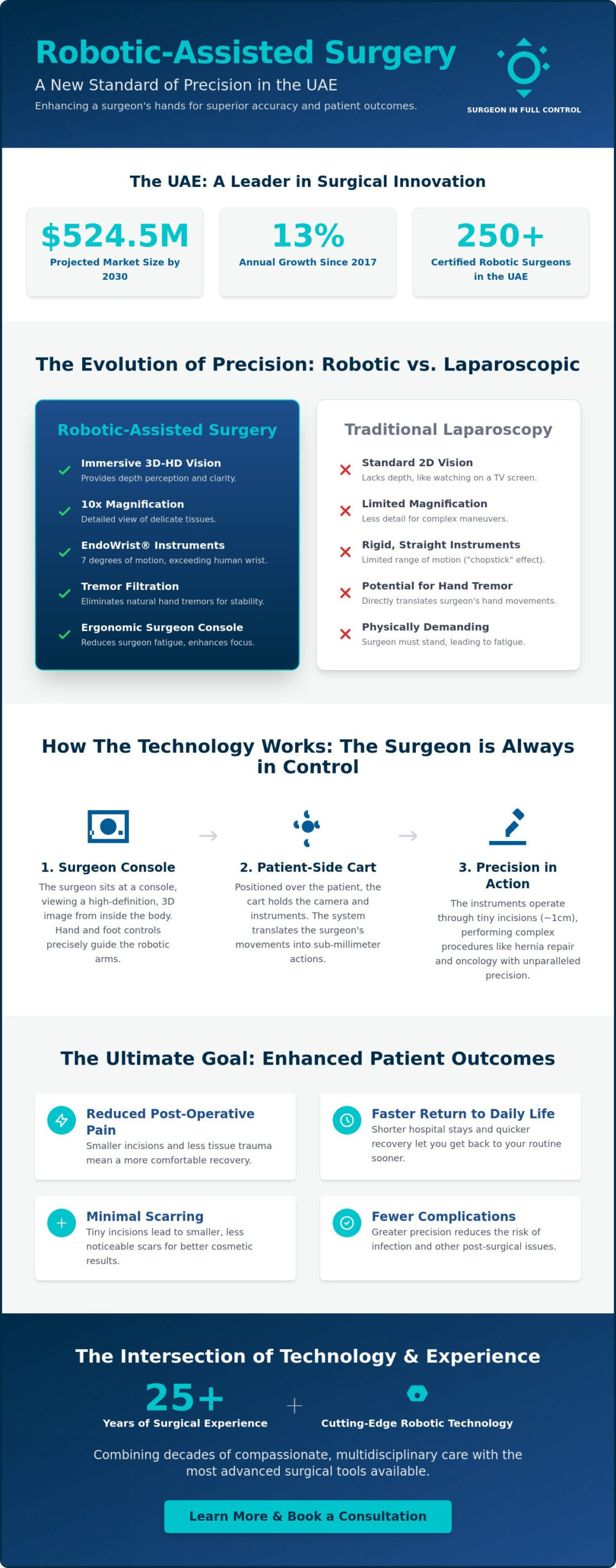
This article shows how robotic-assisted technology serves as a high-definition extension of a surgeon’s hands, specifically designed to navigate the intricate landscape of the digestive system with unmatched precision. With 250 certified robotic surgeons now practicing in the UAE and a market projected to reach $524.5 million by 2030, this innovation is no longer a distant promise but a current standard for safer outcomes. You’ll learn how this approach minimizes scars, clarifies the recovery timeline, and focuses on the ultimate goal: restoring your quality of life with the compassionate care you deserve.
Key Takeaways
- Understand that robotic systems are precise extensions of a surgeon’s hands, ensuring your doctor remains in full control while achieving superior surgical accuracy.
- Explore how the latest advancements in robotic surgery uae utilize 10x magnification to navigate complex gastrointestinal anatomy with minimal tissue trauma.
- Discover how robotic precision applies to specialized procedures like hernia repair and oncology to restore your health with fewer complications.
- Learn about the significant patient benefits, including reduced post-operative pain, minimal scarring, and a faster return to your daily quality of life.
- Identify the critical role of a surgeon’s 25 plus years of experience in combining cutting-edge technology with a compassionate, multidisciplinary approach.
What is Robotic Surgery in the UAE? A New Standard of Precision
Surgery has undergone a quiet but profound transformation over the last decade. In its simplest terms, What is Robotic Surgery? It’s a sophisticated, minimally invasive approach where computer-controlled robotic arms translate a surgeon’s hand movements into micro-movements inside the body. It isn’t an automated process where a machine operates on its own. Instead, it’s a surgeon-controlled system that filters out natural hand tremors and provides a level of dexterity that the human hand alone cannot achieve. The rise of robotic surgery uae reflects a national commitment to medical excellence, with the market projected to reach $524.5 million by 2030. Since 2017, the utilization of these systems has grown by 13% annually, positioning the Emirates as a global leader in surgical innovation.
The transition from traditional open surgery, which required large incisions and long hospital stays, to laparoscopy was the first step toward modern care. Robotic precision represents the next evolution. It bridges the gap between the tactile feedback of open surgery and the minimal invasiveness of laparoscopy. In the UAE, this evolution is supported by the Ministry of Health and Prevention (MoHAP), which has been equipping hospitals with these advanced systems since 2014 to ensure patients receive the highest standard of care.
The Core Philosophy of Robotic-Assisted Care
The heart of this technology isn’t the metal or the software; it’s the preservation of your quality of life. We view these tools as a way to enhance a surgeon’s natural capabilities, allowing for a multidisciplinary approach to complex gastrointestinal oncology and benign conditions. By reducing the size of incisions, we’re able to lower the physical and emotional burden on you. This isn’t just about a successful procedure; it’s about a return to your daily routine with minimal downtime and a sense of renewed wellness.
Robotic vs. Traditional Laparoscopy
While traditional laparoscopy was a massive leap forward, it has inherent limitations. Laparoscopic tools are often rigid, much like operating with chopsticks, and the view is typically 2D. In contrast, robotic systems offer 3D high-definition visualization with 10x magnification. The instruments provide seven degrees of freedom, mimicking the full range of motion of a human wrist. This agility is vital when navigating the narrow, complex pathways of the abdominal cavity. Whether it’s a Robotic Hernia Repair or a Laparoscopic Sleeve Gastrectomy, the added precision ensures that delicate tissues are handled with the utmost care, leading to more predictable and successful outcomes.
The Technology Behind the Precision: How Robotic Systems Work
The da Vinci Surgical System has redefined the modern operating theater. It’s a marvel of engineering that acts as a high-definition extension of a surgeon’s intent. In hospitals across the Emirates, this system is the gold standard for complex abdominal work. It isn’t just about the hardware; it’s about the seamless integration of technology and clinical wisdom. When we utilize robotic surgery uae, we’re bringing together the most advanced tools available with a commitment to patient safety and surgical excellence.
At the Surgeon Console, I’m immersed in a 3D view of the surgical field. This is where 25 plus years of gastrointestinal experience meets 10x magnification. The interface is intuitive. It translates my finger movements into precise actions of the robotic arms in real-time. This setup allows me to stay focused and comfortable during long, complex procedures, which directly impacts the safety and success of the operation. It’s a collaborative process where the machine provides the precision and the surgeon provides the judgment.
The Patient-Side Cart is where the physical work happens. The robotic arms carry specialized instruments through tiny incisions, usually no larger than a centimeter. These arms operate with sub-millimeter accuracy, allowing for movements so fine they’re impossible for a human hand alone. A critical feature here is tremor filtration. Even the most skilled surgeon has microscopic hand vibrations. The system identifies and removes these, ensuring every movement inside your body is perfectly steady and deliberate. This stability is central to the patient benefits of robotic surgery, such as less tissue damage and a smoother recovery process.
Visualisation and Depth Perception
Depth perception is everything when navigating the abdomen. The 3D high-definition camera provides a view that is far superior to the 2D screens used in traditional laparoscopy. I can see the subtle layers of tissue and the exact path of delicate blood vessels with incredible clarity. This level of immersion helps me protect surrounding nerves, which is essential for preserving your quality of life after surgery. It’s about seeing the microscopic details that make a difference in your long-term wellness.
EndoWrist Technology
EndoWrist technology provides instruments with a 360-degree range of motion. Think of it as having tiny, highly agile wrists inside the abdomen. This dexterity is invaluable for complex GI reconstructions where we must suture in very tight spaces. It allows for gentle tissue handling and precise knot-tying that rigid tools simply can’t match. If you have questions about how this technology applies to your specific diagnosis, a consultation with a specialist can help you understand the best path forward for your recovery.
Specialised Robotic GI Procedures: From Hernia Repair to Oncology
The transition from understanding technology to applying it requires a deep appreciation for human anatomy. While general applications exist, the most significant impact of robotic surgery uae is seen in complex gastrointestinal (GI) procedures. This isn’t just about using a robot; it’s about using the right tool for the most delicate tasks. For example, a Robotic Hernia Repair allows for the precise placement of mesh and closure of defects that traditional methods might struggle to reach. Similarly, treating severe GERD or hiatal hernias through robotic fundoplication provides a level of suturing accuracy that directly correlates with long-term relief from symptoms.
Success in these areas is backed by clinical data and growing institutional expertise. Research into the robotic surgery program in Dubai shows that specialized centers are achieving outcomes that rival global benchmarks. Whether we’re performing a resection of the liver or managing a complex pancreatic condition, the goal remains the same: complete removal of the disease while preserving as much healthy tissue as possible. Hospitals in Dubai have already performed over 825 robotic procedures, proving that this technology is a proven pathway to restoring your health.
Robotic Bariatric and Metabolic Surgery
Weight loss surgery requires absolute precision, especially in patients with a high Body Mass Index (BMI). A robotic-assisted Laparoscopic Sleeve Gastrectomy offers a stable platform that overcomes the physical challenges of traditional laparoscopy. The robot’s strength and steady arms make it easier to navigate thick abdominal walls, which reduces the risk of leaks and other complications. This precision is even more critical for revisional weight loss surgery, where scar tissue from previous operations can make visibility and movement difficult. The improved ergonomics for the surgeon during these long procedures ensure that focus remains sharp from the first incision to the final stitch.
Colorectal and Oncology Applications
Oncology is where the human touch and robotic precision find their most vital balance. In colorectal cancer resections, the robotic arms navigate the narrow confines of the pelvis with ease. This allows for a more thorough lymph node dissection, which is essential for accurate staging and effective treatment. By protecting the delicate nerves surrounding the bowel and bladder, we help patients maintain essential functions. This multidisciplinary approach ensures that surgery isn’t just a clinical task, but a step toward a meaningful existence. The result is a faster recovery and a much higher chance of returning to your daily quality of life.
Patient Benefits and Recovery: What to Expect Post-Surgery
The journey toward recovery begins the moment you decide on a surgical path that prioritizes your long-term wellness. Choosing robotic surgery uae offers a distinct advantage in how your body heals. Because the robotic instruments are incredibly precise, there is less disruption to the surrounding healthy tissues. This leads to a significant reduction in post-operative pain, which often means you’ll require fewer doses of strong pain medication. By minimizing the physiological stress on your body, we create a smoother pathway for your return to a meaningful and healthy existence.
Clinical outcomes in the region show that patients experience minimal blood loss and a lower risk of wound infections compared to traditional open surgery. The aesthetic result is also a major consideration for many of our patients in the Emirates. Instead of one large incision, we use several tiny openings, usually less than 12 millimeters in size. These small “keyhole” incisions heal faster and result in “hidden” scars that fade significantly over time. For the UAE’s active population, this means a faster return to work, family commitments, and the lifestyle you enjoy.
The Recovery Timeline
Recovery is a structured process designed to move you from uncertainty toward empowerment. On Day 0 and 1, the focus is on mobilization. Most patients are encouraged to sit up and walk short distances within hours of the procedure to promote circulation. During the first week at home, you’ll manage a specialized diet and engage in light activities like walking around your garden or home. By the second or third week, most patients find they can return to non-strenuous work. This is a sharp contrast to the six to eight weeks of recovery often required for traditional open surgeries. The ultimate goal is a complete restoration of your quality of life with minimal downtime.
Addressing Common Misconceptions
It’s natural to feel a sense of anxiety about the role of technology in the operating room. One of the most frequent questions I hear is whether the robot or the doctor is in control. I want to reassure you that the robot does nothing on its own. Every movement is a direct translation of my hands, guided by 25 plus years of surgical experience. The system includes rigorous safety protocols and constant checks that happen hundreds of times per second. While we use the term “minimally invasive” to describe the small incisions, please understand that we’re still performing a major, life-changing operation with the highest level of clinical gravity. If you’re ready to discuss your specific recovery path, schedule a clinical consultation today to explore your options.
Choosing Your Robotic Surgeon: The Intersection of Tech and Experience
Technology is only half of the equation for a successful outcome. While the rise of robotic surgery uae provides us with incredible tools, the clinical judgment required to navigate a complex oncology case or a delicate bariatric revision comes from decades of hands-on experience. A robotic system doesn’t know when to be cautious or when to push forward; that wisdom belongs to the surgeon. Choosing a specialist who views the robot as an extension of their own hands ensures that your care is grounded in both innovation and integrity. In a landscape where only 250 surgeons in the country are certified in these advanced techniques, the depth of a doctor’s gastrointestinal background remains the most critical factor in your safety.
The surgical consultation process is your opportunity to build trust and find a compassionate ally. It’s where we move beyond the cold facts of a diagnosis to understand your unique goals for recovery. My commitment to high-tech compassion means that while we use the most advanced 4th generation da Vinci models, we never lose sight of the individual behind the scan. We utilize a multidisciplinary approach, ensuring that a team of experts supports your path to wellness from the first meeting through your final follow-up.
Questions to Ask Your Surgeon
Before committing to a procedure, it’s vital to feel fully informed. You should never hesitate to ask detailed questions about your surgeon’s background and the specific plan for your care. Consider asking:
- How many robotic procedures have you performed in my specific area of need?
- Why is the robotic approach superior to traditional laparoscopy for my condition?
- What does the multidisciplinary support team look like during my hospital stay and home recovery?
The Path Forward: Restoring Quality of Life
Surgery is more than a clinical task; it’s a pathway to reclaiming your health. By creating personalized care plans, we ensure that every step of your journey is tailored to your specific needs. This holistic view of wellness is what leads to long-term success and a return to the activities you love. We don’t just aim for a successful operation; we aim for a total restoration of your quality of life. If you’re facing a complex GI challenge, don’t navigate it alone. Consult with Dr. Arindam Ghosh for Advanced Robotic Care and take the first step toward a healthier, more vibrant future.
Embracing a New Era of Surgical Wellness
The evolution of robotic surgery uae represents a profound shift toward a future where complex gastrointestinal care is both safer and more predictable. We’ve explored how the da Vinci system provides 10x magnification and sub-millimeter accuracy, allowing for the preservation of delicate tissues that traditional methods might miss. This isn’t just about advanced machinery; it’s about the clinical judgment that comes from over 25 years of specialized surgical experience. By choosing a multidisciplinary approach, you ensure that every aspect of your oncology or bariatric journey is handled with both technical precision and deep empathy.
Your health is your most valuable asset. You deserve a pathway to recovery that minimizes downtime and restores your quality of life. Whether you’re facing a complex hernia repair or a life-changing bariatric procedure, the ultimate goal is a return to a meaningful existence. Before you proceed, understanding what to expect from your first specialist visit by reviewing a comprehensive guide to the surgical consultation process can help you arrive fully prepared and empowered. Book Your Advanced Surgical Consultation with Dr. Arindam Ghosh today to discuss a personalized care plan tailored to your unique needs. You don’t have to face this journey alone; expert care and high-tech compassion are ready to guide you back to wellness.
Frequently Asked Questions
Is robotic surgery safe for elderly patients in the UAE?
Robotic surgery is considered safe and often advantageous for elderly patients. The minimally invasive nature reduces the physiological stress on the heart and lungs, which is vital for patients over age 70. Smaller incisions mean less blood loss and a lower risk of post-operative pneumonia or wound complications, helping older individuals maintain their independence and quality of life through a gentler recovery process.
Will the robot be performing the surgery by itself?
The robot never performs surgery independently. Every movement of the robotic arms is a direct, real-time translation of the surgeon’s hand gestures at the console. The system serves as a high-definition extension of the doctor’s expertise. It includes failsafes that freeze the instruments instantly if the surgeon’s eyes leave the viewfinder or if a hand movement is detected as unintentional, ensuring absolute safety.
How long is the typical hospital stay after robotic GI surgery?
Most patients stay in the hospital for 1 to 3 days following a robotic gastrointestinal procedure. This is significantly shorter than the 5 to 7 days typically required for traditional open surgery. During this brief stay, our multidisciplinary team monitors your mobilization and nutrition to ensure you’re comfortable and safe before returning home to your family and daily routine.
Is robotic surgery covered by major UAE health insurance providers?
Most major health insurance providers in the UAE now recognize robotic surgery uae as a standard of care for complex GI conditions. Coverage often depends on your specific policy tier and medical necessity. Since 2019, the Ministry of Health and Prevention has actively promoted robotic programs, encouraging wider acceptance. We recommend verifying your benefits with your provider to understand any required pre-authorizations for your specific plan.
What is the difference between robotic surgery and laparoscopic surgery?
The primary difference lies in visualization and dexterity. Traditional laparoscopy uses 2D images and rigid tools that move like chopsticks. In contrast, robotic surgery uae utilizes 3D high-definition cameras with 10x magnification. The instruments feature EndoWrist technology, providing 7 degrees of freedom to mimic the human wrist’s full range of motion within the tightest abdominal spaces.
How long does it take to recover and return to work after a robotic procedure?
Most patients return to non-strenuous work within 2 to 3 weeks of their procedure. This represents a 60% improvement over the 6 to 8 week recovery period often associated with open surgery. While you’ll need to avoid heavy lifting for about 6 weeks, your ability to resume daily activities and light walking usually begins within just 48 hours of the operation.
Are there specific risks associated with robotic-assisted surgery?
Like any procedure, robotic surgery carries general risks such as infection or reaction to anesthesia. Specific technical risks are rare because we follow strict protocols regulated by the Ministry of Health and Prevention. Our team is fully trained to transition to traditional laparoscopic or open methods immediately if the clinical situation requires, ensuring your safety remains the absolute priority at all times.
Why should I choose a robotic approach for hernia repair?
Choosing a robotic approach for hernia repair allows for more precise mesh placement and more secure suturing of the abdominal wall defects. The 3D view helps identify hidden hernias that might be missed with traditional methods. This precision reduces the risk of recurrence and chronic post-operative pain, which is a common concern for patients seeking a permanent solution and a return to an active lifestyle.
One comment
Pingback: What Does a Gastrointestinal Surgeon Do in the UAE? A Patient’s Guide to Expert Care