

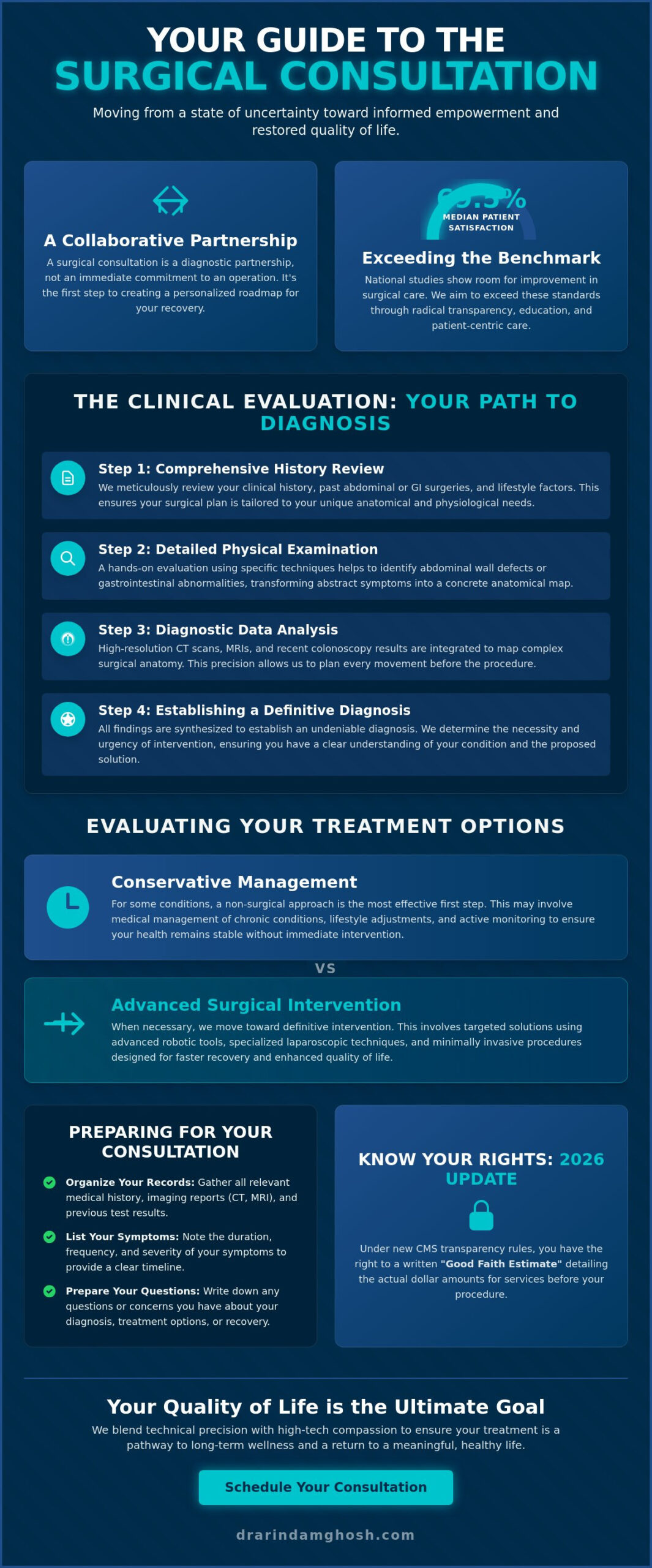
A surgical consultation isn’t a commitment to an operation; it’s a collaborative diagnostic partnership focused on restoring your quality of life. It’s natural to feel a sense of anxiety when facing the unknown, especially when medical terminology feels like a barrier to understanding your own health. You aren’t alone in these concerns, as a national study of 2,953 U.S. hospitals shows that the median patient satisfaction score for surgical care is currently 69.5%. Mastering the surgical consultation process is the essential first step in moving from a state of uncertainty toward a state of informed empowerment.
This guide will help you navigate your surgical journey with confidence by detailing every clinical and emotional milestone of your specialist visit. You’ll learn how to verify a surgeon’s technical precision while ensuring your personal concerns are heard. We’ll also cover critical 2026 updates, such as your right to a written “Good Faith Estimate” and how new CMS transparency rules require hospitals to publish actual dollar amounts for services. By the end of this article, you’ll have a clear framework for your diagnosis and a treatment plan that prioritizes both modern innovation and compassionate care.
Key Takeaways
- Understand the surgical consultation process as a collaborative diagnostic partnership rather than an immediate commitment to a procedure.
- Learn how to organize your medical history and imaging to ensure your specialist has the precise data needed for an accurate clinical diagnosis.
- Discover the methodical criteria used to weigh conservative management against advanced, minimally invasive surgical options for your specific condition.
- Gain confidence in your recovery path by understanding how a multidisciplinary team integrates technical precision with a focus on your long-term quality of life.
What is a Surgical Consultation? Defining the Collaborative Diagnostic Phase
A surgical consultation is far more than a simple meeting; it’s a comprehensive evaluation of your digestive health and unique surgical needs. While many patients are familiar with a standard gastroenterologist appointment, which often focuses on the medical management of chronic conditions or diagnostic screenings, a visit to a surgical specialist marks a transition toward definitive intervention. This phase is critical because it establishes the clinical alignment and trust necessary for a successful outcome. We move beyond identifying symptoms and begin the deliberate work of planning a targeted solution, whether that involves advanced robotic tools or specialized laparoscopic techniques.
Understanding the broad scope of what surgery is helps bridge the gap between a medical diagnosis and a physical cure. In this environment, the surgical consultation process serves as a bridge, turning clinical data into a personalized roadmap for recovery. It’s a time for meticulous analysis where the gravity of your condition is met with a calm, hopeful perspective on modern medical advancements. This collaborative diagnostic phase ensures that every step we take is grounded in both scientific rigor and your personal health goals.
The Primary Objectives of Your First Visit
The first goal of our meeting is to establish an undeniable diagnosis through a thorough review of your clinical history and a physical examination. We don’t just look at reports; we look at the individual. This helps us determine the necessity and urgency of any intervention. As of 2026, medical billing involves over 11,000 CPT codes, which reflects the extreme precision required even in the administrative documentation of your care. Given that a national study of 2,953 U.S. hospitals found a median patient satisfaction score of 69.5% for surgical care, we strive to exceed these benchmarks through radical transparency. We also prioritize education, ensuring you understand the physiological impact of your condition so you can make an informed choice. It’s about moving from uncertainty to a state of empowerment.
Surgery as a Tool for Quality of Life
In our practice, surgery isn’t viewed as just “fixing a problem.” It’s a pathway to enhancing your long-term wellness. A specialist views the procedure as one vital part of a holistic recovery journey. This is where the surgeon’s human touch becomes just as important as their technical precision. We focus on how an intervention will impact your daily existence, aiming for a return to a meaningful and healthy life. By blending robotic precision with high-tech compassion, we ensure that you aren’t just a case number, but a partner in a multidisciplinary approach to care. Our ultimate thematic anchor is always your quality of life, ensuring the clinical task serves the human experience.
While this guide focuses on gastrointestinal surgery, the principles of a thorough specialist consultation apply to all areas of health, including podiatry. For those seeking expert care for foot or ankle conditions, read more about how a dedicated podiatric evaluation can help restore your mobility and quality of life.
The Clinical Evaluation: Mapping Your Path to Recovery
The clinical evaluation is the cornerstone of a successful surgical consultation process. It transforms abstract symptoms into a concrete anatomical map. We begin by reviewing your history of abdominal or GI surgeries, as scar tissue and previous interventions influence our current approach. This methodical review ensures that the surgical plan is as precise as the technology we use. During the physical examination, I use specific techniques to evaluate abdominal wall defects or gastrointestinal abnormalities. This isn’t just about finding a problem; it’s about understanding how your body functions in its current state. We integrate your existing records with fresh clinical findings to build a comprehensive picture of your health. If you have questions about your diagnostic reports, you can consult with our specialist team to gain clarity on your next steps.
Reviewing Diagnostic and Interventional Data
Precision is paramount. In many cases, a recent diagnostic colonoscopy provides the foundational data needed to visualize the internal environment of the GI tract. We also use high-resolution CT scans and MRIs to map complex surgical anatomy, allowing us to plan every movement before entering the operating room. For complex gastrointestinal oncology cases, we employ a multidisciplinary review. This involves a collective analysis by surgeons, oncologists, and radiologists. As of 2026, studies show that hospitals using this collective expertise model see significantly lower readmission rates. This philosophy of collective expertise ensures that your care is never an isolated intervention but a coordinated effort to restore your health.
Assessing Surgical Candidacy and Risk
Not every diagnosis requires immediate surgery. We carefully evaluate comorbidities such as obesity or diabetes, especially when considering bariatric procedures or complex GI repairs. By calculating surgical risk scores, we ensure your safety is the absolute priority. I take the time to explain the ‘why’ behind every recommendation. If we suggest a specific intervention, it’s because the clinical data shows it’s the most effective pathway to restoring your quality of life. We balance the necessity of the procedure with your body’s ability to heal, ensuring a hopeful and successful outcome. Our goal is to lead you from a state of uncertainty toward a state of informed empowerment through clear, direct, and empathetic communication.
Navigating Treatment Options: Evaluating Surgery vs. Conservative Management
The decision to proceed with an operation is never made lightly. During the surgical consultation process, we engage in a transparent debate between conservative management and surgical intervention. For many gastrointestinal conditions, conservative paths involving medication or significant lifestyle adjustments are the first line of defense. However, when these methods fail to restore your health, we shift our focus to more definitive solutions. We might discuss ‘watchful waiting’ for asymptomatic conditions, but the goal is always to move toward a state of informed empowerment rather than staying in a state of clinical uncertainty.
Comparing different surgical approaches is a vital part of this dialogue. We often compare traditional open methods with minimally invasive techniques like laparoscopic sleeve gastrectomy. While traditional surgery has its place, modern advancements allow us to achieve superior outcomes with less trauma to the body. This part of the consultation is designed to demystify complex medical jargon, ensuring you understand the mechanics of your recovery without feeling overwhelmed by technical terminology.
Laparoscopic and Robotic-Assisted Precision
We prioritize techniques that offer smaller incisions and significantly faster recovery times. By utilizing robotic-assisted tools, I can perform complex hernia or colorectal resections with a level of precision that exceeds human capability alone. This is the hallmark of high-tech compassion; using the most advanced tools available to protect your quality of life. During our visit, I often use detailed diagrams or physical models to help you visualize the procedure. Seeing the path to recovery makes the journey feel less daunting and more like a structured plan for wellness.
Understanding Risks, Benefits, and Alternatives
A professional consultation requires a transparent discussion about potential complications. We don’t avoid the gravity of surgical risks; instead, we discuss exactly how we mitigate them using evidence-based protocols. As of 2026, the industry wide shift toward value-based care means our success is tied directly to your long-term outcomes and satisfaction. We define success not just as the completion of a procedure, but as your return to a meaningful existence. Informed consent is a two-way dialogue where your voice is heard, ensuring you feel confident in the technical precision and the human care behind your treatment plan.
Preparing for Your Consultation: Ensuring a Productive Dialogue
Preparation is the bridge between feeling overwhelmed and feeling in control. To maximize the surgical consultation process, you should arrive with a complete folder of your medical history, including imaging discs and current medication lists. Under the No Surprises Act, as of April 2026, you’re also entitled to a written “Good Faith Estimate” if you’re uninsured or self-pay. Preparing to discuss these financial logistics is now a standard part of the pre-surgical dialogue, ensuring there are no unexpected burdens during your recovery. Beyond the paperwork, mental preparation is equally vital. Facing a potential surgical diagnosis often triggers a fight or flight response. Bringing a trusted family member or friend can help you absorb complex technical information and ensure that your emotional concerns aren’t overlooked during the clinical discussion.
If you’re ready to begin this collaborative journey, you can schedule your comprehensive consultation with our specialist team today.
Key Questions to Ask Your Surgeon
A productive dialogue requires you to be an active participant in your care. Don’t hesitate to ask about the surgeon’s specific experience with robotic-assisted surgery or laparoscopic techniques. You should also inquire about non-surgical alternatives if you aren’t ready to proceed immediately. Understanding how the procedure will impact your daily life, diet, and activity levels is essential for setting realistic expectations. We define success by your ability to return to the activities you love, so your questions should target long-term quality of life rather than just the immediate clinical outcome.
What the Surgeon Needs to Know from You
I need more than just your test results to provide the best care. Detailed symptom tracking is invaluable; note the triggers, frequency, and severity of your discomfort. Be honest about lifestyle factors like smoking or nutritional habits, as these directly influence surgical risks and healing times. Most importantly, share your personal goals for recovery. Whether you want to return to a specific sport, travel internationally, or simply get back to work by a certain date, knowing these milestones helps us tailor a multidisciplinary approach that fits your life. Your transparency allows us to blend robotic precision with the human touch you deserve.
The Patient-Centric Approach: Why the Consultation is a Pathway to Quality of Life
The conclusion of a surgical consultation process marks the beginning of a transformative journey. In our practice, we embrace a philosophy of “high-tech compassion,” where the cold precision of advanced tools meets the warm reality of human care. We don’t view surgery as an isolated event; it’s a collaborative effort supported by a multidisciplinary team. This collective expertise ensures that your pre-operative preparation and post-operative recovery are managed with the same rigor as the procedure itself. We also encourage patients to seek a second opinion if they feel any lingering uncertainty. A second opinion isn’t a sign of doubt; it’s a healthy part of a thorough diagnostic phase that reinforces your confidence in the chosen path toward wellness.
As we move from the initial visit into the planning stage, we often incorporate “pre-habilitation.” This involves optimizing your nutritional status and physical readiness to ensure the best possible outcome. Global health insurance costs are projected to rise by 10.3% in 2026, making it more important than ever to choose a treatment plan that is both clinically effective and administratively transparent. By focusing on your long-term quality of life, we ensure that every decision made during the consultation serves your ultimate goal: a return to a healthy, meaningful existence.
The Role of Innovation in Patient Safety
Modern innovation has fundamentally changed how we approach patient safety. Robotic-assisted tools provide a level of visualization and dexterity that significantly reduces the margin for human error during complex gastrointestinal oncology cases. We also leverage AI-driven analysis to review “game film” from previous procedures, allowing for continuous improvement in surgical techniques. This focus on technology is balanced with advanced anesthesia and pain management protocols designed to accelerate your recovery. You aren’t just a passive recipient of care; you’re a partner in a data-rich ecosystem where your safety and comfort are the primary metrics of success.
Next Steps: Moving from Consultation to Action
Once the clinical decision is finalized, we transition to the logistics of scheduling and insurance clearance. It’s helpful to remember that new CMS requirements for hospital price transparency took full effect on April 1, 2026. These regulations require hospitals to publish actual dollar amounts for services, providing you with unprecedented clarity regarding the financial aspects of your care. We establish a direct line of communication for any follow-up questions that may arise after you leave the clinic. When you feel ready to reclaim your health, our team is prepared to guide you through the final pre-op testing and toward a successful recovery. Your empowerment is the final step in the consultation, turning clinical uncertainty into a structured plan for a better quality of life.
Empowering Your Path to Restored Wellness
Moving from a diagnostic visit to a definitive recovery plan requires a fundamental shift in perspective. We’ve explored how the surgical consultation process functions as a vital bridge between your current health challenges and a future of restored quality of life. By prioritizing a multidisciplinary approach and understanding the advantages of robotic precision, you can approach your surgery with a sense of informed empowerment rather than clinical anxiety. This journey is about more than just a procedure; it’s about reclaiming the daily activities and wellness you value most.
Dr. Arindam Ghosh brings over 25 years of surgical expertise to every patient interaction, specializing in advanced robotic and laparoscopic techniques that prioritize your safety and long-term recovery. Our patient-centric approach ensures that you aren’t just a case number, but a partner in a holistic healing journey. We’re committed to blending high-tech innovation with the human touch you deserve. Schedule a Consultation with Dr. Arindam Ghosh to begin your pathway back to a meaningful and healthy existence. Your journey toward recovery is a collaborative one, and we’re ready to walk it with you.
Frequently Asked Questions
How long does a typical surgical consultation take?
A typical visit lasts between 30 and 60 minutes, though complex gastrointestinal oncology cases may require more time for a thorough review. This duration allows for a methodical analysis of your medical history and a precise physical examination. We prioritize a steady, unhurried rhythm to ensure you absorb all clinical findings before we discuss solutions. It’s essential that you feel heard and understood during every minute of the encounter.
Do I need a referral to see a surgical specialist nationally?
Referral requirements depend entirely on your specific insurance provider and plan type. While PPO plans often allow direct access to specialists, many HMO plans require a primary care physician’s referral to cover the visit. You should verify these details with your insurer at least 48 hours before your scheduled appointment. Understanding these administrative logistics is a standard part of navigating the modern healthcare environment with confidence.
Will I have to undergo surgery immediately after the consultation?
No, the surgical consultation process is a diagnostic partnership, not an immediate commitment to an operation. We use this time to evaluate if surgery is the truly most effective pathway to restoring your quality of life. In many instances, we may recommend conservative management or watchful waiting based on your specific clinical data. The final decision always rests with you after a transparent discussion.
What should I bring to my first appointment with a surgeon?
You should bring your government issued identification, current insurance card, and a comprehensive list of all medications and supplements. It’s also vital to provide actual imaging discs, such as CT scans or MRIs, rather than just the written reports. Having these tangible records allows for a more precise anatomical review. Bringing a support person can also help you track technical details and maintain your emotional balance.
Are surgical consultations covered by most national insurance plans?
Most national insurance plans cover surgical consultations as a standard specialist visit, though co-pays and deductibles vary by plan. Under current transparency regulations, providers must offer clarity regarding potential costs for uninsured patients. We recommend contacting your insurance carrier to confirm your specific coverage levels for “specialist office visits.” This ensures you can focus entirely on your clinical care rather than financial uncertainty during your visit.
Can I bring a family member or friend to the consultation?
We strongly encourage you to bring a trusted family member or friend to your appointment. A support person provides an extra set of ears to help process specialized medical terminology and technical procedural details. They can also offer emotional stability during a high stakes discussion about your health. This collaborative approach ensures that you feel safe and supported as we map out your specific path to recovery.
What happens if the surgeon recommends a non-surgical treatment instead?
If a non-surgical route is recommended, we will coordinate your transition to medical management or specialized lifestyle interventions. Our goal is always the most effective treatment with the least intervention necessary. Surgery is just one tool in our multidisciplinary approach to wellness. We’ll outline a clear follow-up schedule to monitor your progress and ensure your quality of life continues to improve without the need for invasive measures.
How do I know if I need a second opinion after my consultation?
You should consider a second opinion if you feel any lingering uncertainty about your diagnosis or the proposed surgical consultation process. Seeking another perspective is a standard and healthy part of modern surgical practice, especially for complex oncological or robotic procedures. A second opinion can validate the initial plan or offer alternative insights, ultimately strengthening your confidence in your chosen pathway to a healthy existence.
One comment
Pingback: What Does a Gastrointestinal Surgeon Do in the UAE? A Patient’s Guide to Expert Care