

Did you know that approximately 31% of adults in the United Arab Emirates currently face health challenges related to obesity, often leading to a frustrating cycle of temporary fixes? It’s natural to feel a sense of exhaustion when traditional methods fail to provide the lasting relief you deserve. You might worry about surgical risks or feel confused by the different bariatric options available today. Laparoscopic Sleeve Gastrectomy addresses these concerns by offering a refined, minimally invasive pathway to metabolic health. This procedure isn’t just about weight loss; it’s a specialized intervention designed to help you reclaim your vitality with the support of a dedicated multidisciplinary team.
In this guide, you’ll discover how Laparoscopic Sleeve Gastrectomy combines surgical precision with high-tech compassion to restore your health and long-term quality of life. We’ll walk through the clinical benefits, such as the potential for Type 2 diabetes remission, and provide clarity on the lifestyle transitions that follow. By the end of this article, you’ll have a clear, evidence-based roadmap for your recovery and the tools needed to achieve sustainable wellness.
Key Takeaways
- Understand how modern surgical techniques reduce stomach volume to facilitate weight loss while minimizing discomfort through minimally invasive “keyhole” access.
- Identify the specific clinical criteria and psychological readiness required to determine if you are an ideal candidate for weight loss surgery in the UAE.
- Explore the technical advantages of Laparoscopic Sleeve Gastrectomy, where robotic precision and clinical expertise converge to restore your metabolic health.
- Gain insights into the recovery process and the immediate steps taken in the hospital to ensure a safe transition back to your daily life and a higher quality of life.
- Discover the essential role of a multidisciplinary team, including nutritionists and psychologists, in supporting your holistic journey toward long-term wellness.
Understanding Laparoscopic Sleeve Gastrectomy: The Modern Gold Standard
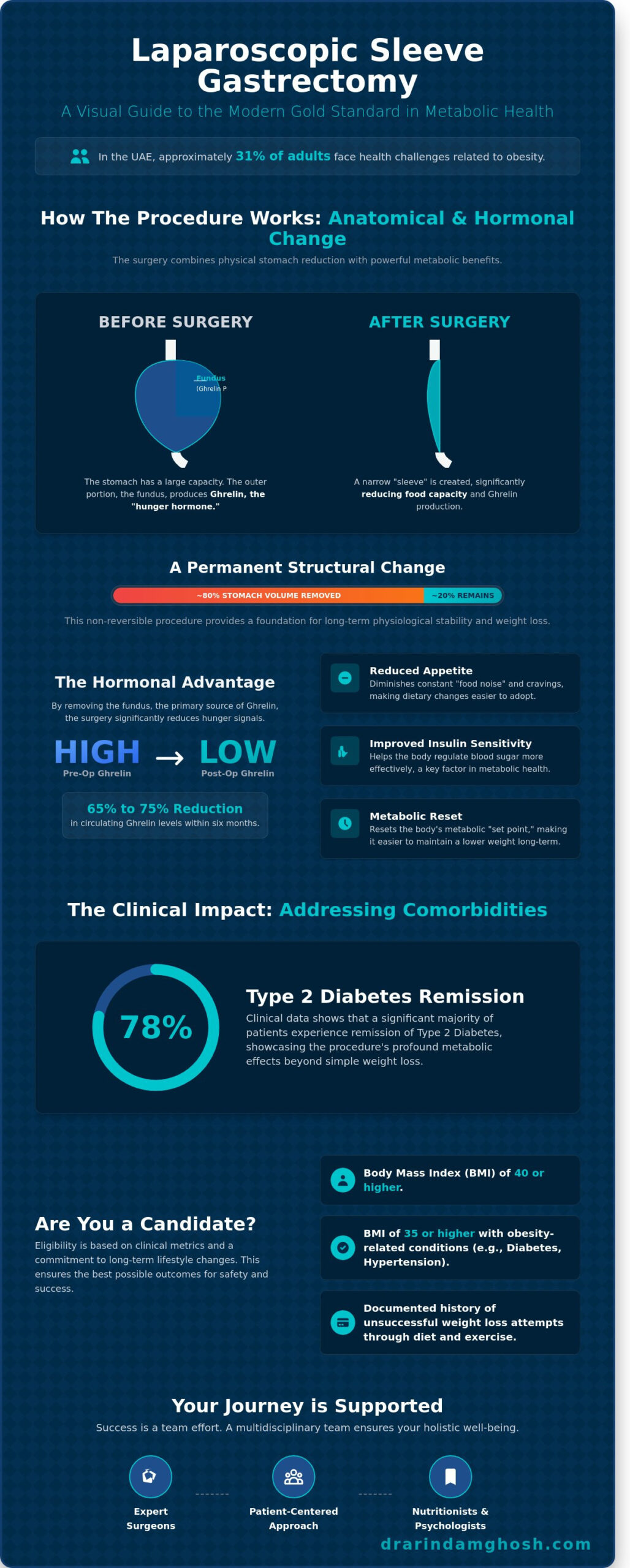
Laparoscopic Sleeve Gastrectomy has emerged as the most frequently performed bariatric procedure nationally. This minimally invasive surgery involves a precise reduction of the stomach volume to help patients achieve sustainable weight loss. Surgeons use advanced robotic or laparoscopic tools to remove approximately 80% of the stomach. The remaining portion takes the shape of a narrow, banana-like tube or “sleeve.” This new structure significantly limits food intake while preserving the natural digestive pathway.
Choosing this path is a significant decision for your health journey. The procedure is non-reversible, which provides a foundation for long-term physiological stability. Unlike adjustable methods that may require frequent recalibration, the sleeve offers a permanent structural change. This consistency helps patients nationwide maintain their weight loss goals over decades rather than months. You can find more technical details on the history and evolution of the Sleeve Gastrectomy on Wikipedia to understand its global adoption.
The Anatomy of a Sleeve Gastrectomy
The surgical process focuses on removing the fundus, which is the large, outer curvature of the stomach. By leaving only about 20% of the original capacity, the procedure creates a high-pressure, low-volume system. A critical aspect of this technique is the preservation of the pyloric valve. This valve controls the release of food into the small intestine. Keeping it intact allows for natural gastric emptying and prevents “dumping syndrome,” a common complication in other bypass surgeries. This ensures that the digestive process remains as close to biological norms as possible while restricting total volume.
The Hormonal Advantage: Beyond Simple Restriction
This surgery is far more than a physical change to your anatomy. It’s a powerful metabolic intervention. The fundus, which we remove during the procedure, is the primary site for secreting Ghrelin. This is the hormone responsible for triggering hunger and cravings. Clinical data from early 2026 indicates that patients experience a 65% to 75% reduction in circulating Ghrelin levels within the first six months of the procedure.
This chemical shift provides several clinical benefits:
- Reduced Appetite: It diminishes the constant “food noise” that many patients struggle with daily.
- Improved Insulin Sensitivity: Recent 2026 studies show Type 2 Diabetes remission in 78% of surgical cases observed nationally.
- Metabolic Reset: It resets the body’s metabolic set point, making it easier to maintain a lower weight long-term.
The dual action of physical restriction and hormonal modulation makes Laparoscopic Sleeve Gastrectomy a cornerstone of modern metabolic medicine. It empowers you to take control of your health with both biological and structural support. This procedure is not just about eating less; it’s about changing how your body interacts with food and energy at a cellular level.
Determining Candidacy: Is Weight Loss Surgery Right for You?
Deciding to undergo Laparoscopic Sleeve Gastrectomy is a significant milestone in your health journey. This procedure is a tool for transformation, yet it requires a specific clinical and emotional profile to ensure safety and long-term success. Standard clinical guidelines in the UAE typically require a Body Mass Index (BMI) of 40 or above. If you live with weight-related health conditions, a BMI of 35 is often the threshold for surgical intervention. These numbers serve as a starting point for a deeper conversation about your metabolic health and future goals.
Clinical eligibility is only one part of the equation. We prioritize patients who’ve made genuine, documented attempts at traditional weight loss through diet and exercise for at least six months without achieving sustained results. This history demonstrates that your obesity may be driven by metabolic factors that lifestyle changes alone cannot resolve. Before moving forward, you’ll undergo a comprehensive pre-operative health assessment. This multidisciplinary evaluation involves blood work, cardiovascular screening, and nutritional counseling to ensure your body is prepared for the transition. Psychological readiness is equally vital. You must be prepared to embrace a new relationship with food and a commitment to lifelong wellness.
Addressing Obesity-Related Comorbidities
The primary objective of Laparoscopic Sleeve Gastrectomy is to restore your quality of life by mitigating life-threatening conditions. Clinical data indicates that significant weight reduction can lead to the remission of Type 2 Diabetes in 60% of patients within the first year. It also effectively manages hypertension and resolves obstructive sleep apnoea, which restores restorative sleep patterns. According to the NIDDK on Bariatric Surgery Types, these metabolic improvements are a hallmark of modern bariatric interventions. Beyond internal health, reducing the load on your skeletal system improves joint health and overall mobility, allowing you to return to the activities you love.
Who is Not a Candidate?
While surgery offers a pathway to health, certain contraindications may make this procedure unsuitable. Patients suffering from severe Gastro-Oesophageal Reflux Disease (GERD) or Barrett’s oesophagus may find that a sleeve gastrectomy exacerbates their symptoms; in these cases, we often discuss alternative gastric bypass options. Lifestyle factors also play a role. Active smoking and alcohol dependency are significant barriers to eligibility because they increase the risk of post-operative complications and impair the healing process. Age is considered on an individual basis. While we typically treat adults between 18 and 65, we evaluate adolescents and older adults through a specialized lens that focuses on physiological resilience and the potential for a meaningful increase in their functional lifespan. If you’re ready to explore your options, schedule a consultation to begin your personalized health assessment.
The Surgical Procedure: Laparoscopic vs. Robotic Precision
Choosing a surgical path is a significant step toward reclaiming your health. Modern medicine has transformed the Laparoscopic Sleeve Gastrectomy into a refined, minimally invasive procedure. Instead of one large incision, surgeons use four or five small “keyhole” openings. This technique preserves the integrity of the abdominal wall and significantly reduces the physical stress on your body. Most patients in the UAE find they can return to light activity within a few days; a stark contrast to the weeks of recovery required by older methods.
Safety starts before the first incision. The process begins with general anesthesia, administered by a specialized team to ensure you remain comfortable and stable. During the operation, the surgeon removes about 80% of the stomach, leaving a narrow, banana-shaped sleeve. This change isn’t just mechanical. It alters the hormones that control hunger and satiety. This metabolic shift is what makes the procedure a powerful tool for long-term wellness and a better quality of life.
The Benefits of Robotic-Assisted Surgery
Robotic technology has elevated the standards of precision in gastrointestinal care. When performing a robotic-assisted Laparoscopic Sleeve Gastrectomy, the surgeon utilizes a high-definition 3D camera that provides 10 times the magnification of standard vision. This clarity allows for the delicate handling of tissues and blood vessels. The robotic instruments possess a range of motion greater than the human wrist, which translates to smoother maneuvers in tight spaces. It’s a perfect marriage of the “human touch” and robotic accuracy, often resulting in even smaller incisions and less internal trauma. The same robotic precision that benefits bariatric patients is also central to gastrointestinal cancer surgery, where advanced technology enables surgeons to operate with exceptional accuracy in complex anatomical environments.
Safety and Risk Management
Your peace of mind is the priority of any surgical team. To ensure the highest safety standards, we implement rigorous protocols during and after the surgery. These include:
- Staple Line Reinforcement: We use specialized materials to strengthen the new stomach seam and prevent bleeding.
- Intraoperative Leak Tests: A physical check is performed during the surgery to ensure the sleeve is perfectly sealed before the procedure concludes.
- DVT Prophylaxis: To manage the small risk of blood clots, we use compression devices and encourage early mobilization within hours of surgery.
Clinical data shows that a surgeon’s experience is the most critical factor in minimizing risks. By choosing a multidisciplinary team in a regulated UAE facility, you ensure that every detail of your recovery is managed with clinical rigor and personalized care. The focus remains on a safe transition from the operating room to a healthier, more active lifestyle. Patients who are also managing gallbladder disease alongside their weight loss journey may benefit from understanding how a Laparoscopic Cholecystectomy can be performed with the same minimally invasive precision to address biliary conditions effectively.
The Recovery Journey: Restoring Your Quality of Life
Recovery after a Laparoscopic Sleeve Gastrectomy is a meticulous process designed to transition you safely from clinical care to a revitalized lifestyle. The first 48 hours focus on proactive healing. You’ll likely remain in the hospital for one or two nights under close observation. Our multidisciplinary team prioritizes early mobilization. You’ll be encouraged to walk within 4 to 6 hours after the procedure. This movement is vital for circulation and lung function. Pain is managed through a multimodal approach, using specific medications that minimize discomfort while keeping you alert and engaged in your recovery.
Most patients in the UAE return to desk-based professional roles within 10 to 14 days. If your job involves physical labor, we typically recommend waiting 4 to 6 weeks. This timeline ensures your internal sutures have sufficient time to heal before you engage in heavy lifting or strenuous activity. This period isn’t just about physical rest; it’s about mental recalibration as you adapt to your body’s new requirements.
The Four Phases of the Post-Sleeve Diet
Your new stomach requires a gradual introduction to food. We guide you through four distinct stages to ensure long-term success:
- Phase 1 (Days 1-7): You’ll consume only clear liquids. Hydration is the priority. You must aim for 1.5 to 2 liters of fluid daily, taken in small, frequent sips.
- Phase 2 (Weeks 2-3): We introduce pureed foods. Protein becomes the focus here. You’ll aim for 60 to 80 grams of protein daily through blended soups, thin dals, or Greek yogurt.
- Phase 3 (Weeks 4-5): You’ll transition to soft foods like eggs or steamed fish. This phase is crucial for learning to recognize “fullness” cues before you feel overextended.
- Phase 4 (Week 6+): This is your lifelong “new normal.” You’ll focus on nutrient-dense whole foods, prioritizing lean proteins and vegetables over simple carbohydrates.
Long-term Lifestyle and Emotional Transition
The first 12 to 18 months are often called the “honeymoon phase” because weight loss is rapid and motivating. However, maintaining this success requires a commitment to daily vitamin supplementation. Since the Laparoscopic Sleeve Gastrectomy alters how you absorb certain nutrients, you’ll need lifelong Vitamin B12, Iron, and Calcium Citrate to maintain your health. Beyond the physical, many patients experience a profound psychological shift. Reclaiming your social identity and confidence is a collaborative effort. We provide the clinical precision you need, but your dedication to these lifestyle changes ultimately secures your long-term quality of life.
Choosing Expertise: The Multidisciplinary Approach to Success
Choosing a surgeon for your Laparoscopic Sleeve Gastrectomy is a decision that extends far beyond the operating room. While technical precision is vital, the most successful outcomes in the UAE are achieved through a multidisciplinary framework. You aren’t just looking for a clinician; you’re seeking a team that understands the physiological and psychological shifts ahead. A bariatric nutritionist provides the roadmap for metabolic health, helping you navigate dietary changes while respecting local culinary traditions. Simultaneously, a psychologist helps you dismantle the emotional barriers to sustained weight loss. This collective effort is what prevents weight regain, which clinical data suggests can affect up to 20% of patients who lack consistent long-term support.
The ultimate goal of surgery is a return to a meaningful, healthy existence. We measure success not just by the numbers on a scale, but by your quality of life. This includes the resolution of type 2 diabetes, improved mobility, and the confidence to engage fully in your community. A surgeon who prioritizes these holistic outcomes will focus on a “human touch” that complements their technical skill, ensuring you feel like a partner in your recovery rather than just a patient on a schedule.
The Value of 25+ Years of Clinical Authority
Experience is the cornerstone of surgical safety. High surgical volume is a proven indicator of better patient outcomes and lower complication rates. When a surgeon brings over 25 years of clinical authority, especially with a background in gastrointestinal oncology, they possess a level of anatomical insight that goes beyond standard training. This specialized knowledge allows for greater precision during a Laparoscopic Sleeve Gastrectomy, particularly in complex cases. It moves the practice away from a “one size fits all” model toward personalized care that respects your specific health history and metabolic needs. Patients who require both bariatric and oncological care can benefit from understanding the full scope of gastrointestinal cancer surgery options available through the same multidisciplinary expertise. To make a truly informed decision, understanding how to identify the best bariatric surgeon in Dubai can help you evaluate the clinical credentials and expertise that matter most for your outcome.
Preparing for Your Consultation
Your first visit is the beginning of a collaborative journey. It’s a time to move from uncertainty to informed empowerment. During this session, you’ll discuss diagnostic tests such as an endoscopy, which checks for hiatal hernias or inflammation, and comprehensive blood work to assess your nutritional baseline. For patients with a history of persistent abdominal symptoms or unexplained changes in bowel habits, a diagnostic colonoscopy may also be recommended as part of your pre-operative digestive health evaluation. To make the most of your appointment, consider asking these specific questions:
- How many sleeve gastrectomy procedures have you performed in the last year?
- What does your specific follow-up program look like for the first 12 months?
- How does your team support patients who hit a weight-loss plateau?
- What are the expected metabolic improvements for my specific co-morbidities?
Taking this step requires courage and clarity. If you’re ready to explore how a tailored surgical plan can restore your health, you can Schedule a consultation for a personalized evaluation to discuss your options in a professional, supportive environment.
Embrace a Healthier Future Through Expert Care
Choosing to undergo a Laparoscopic Sleeve Gastrectomy is a pivotal decision for your long-term wellness. This modern gold standard in weight loss surgery offers more than just a physical change; it’s a gateway to restoring your quality of life. By combining robotic precision with a compassionate human touch, the procedure ensures that your safety and recovery remain the top priority. Dr. Arindam Ghosh brings over 25 years of surgical experience to every case, utilizing a comprehensive multidisciplinary care model that guides you through each milestone. Patients across the UAE benefit from his deep expertise in both robotic and laparoscopic techniques, which focus on achieving sustainable, life-changing results. You don’t have to face these complex health challenges by yourself. With the right clinical authority and a personalized treatment plan, you can confidently step into a new chapter of vitality. It’s time to prioritize your health with a team dedicated to your success.
Begin your journey to health-book a consultation with Dr. Arindam Ghosh today
Frequently Asked Questions
How much weight can I expect to lose after a sleeve gastrectomy?
You can expect to lose between 60% and 70% of your excess body weight within the first 18 months. For a patient carrying 50kg of extra weight, this translates to a loss of roughly 30kg to 35kg. Most of this progress happens in the first six months. It’s a transformative journey that significantly improves your quality of life by reducing the strain on your joints and cardiovascular system.
Is the sleeve gastrectomy reversible if I change my mind?
A laparoscopic sleeve gastrectomy is a permanent procedure and isn’t reversible. During the operation, our surgical team removes approximately 80% of the stomach to create a narrow tube. While we can’t undo the surgery, we can manage or modify it through other techniques if a patient’s health needs change. It’s a lifelong commitment to health that requires careful consideration and professional guidance from a multidisciplinary team.
What are the most common long term side effects of the procedure?
Chronic acid reflux and vitamin deficiencies are the most frequent long term side effects. Research indicates that roughly 20% of patients may experience increased gastroesophageal reflux after the procedure. Additionally, about 15% of individuals might face iron or B12 deficiencies if they don’t follow their nutritional plan. Our team provides continuous monitoring to ensure these issues are managed effectively through personalized care and high quality supplements.
How long does the surgery take and how long is the hospital stay?
The surgery generally lasts between 60 and 90 minutes. Most patients in the UAE stay in the hospital for 24 to 48 hours to ensure a safe initial recovery. We focus on getting you mobile quickly to prevent complications. You’ll typically be ready to return to light office work within 10 days, though full physical activity usually resumes after 6 weeks of healing.
Can I get pregnant after having weight loss surgery?
You can certainly have a healthy pregnancy after weight loss surgery. We advise waiting 12 to 18 months until your weight stabilizes to ensure optimal nutrition for both you and the baby. Many women find that their fertility improves as they reach a healthier BMI. We work closely with obstetricians to provide a supportive, multidisciplinary approach during your pregnancy journey to ensure the safety of the mother and child.
Will I have excess skin after losing a significant amount of weight?
Many patients experience loose skin after losing more than 35kg to 40kg. This affects approximately 70% of individuals, depending on their age, genetics, and skin elasticity. While exercise helps tone the underlying muscle, it won’t fully eliminate redundant skin. Once your weight remains stable for 12 months, we can discuss body contouring options to help you feel fully comfortable in your new body and enhance your quality of life.
Does health insurance typically cover laparoscopic sleeve gastrectomy?
Most insurance providers in the UAE cover the procedure if you meet specific clinical criteria. Generally, a BMI over 40, or a BMI over 35 with conditions like hypertension or Type 2 diabetes, qualifies for coverage under policies from Daman, AXA, or NextCare. You’ll need to provide documented evidence of previous weight loss attempts. Our team assists in navigating these requirements to ensure you receive the laparoscopic sleeve gastrectomy care you deserve.
What happens if I start to regain weight a few years later?
If you notice weight regain, we immediately perform a comprehensive evaluation to identify the cause. Statistics show that about 15% of patients might regain some weight five years after surgery. We don’t view this as a failure but as a prompt to adjust your metabolic plan. Options include nutritional counseling, behavioral therapy, or even revisional procedures to protect your long term wellness and restore your health goals.
2 comments
Pingback: Bariatric Surgery Cost in Dubai: A Comprehensive 2026 Guide to Investment and Value
Pingback: Robotic Surgery in the UAE: The Future of Precision Gastrointestinal Care