

Did you know that robotic gastrointestinal surgery in the UAE can reduce your hospital stay by 40%, allowing many patients to return home in as little as 24 to 72 hours? It’s natural to feel a sense of uncertainty when your doctor mentions the word “surgery,” especially when you’re already trying to distinguish between a gastroenterologist’s medical advice and a surgeon’s intervention. You want to feel confident that the path you choose isn’t just about treating a symptom but restoring your long-term wellness. Understanding exactly what does a gastrointestinal surgeon do in UAE is the first step toward reclaiming your health and peace of mind.
We’ll explore the specialized role of GI surgeons, the advanced laparoscopic and robotic procedures they perform, and how they use a multidisciplinary approach to ensure your safety. This guide provides a clear roadmap for your consultation and recovery process in the Emirates’ world-class healthcare system. You’ll learn how modern surgical precision, combined with a compassionate human touch, can bridge the gap between a complex diagnosis and a meaningful return to your quality of life.
Key Takeaways
- Understand the specialized role and discover exactly what does a gastrointestinal surgeon do in UAE to bridge the gap between complex diagnosis and definitive, life-restoring treatment.
- Explore how modern robotic and laparoscopic advancements prioritize your comfort by minimizing physical trauma and significantly accelerating your return to daily activities.
- Recognize the critical symptoms and diagnostic red flags that signal a need for specialized surgical evaluation rather than continued medical management.
- Learn how a collaborative, multidisciplinary team approach provides a structured and reassuring roadmap for your journey from initial diagnosis through a successful recovery.
Table of Contents
- Understanding the Role of a Gastrointestinal (GI) Surgeon in the UAE
- Specialized Procedures: From Minimally Invasive to Robotic Surgery
- Recognizing Symptoms: When Should You Consult a GI Surgeon?
- The Modern Patient Journey: Comprehensive Care and Recovery
- Selecting an Expert Specialist for Your Gastrointestinal Health
Understanding the Role of a Gastrointestinal (GI) Surgeon in the UAE
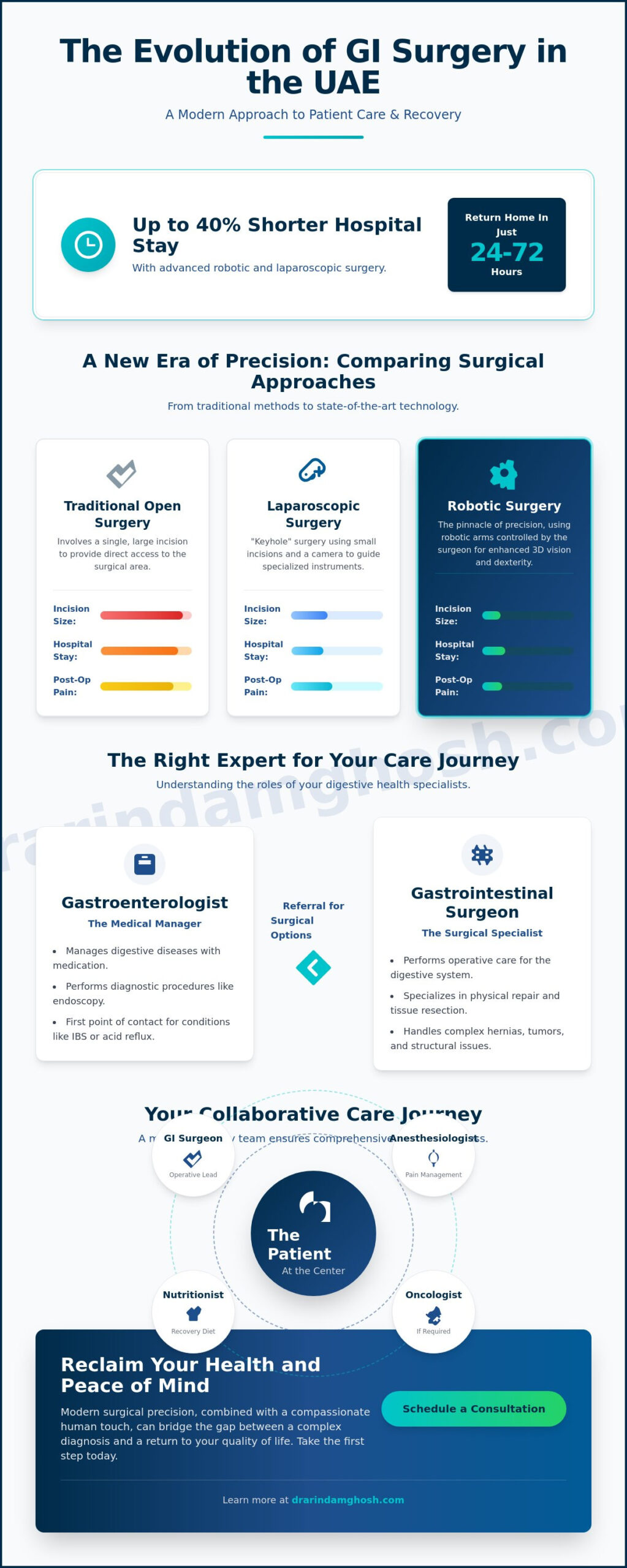
A gastrointestinal surgeon is a dedicated specialist who provides both diagnostic evaluation and advanced operative care for the entire digestive system. If you’ve been struggling with persistent abdominal issues, you might wonder, what does a gastrointestinal surgeon do in UAE that differs from a standard medical checkup? These experts focus on the surgical intervention of vital organs including the esophagus, stomach, liver, pancreas, and intestines. While the technical complexity of Digestive System Surgery is undeniable, the ultimate priority is restoring your quality of life. In the UAE’s rapidly evolving healthcare sector, these surgeons increasingly utilize robotic-assisted tools and laparoscopic techniques. These innovations have been shown to reduce hospital stays by up to 40% compared to traditional open methods, often allowing patients to return home within 24 to 72 hours.
The UAE maintains a high standard of medical excellence with approximately 181 doctors per 100,000 citizens. This density ensures that you receive personalized attention from specialists who blend clinical authority with profound empathy. A GI surgeon doesn’t just perform a procedure; they act as a compassionate ally, guiding you through the gravity of a diagnosis toward a hopeful, healthy outcome. By combining robotic precision with a human touch, they ensure that complex interventions like liver resections or pancreaticoduodenectomies are performed with the highest level of safety and care.
GI Surgeon vs. Gastroenterologist: Knowing the Difference
Many patients feel a sense of confusion when deciding which specialist to visit for chronic pain. Gastroenterologists primarily handle the medical management of digestive diseases through medication and diagnostic endoscopies. They’re excellent for managing conditions like IBS or early-stage acid reflux. However, a GI surgeon is called when your condition requires a physical repair, a resection of damaged tissue, or a structural reconstruction. It’s common for these specialists to work in a collaborative partnership. Most patients begin their journey with a medical evaluation and are later referred through a surgical consultation process to discuss definitive operative options.
The Focus on Digestive Organs and Systems
A GI surgeon’s expertise spans the entire digestive pathway, often categorized into “foregut” and “hindgut” specialties. Foregut surgery involves the esophagus and stomach, while hindgut procedures focus on the colon and rectum. Beyond organ-specific care, these surgeons are masters of the abdominal wall, treating complex hernias that can significantly limit your mobility. In alignment with UAE national healthcare standards, these specialists operate within a multidisciplinary team. This approach ensures that every aspect of your wellness, from pre-operative nutrition to post-surgical oncology, is managed by a collective of experts. When you ask what does a gastrointestinal surgeon do in UAE, the answer lies in this comprehensive, holistic care that views surgery as a pathway to a meaningful existence.
Specialized Procedures: From Minimally Invasive to Robotic Surgery
The evolution of surgical care in the Emirates has reached a point where significant abdominal procedures no longer require large, invasive incisions. Modern gastrointestinal surgery has transitioned toward tiny, precision-guided ports, a shift that prioritizes your comfort and physical integrity. When you ask what does a gastrointestinal surgeon do in UAE today, you’re looking at a professional who combines years of clinical training with high-tech mastery. According to the Physicians and Surgeons Occupational Outlook, surgeons must possess exceptional dexterity and problem-solving skills; these traits are amplified by the advanced tools available in our local hospitals.
Laparoscopic techniques, often referred to as “keyhole surgery,” use small cameras and specialized instruments to perform complex repairs. This approach results in significantly less post-operative pain and allows for a faster discharge. However, robotic surgery uae represents the current pinnacle of surgical precision. Robotic systems provide surgeons with immersive 3D visualization and a range of motion that exceeds the human hand, especially in tight abdominal spaces. In 2024 alone, Cleveland Clinic Abu Dhabi performed over 400 robotic surgeries, highlighting the nation’s commitment to this advanced standard of care. These technologies don’t just improve the surgeon’s view; they directly translate to a safer, more controlled experience for the patient.
Bariatric and Metabolic Intervention
Surgeons address the growing challenge of obesity through life-saving procedures like Laparoscopic Sleeve Gastrectomy and Gastric Bypass Surgery. These aren’t just cosmetic adjustments. They’re metabolic interventions designed to resolve chronic conditions like Type 2 diabetes and hypertension. By altering the digestive anatomy, these procedures provide a powerful tool for patients to reclaim their metabolic health. It’s about more than weight loss; it’s about a fundamental restoration of your long-term quality of life through science-backed surgical solutions.
Gastrointestinal Oncology and Complex Resections
In the field of oncology, a GI surgeon’s precision is vital for removing tumors within the liver, pancreas, and colorectal system. Procedures such as Colorectal Cancer Resection or the complex Pancreaticoduodenectomy, also known as the Whipple Procedure, require a high level of technical expertise. While the focus is on clinical rigor, the human touch remains central to the process. Guiding a patient through a cancer diagnosis involves more than just a successful Liver Resection; it requires a compassionate partnership that prioritizes your emotional wellness alongside physical recovery. If you’re facing a complex diagnosis, you can schedule a comprehensive evaluation to discuss how these advanced techniques can support your specific recovery journey.
Recognizing Symptoms: When Should You Consult a GI Surgeon?
Your body often communicates its needs through subtle signals that, over time, can become impossible to ignore. When chronic symptoms don’t respond to lifestyle adjustments or standard medications, it’s a sign that you need a more targeted specialist evaluation. Understanding what does a gastrointestinal surgeon do in UAE involves recognizing the exact moment when medical management has reached its limit and a structural intervention is required. These specialists don’t just operate; they use their diagnostic expertise to determine if your pain is caused by a physical issue that requires a precise repair. Persistent acid reflux may indicate a hiatal hernia requiring surgical repair to restore the proper function of the esophageal valve and protect your long-term health.
Early screening for colorectal health is perhaps the most vital step in preventing advanced disease. It’s a proactive measure that prioritizes your future wellness. While modern imaging is helpful, a surgeon uses diagnostic tools like endoscopy and colonoscopy to see what an MRI or CT scan might miss. This direct visualization allows for the identification of polyps or tissue changes that can be addressed before they escalate into more serious conditions. By taking these steps early, you’re not just treating a symptom; you’re actively safeguarding your quality of life.
Red Flag Symptoms for Surgical Consultation
Certain symptoms demand immediate attention and a higher level of clinical authority. Sudden, severe abdominal pain can be a primary indicator of acute appendicitis or gallbladder issues that require a Laparoscopic Cholecystectomy. You should also be vigilant about unexplained weight loss or significant, lasting changes in your bowel habits. These are red flags that necessitate a thorough investigation. In these moments, the surgeon acts as a protector, providing essential emergency GI care across the UAE to resolve life-threatening obstructions or perforations with calm, robotic precision.
Diagnostic Indicators and Referrals
The path to the operating room is rarely a straight line. Often, a gastroenterologist appointment dubai serves as the initial gateway where a medical specialist identifies a condition that requires a surgical referral. Once a referral is made, tools like MRI, CT scans, and biopsies become foundational for surgical planning. This data-driven approach ensures that every procedure is tailored to your specific anatomy. We always encourage patients to seek a second opinion for complex surgical recommendations. This step is a vital part of an informed and empowered patient journey, ensuring you feel complete confidence in your chosen treatment plan.
The Modern Patient Journey: Comprehensive Care and Recovery
Your journey toward healing starts long before you enter the operating theater. It begins with a meticulous clinical evaluation where every detail of your medical history is examined with clinical authority and profound empathy. This pre-operative planning phase is where the blueprint for your recovery is created. We believe that patient education is a vital component of this process. When you understand the “how” and the “why” behind your specific procedure, it transforms a state of uncertainty into one of informed empowerment. This clarity reduces anxiety and builds a foundation of trust between you and your surgical team.
When people ask what does a gastrointestinal surgeon do in UAE, they’re often surprised to learn that the role extends far beyond the operating room. The surgeon acts as the coordinator of a comprehensive recovery plan. In the UAE’s advanced healthcare landscape, this journey involves a dedicated team of dietitians, physiotherapists, and specialized nurses. Post-operative follow-up is never treated as a formality; it’s a critical period where we monitor your progress to ensure long-term wellness. By maintaining this steady, measured cadence of care, we ensure that your transition back to health is as smooth and safe as possible.
The Multidisciplinary Team Approach
Modern GI surgery isn’t an isolated intervention. It’s a collaborative effort where surgeons work closely with radiologists and oncologists to achieve holistic outcomes. This team-based philosophy is a hallmark of UAE national healthcare standards and is a primary reason for lower complication rates in complex cases. Specialized nursing staff in the recovery wards provide the human touch that complements our high-tech precision. This collective expertise ensures that every aspect of your diagnosis, from imaging to pathology, is reviewed by multiple specialists before a single incision is made.
Post-Operative Recovery and Quality of Life
If you undergo a minimally invasive procedure, you can expect to see significant progress within the first 24 to 48 hours. Because robotic and laparoscopic tools reduce hospital stays by 40%, many of our patients are discharged within 24 to 72 hours. Your transition back to a normal diet and physical activity is managed in stages, guided by our nutritional experts. The ultimate goal of any intervention, whether it’s a Colorectal Cancer Resection or a Laparoscopic Appendectomy, is your return to a meaningful, healthy existence. We view surgery not just as a clinical task, but as a pathway to restoring your quality of life. If you’re ready to take the first step toward recovery, you can book a specialist consultation to discuss a personalized care plan tailored to your needs.
Selecting an Expert Specialist for Your Gastrointestinal Health
Choosing the right surgical partner is a decision that impacts your long-term wellness and peace of mind. You should look for a surgeon who possesses extensive experience, ideally spanning 20 years or more, in both traditional open surgery and modern minimally invasive techniques. This depth of knowledge ensures that your doctor can adapt to any clinical situation with calm authority. When you evaluate what does a gastrointestinal surgeon do in UAE to ensure patient safety, you’ll find that the best specialists maintain strong affiliations with premier hospital groups across Dubai and Abu Dhabi. These institutions are regulated by authorities like the Dubai Health Authority (DHA) or the Department of Health (DOH), ensuring that your care meets rigorous national standards.
The ideal specialist doesn’t just offer technical expertise; they prioritize a patient-centric approach characterized by transparent communication. You deserve a healer who explains every step of the process, from the initial diagnostic gastroscopy to the nuances of post-operative recovery. This transparency is the foundation of a successful partnership. It’s about finding a professional who combines robotic precision with a human touch, ensuring that while the technology is cutting-edge, the care remains deeply personal and compassionate.
Evaluating Clinical Rigor and Innovation
Innovation is a cornerstone of modern gastrointestinal care in the Emirates. It’s essential to verify that your surgeon is well-versed in the latest robotic-assisted technologies, such as the da Vinci Xi or Versius systems. A proven track record in complex gastrointestinal oncology and bariatric cases, including Laparoscopic Sleeve Gastrectomy, indicates a high level of clinical rigor. Because the UAE is a global hub for medical excellence, a surgeon with a globally-minded perspective is uniquely equipped to handle the diverse needs of our local community. They bring world-class insights to every procedure, whether it’s a routine Laparoscopic Cholecystectomy or a complex Whipple procedure.
The Importance of Personal Connection
A successful surgical outcome relies heavily on the trust established between the patient and the surgeon. You should feel that your doctor isn’t just a technician but a protector of your health. Compassionate care is not a luxury; it’s a clinical necessity that aids in your emotional recovery and overall wellness. This holistic view of medicine ensures that the focus remains on your quality of life rather than just the completion of a procedure. If you’re seeking a path toward restoration and health, you can schedule a consultation with Dr. Arindam Ghosh to discuss your gastrointestinal health with a trusted expert who values your individual journey.
Empowering Your Journey Toward Lasting Digestive Health
The transition from a state of digestive discomfort to a life of vitality is achievable through the right surgical partnership. Modern advancements have fundamentally changed the patient experience; robotic and laparoscopic techniques now offer a 40% reduction in recovery times compared to traditional methods. By choosing a specialist who integrates high-tech precision with high-touch compassion, you ensure your journey is supported by both innovation and integrity. Understanding exactly what does a gastrointestinal surgeon do in UAE empowers you to move beyond temporary symptom management toward a definitive, life-restoring intervention.
Your health deserves the care of a protector who understands the gravity of your diagnosis. With over 25 years of surgical experience and a mastery of advanced robotic tools, Dr. Arindam Ghosh provides comprehensive care across the UAE’s premier hospital groups. Don’t let uncertainty delay your return to a meaningful existence. Book a clinical evaluation with Dr. Arindam Ghosh for expert GI care today. Taking this small step is the beginning of a collaborative pathway toward lasting health and a renewed quality of life.
Frequently Asked Questions
Is gastrointestinal surgery always the last resort?
Surgery isn’t always a last resort; it’s often the most effective primary treatment for structural issues like hernias or specific metabolic disorders. Early intervention can prevent a condition from escalating into a complex emergency. Choosing a surgical path early often leads to a better long-term quality of life because it addresses the physical root of the problem rather than just managing symptoms with lifelong medication.
How long does it take to recover from laparoscopic GI surgery in the UAE?
Most patients are discharged within 24 to 72 hours following a laparoscopic procedure in a UAE hospital. While you’ll be mobile almost immediately, a full return to strenuous physical activity typically takes about 2 to 4 weeks. This accelerated timeline is a direct result of the minimally invasive approach, which significantly reduces tissue trauma and post-operative pain compared to traditional open surgeries performed in the past.
Can a GI surgeon perform both a colonoscopy and a major surgery?
Yes, a GI surgeon is uniquely qualified to perform both diagnostic endoscopies, such as a colonoscopy, and major operative procedures like a colorectal cancer resection. This dual capability allows the surgeon to maintain continuity of care. They can personally visualize the internal condition during the diagnostic phase and then use that precise data to plan and execute a successful, life-restoring surgical intervention.
What is the success rate of robotic-assisted GI procedures?
Success rates for robotic-assisted gastrointestinal procedures are exceptionally high, with some clinical studies showing complication rates below 5% for routine cases. The enhanced 3D visualization and 360-degree instrument rotation allow for greater precision in complex abdominal spaces. This technology is a primary reason why patients ask what does a gastrointestinal surgeon do in UAE to achieve such consistent, high-quality outcomes in modern surgical oncology.
Do I need a referral to see a gastrointestinal surgeon in the UAE?
While many patients are referred by a gastroenterologist, you don’t always need a formal referral to book a consultation in the private sector. However, you should check your specific health insurance policy, as some plans require a GP referral for specialist coverage. In the UAE’s regulated healthcare system, you have the freedom to seek a second opinion or a direct evaluation with a surgical expert to discuss your options.
What happens if my GI condition is not treated surgically?
Leaving a surgical condition untreated can lead to chronic pain or life-threatening complications like organ perforation or bowel obstruction. For example, an untreated gallbladder issue can result in severe inflammation or jaundice. When exploring what does a gastrointestinal surgeon do in UAE, you’ll learn that their role is to intervene before these risks manifest, ensuring your health is protected through timely and precise structural repairs.
Are GI surgeries covered by major insurance providers in the UAE?
Most gastrointestinal surgeries are considered medically necessary and are covered by major insurance providers in Dubai and Abu Dhabi. Since 2026, the UAE has implemented mandatory health insurance laws that ensure residents have access to essential surgical care. While basic plans cover inpatient services with a 20% co-payment up to AED 500 per visit, it’s always best to verify your specific coverage limits with your provider before proceeding.
How do I prepare for my first consultation with a GI surgeon?
Preparation is key to an empowered consultation. Bring all recent imaging reports, blood test results, and a list of your current medications to your appointment. It’s helpful to document the frequency and intensity of your symptoms over the last 30 days. This data allows your surgeon to provide a more methodical and precise evaluation, moving you closer to a solution that restores your quality of life and long-term wellness.
One comment
Pingback: Coping with Anxiety Before Major Surgery: A Surgeon’s Perspective on Mental Readiness